
What Time of Day Should You Walk Your Dog in Queensland?
Why the time of day matters in Townsville
I live in Townsville with two dogs, a Border collie and a Chug. They would happily go for a walk at any time, but the weather is the one that says no.
In a cool place like Melbourne, you can walk your dog almost whenever you like. Up here, for about half the year, the weather decides for you. The Bureau of Meteorology has a weather station at Townsville Airport. It has kept records since 1940. Here is what summer and winter look like on average.
| January (summer) | July (winter) | |
|---|---|---|
| Hottest part of the day | 31.5°C | 25.2°C |
| Coolest part of the night | 24.4°C | 13.8°C |
| Temperature at 9am | 28.1°C | 19.5°C |
| How sticky the air is at 3pm (humidity) | 65% | 52% |
| Sunrise (middle of the month) | 5:46am | 6:46am |
| Sunset (middle of the month) | 6:56pm | 5:51pm |
| How strong the sun is (UV index) | 11+ (extreme) | 7 (high) |
Why the ground matters more than the air
The temperature on your weather app is measured in the shade. But your dog walks on the ground, and the ground sits in the sun all day. That makes it much hotter than the air. An animal charity called Four Paws shared these measurements:
| Air temperature | Road in full sun |
|---|---|
| 25°C | 52°C |
| 31°C | 62°C |
| 35°C | 65°C |
At 52°C, skin can be badly burnt in about one minute. A normal January day in Townsville is 31.5°C. That means a sunny road could be over 60°C.
Some surfaces get hotter than others. A university study tested six different surfaces on summer afternoons. Fake grass was the hottest every single time. It was even hotter than the road. Real grass was the coolest. So fake grass at a dog park or in a backyard can be worse than the road.
The ground also holds on to heat. Footpaths soak up sun all day and stay hot long after the air cools down. That's why a walk at 6:30pm in summer can still burn.
Try the hand test. Put the back of your hand flat on the footpath. Count to five. If it's too hot to keep your hand there, it's too hot for paws.
I do the hand test at our front gate before every summer walk. If my hand wants to come off before I get to five, we walk on the grass or the dogs wait until later. It only takes five seconds. It has changed when we walk more than any weather app ever did.
What is the best time to walk your dog in summer?
The safe times in summer are short:
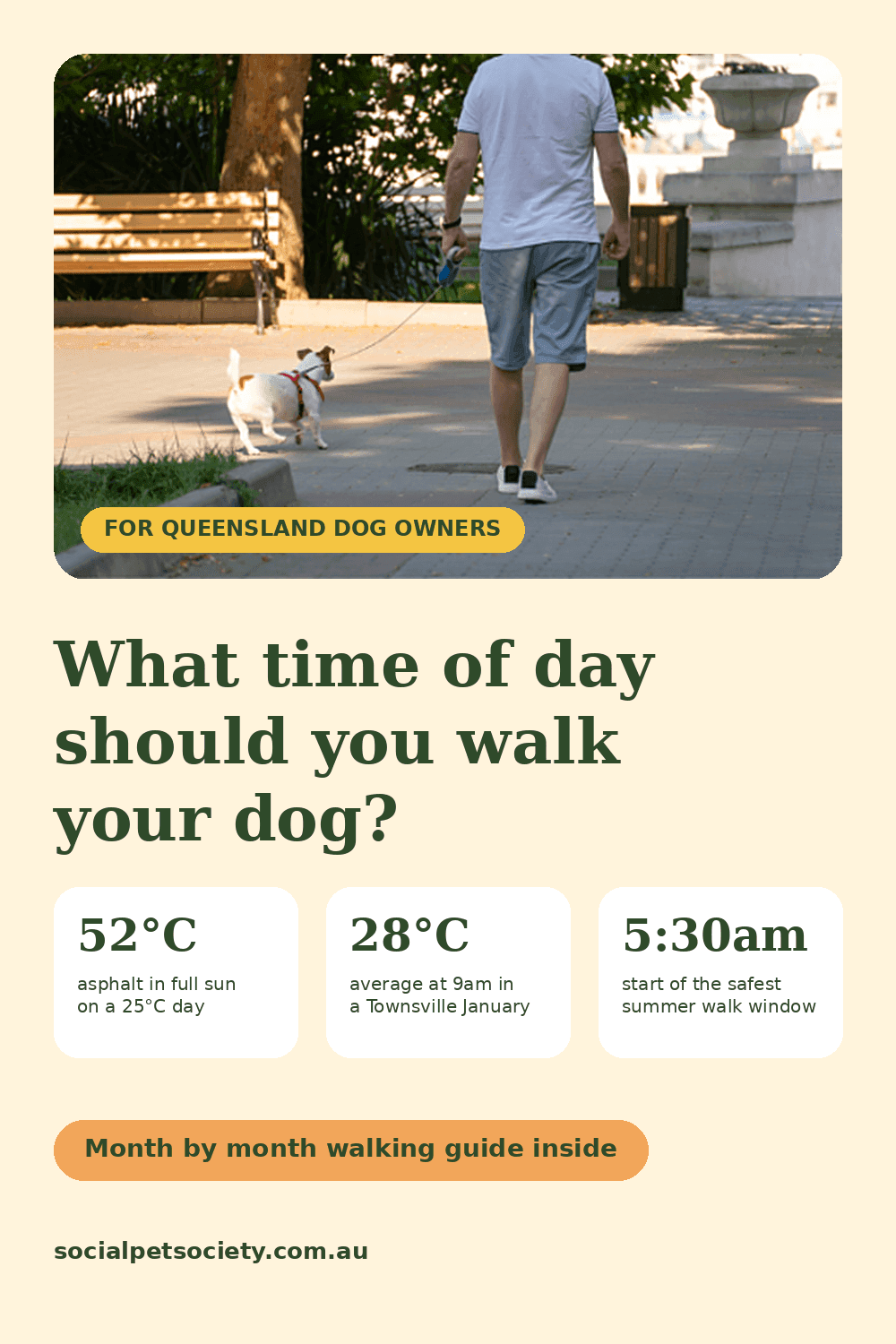
- Morning: from first light until about 7:30am. In late November the sun comes up as early as 5:24am. The ground has had all night to cool down. This is the best walk of the day from November to March.
- Evening: after dark, not at sunset. In the middle of January the sun doesn't set until 6:58pm. Even then, the footpath is still hot from the day. Wait until it's properly dark, then do the hand test.
- Skip walks from about 8am to 6pm. If your dog needs to go out, keep it to a quick toilet stop on grass or in the shade.
Sticky air makes summer even harder. Dogs cool down mostly by panting. When they pant, water dries off their tongue and mouth, and that carries heat away. When the air outside is already wet and sticky, panting doesn't work as well. Townsville air in January feels sticky even when you're standing still. In our house, summer walks become a slow sniff instead of a march, and nobody minds.
When to walk your dog in Townsville, month by month
The temperatures below are Bureau of Meteorology averages for Townsville Airport. The walking times are a guide only, so always check the ground on the day.
| Months | Hottest part of the day | Temperature at 9am | Best time to walk | Watch out for |
|---|---|---|---|---|
| December to February | 31.2 to 31.6°C | 27.6 to 28.4°C | First light to 7:30am, or after dark | Hot footpaths, sticky air, storms, cane toads |
| March and April | 29.7 to 30.8°C | 25.6 to 27.2°C | Before 8am, or after dark | Summer heat hangs around, cane toads after rain |
| May | 27.7°C | 23.0°C | Before 9am and late afternoon | Warm middle of the day |
| June to August | 25.2 to 26.2°C | 19.5 to 21.1°C | Almost any time, in the shade at lunchtime | Strong sun, dark by about 5:50pm |
| September and October | 27.9 to 29.6°C | 23.9 to 26.2°C | Before 8:30am and late afternoon | Heat building up, more snakes about |
| November | 30.9°C | 27.7°C | First light to 7:30am, or after dark | Same as summer |
Winter is the only time of year when a lunchtime walk makes sense. It can even suit dogs that feel the cold, like older dogs and dogs with short coats. Just pick a shady path.
Is the walk itself the biggest heatstroke risk?
I work as a nurse, so heat illness is something I take seriously. What surprised me was the research on dogs.
Most warnings tell us not to leave dogs in hot cars. That is good advice, but the research shows a bigger danger. In 2020, Nottingham Trent University and the Royal Veterinary College looked at the vet records of 905,543 dogs. They found 1,259 cases of heatstroke. Exercise caused 74% of them. Hot cars caused only 5.2%.
Most of those dogs weren't doing anything hard. Of the cases caused by exercise, 68% happened after just a normal walk in the heat. Heatstroke from exercise was also just as likely to kill a dog as heatstroke in a car. This study was done in the UK, where summers are much cooler than ours. So the lesson matters even more up here. A normal walk at the wrong time of day is the real danger.
Which dogs are most at risk?
Dogs with flat faces, like pugs and bulldogs, had a higher chance of every kind of heatstroke in the study. The breeds most linked to heatstroke from exercise were:
- Chow Chow
- Bulldog and French Bulldog
- Greyhound
- English Springer Spaniel
- Cavalier King Charles Spaniel
- Staffordshire Bull Terrier
Young male dogs were more likely to overheat while exercising. Older dogs were more likely to overheat just from being in a hot place.
Signs of heatstroke
RSPCA Queensland says to watch for:
- heavy panting that keeps getting worse
- drooling and not being able to settle
- gums that are very red or very pale, or a bright red tongue
- a racing heartbeat or trouble breathing
- vomiting, wobbly walking, confusion, shaking or falling down
What to do
Move your dog into the shade straight away. Wet their fur with lukewarm water. Never use ice cold water. Fan them to help them cool down faster. Then go straight to the vet, even if your dog seems better. Heatstroke can hurt the inside of the body, and that damage can show up later.
Is it better to walk my dog in the morning or the evening?
For most of the year, morning wins. The ground is at its coolest after a whole night with no sun. In the evening, the footpath is still giving off the heat it soaked up all afternoon.
| Early morning | Evening | |
|---|---|---|
| The ground | Coolest it gets all day | Can stay hot after the sun goes down |
| The air in January | About 24.4°C overnight | Still close to 30°C at 3pm, cooling slowly |
| Animals to watch for | Snakes on hot days | Cane toads after dark |
| Light | Sunrise as early as 5:24am | Dark by about 5:50pm in winter |
| Fitting it in | Before work and school | After work, but not straight after dinner |
Is it safe to walk my dog after dark?
Grown up toads come out at night. They are busiest in the warmer months. In the south they slow down in winter, but in tropical North Queensland they are around all year. They also come out more after rain. So a warm, wet evening is the worst time for toads.
Dogs get poisoned when they bite or lick a toad. The poison comes from bumps behind the toad's head. It sticks to the dog's gums and tongue. Puppies and terriers get poisoned the most, because they love to chase anything that hops. Watch for:
- drooling, pawing at the mouth or very red gums
- shaking
- stiff muscles
- fits (seizures)
- a very fast or uneven heartbeat
If your dog mouths a toad, wipe their gums and tongue with a damp cloth. Keep their head pointing down so the water doesn't go down their throat. Then call your vet straight away. Toad poison can kill quickly.
Like most dogs, ours would chase a toad if they got the chance. That's why our night walks are always on a short lead with a torch.
How to stay safe: keep your dog on a short lead at night, carry a torch, and stay away from long grass, puddles and bright lights where toads sit to catch bugs.
Are snakes a risk on early morning and evening walks?
Yes, especially when the weather is warm. Snakes need warmth from outside to move around, so you see more of them as it heats up. In the middle of summer, the day gets too hot even for snakes. Many of them move around very early in the morning, late in the evening or at night instead. Those are the same cool times we pick to walk our dogs.
Here are the facts:
- A survey of vets found about 6,200 pets get bitten by snakes in Australia every year.
- The eastern brown snake causes about 76% of reported pet snake bites.
- Only 31% of dogs bitten by a brown snake survive without antivenom (the medicine that fights snake venom). With antivenom, 75% survive.
- Antivenom on its own can cost at least $1,000.
Your dog may have been bitten, even if you didn't see a snake, if they have:
- sudden weakness, then fall down
- vomiting
- red or brown wee
Keep your dog as still as you can and get to a vet straight away. The sooner they get antivenom, the better their chance.
Snakes are just part of life in Townsville. From spring onwards, stick to footpaths and mown grass.
How to stay safe: keep your dog on a lead, stay on mown paths, and keep away from long grass and bushes near creeks.
Can my dog get sunburnt on a midday walk?
Yes. The UV index tells you how strong the sun is. Queensland Health says to protect your skin whenever it's 3 or more. In Queensland, it's 3 or more all year, even in winter. In Townsville, it reaches 11+ (extreme) from January to March, and still gets to 6 or 7 in June and July.
Dogs that burn most easily have pale or pink noses, white or thin fur, or not much hair on their ears and tummy. The middle of the day also has the least shade. So even a winter lunchtime walk is best on a path with trees. If your dog has a pink nose, ask your vet about a sunscreen that is safe for pets.
Should I walk my dog before or after they eat?
This matters most for big dogs with deep chests. They can get something called bloat. Their stomach fills up with gas and can twist around. When that happens, blood can't get to the stomach. It is an emergency and can kill a dog.
The breeds that get bloat most often include Great Danes, German Shepherds, Standard Poodles and Dobermans. Male dogs are twice as likely to get it as female dogs. Dogs over seven years old are more than twice as likely to get it as dogs aged two to four.
For a long time, vets have said not to do hard exercise just before or after a meal. Older studies agree. But a newer study found that dogs who had gentle exercise after eating were actually less likely to get bloat. So a good plan is a slow sniff walk after a meal. Save running, fetch and swimming until at least an hour after eating.
Signs of bloat are a hard, swollen tummy, pacing, not being able to settle, drooling, and vomiting or trying to vomit. If you see these, go to the vet straight away.
The best time is the one you'll stick to
The safest time of day only helps if you actually go for the walk. With a family of seven, if the walk isn't joined onto something we already do, it doesn't happen. Ours goes along with kindy pick-up. My four-year-old, the dog and I all walk there together. In summer, that afternoon walk is right in the heat of the day. So in summer I swap it for an early walk before the school run.
In Townsville, the longest day in December has about 13 hours and 17 minutes of daylight. In June we get about 2 hours and 20 minutes less. So your walk time will move a little with the seasons, and that's okay.
Want more help making the walk a habit? Read how to make walking the dog part of your daily routine. Looking for shady, grassy places to walk? Check out our Townsville off-leash parks.
Frequently asked questions
What temperature is too hot to walk a dog?
Don't just look at the air temperature. The ground can be more than twice as hot. A road in full sun can reach about 52°C on a 25°C day. That is hot enough to burn skin in a minute. Always do the five second hand test first.
Is it safe to walk my dog at night in Queensland?
Yes, once the footpath has cooled down. Keep your dog on a short lead and carry a torch. Watch out for cane toads. In North Queensland they come out at night all year, and even more after rain
Are hot cars or hot walks more dangerous for dogs?
In the biggest study of its kind, exercise caused 74% of heatstroke cases in dogs. Hot cars caused 5.2%. Most of the exercise cases happened after a normal walk.
Is artificial grass safe for dogs in summer?
Not in full sun. A study tested six surfaces, and fake grass was the hottest every time. It was even hotter than the road. Real grass was the coolest.
Can I walk my dog in the middle of the day in winter?
Usually, yes. In July, the hottest part of the day in Townsville is about 25.2°C on average, which is fine for most dogs. The sun is still strong though, so pick a shady path and do the hand test first.
This article is for general information only and isn’t a substitute for professional advice. The sources we used are listed below.
References
- Animal Emergency Service (n.d.) GDV in dogs. Available at: animalemergencyservice.com.au.
- Bureau of Meteorology (2026) Climate statistics for Australian locations: Townsville Aero. Available at: bom.gov.au.
- Four Paws (n.d.) Hot asphalt: a danger to your dog's paws. Available at: fourpawsusa.org.
- Greencross Vets (n.d.) Cane toad poisoning in dogs. Available at: greencrossvets.com.au.
- Hall, E.J., Carter, A.J. and O'Neill, D.G. (2020) 'Dogs don't die just in hot cars: exertional heat-related illness (heatstroke) is a greater threat to UK dogs', Animals, 10(8), 1324. Available at: doi.org.
- Mirtschin, P.J., Masci, P., Paton, D.C. and Kuchel, T. (1998) 'Snake bites recorded by veterinary practices in Australia', Australian Veterinary Journal, 76(3), pp. 195–198.
- Queensland Health (n.d.) Sun safety in outdoor settings. Available at: health.qld.gov.au.
- RACQ (2020) Cats more likely to survive snake bites than dogs. Available at: racq.com.au.
- Royal Veterinary College (2020) Excessive exercise responsible for three-quarters of heatstroke cases in dogs, study shows. Available at: rvc.ac.uk.
- RSPCA Queensland (n.d.) Heatstroke: staying cool. Available at: rspcaqld.org.au.
- Keogh, L. (n.d.) Introducing the cane toad. Queensland Historical Atlas. Available at: qhatlas.com.au.
- Vets Now (n.d.) Hot pavements and dog paws. Available at: vets-now.com.
Related articles
Health and Wellbeing
How to Pack a Pet Cyclone Kit in Townsville
Pack your pet cyclone kit before the season starts. This Townsville guide covers what goes in a kit for dogs, cats and chickens, the pet rules at local shelters and places of refuge, what to do if you have to leave pets at home and how to find a lost pet after the storm.
· Talitha Mulder
Health and Wellbeing
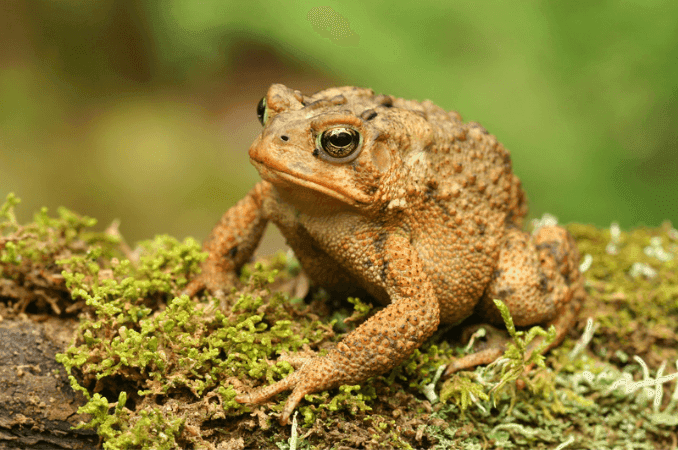
Cane toads and dogs, signs of poisoning and what to do
Cane toads can poison a dog in minutes. Learn the signs of cane toad poisoning, the wipe, rinse and ring first aid steps, and how we keep toads out of our Townsville backyard.
· Talitha Mulder
Health and Wellbeing
How to Make Walking the Dog Part of Your Daily Routine (the Atomic Habits Way)
Struggling to walk the dog every day? Here’s how I used the four rules from Atomic Habits to turn our dog walk into a habit that sticks, plus a fill-in plan you can print and put on the fridge.
· Talitha Mulder