
Is My Cat Happy? Use This Checklist to Tell if Your Cat is Content
If you share your life with a cat, you’ve likely wondered: “Is my cat really happy?” Cats are mysterious creatures, and while they bring joy into our homes, they don’t always make it obvious when they’re content — or when something is wrong. It can take a lot of searching, guesswork, and even…
If you share your life with a cat, you’ve likely wondered: “Is my cat really happy?” Cats are mysterious creatures, and while they bring joy into our homes, they don’t always make it obvious when they’re content — or when something is wrong.
It can take a lot of searching, guesswork, and even stress to figure out whether your cat’s quirky behaviour is just personality or a sign of unhappiness.
This guide breaks it down step by step, so you’ll know exactly how to read your cat’s signals, recognise red flags, and create a happy, fulfilling environment they’ll thrive in.
Feline happiness isn’t just about warm cuddles — it’s about long-term health, emotional balance, and a stronger human-animal bond. Cats that feel safe and stimulated live healthier, longer lives.
By learning the signs of happiness and stress, and by applying proven strategies to enrich their daily life, you’ll feel confident as a pet parent while giving your cat the life they deserve.
In This Article We Will Cover:
Disclosure: This article includes affiliate links. If you click on these links and make a purchase, I receive a small commission. This comes at no extra cost to you but greatly supports the maintenance of this site. Learn more here.
When you first imagined life with a cat, chances are you pictured soft purrs, quiet evenings with a lap warmer, and playful antics around the house.
But what many cat owners don’t realise is that cats are experts at hiding discomfort — whether it’s stress, boredom, or even illness.
This article gives you everything you need to confidently answer the question: “Is my cat happy?” — and if not, what to do about it.
“Time spent with cats is never wasted.”
Sigmund Freud
Want to make your cat’s happiness easier to manage? Check out our recommended [cat care resources and tools here].
Importance of Understanding Your Cat
The most important reason to understand your cat is that their happiness and health depend on it. Unlike dogs, cats don’t wear their emotions openly. They may continue eating, sleeping, and grooming even when something’s wrong, leaving you unaware until the problem is serious.
When you know how to read your cat, you can adjust your care, prevent unnecessary stress, and catch health issues early.
Five key ways to connect more deeply with your cat:
1. Treat them like family
When you view your cat as family, love and respect come naturally. Cats who are treated as companions — not just background pets — tend to show more affection and confidence.
Studies even show cat owners are less likely than dog owners to see their pets as “family,” but shifting that mindset can transform the bond.
2. Look out for subtle emotions
Cats do experience joy, love, and comfort — but they show it quietly. A slow blink, rubbing against your leg, or curling up nearby are all signs of trust.
Paying attention to these subtle cues makes your cat feel “heard” and respected.
3. Appreciate their intelligence
Cats are problem-solvers with sharp minds. Without stimulation, they become bored or stressed.
Puzzle toys, hunting-style play, and food-dispensing games give them a healthy outlet and prevent destructive behaviour.
4. Actively build a bond
Don’t let your cat just “exist” in the same house. Dedicate time each day for interaction, whether it’s a game of chase, brushing, or quiet cuddles.
Cats in households where owners actively engage with them show fewer stress-related behaviours.
5. Respect their individuality
Every cat is unique. Some are lap-seekers, while others only show affection from across the room.
Paying attention to your cat’s quirks and adapting care accordingly ensures they feel safe and understood.
Understanding your cat builds trust and allows you to create a home where they feel safe, respected, and loved.
Guidelines for Recognising Signs of Unhappiness
One of the biggest challenges in cat ownership is recognising when your cat isn’t happy. Cats are masters of disguise — in the wild, showing weakness could make them vulnerable. That’s why domestic cats often hide pain, stress, or sadness until the signs are more obvious.
Learning these verbal and physical cues helps you step in before unhappiness turns into long-term stress or health problems.
Verbal Signs of an Unhappy Cat
Attention-seeking meowing
If your cat repeatedly vocalises at you, especially at unusual times of the day, it could mean boredom, hunger, or a need for comfort. For example, my own cat races around the house yowling if dinner is even five minutes late — not unhappy long-term, but definitely demanding attention.
Stress meowing
A sudden change in tone, pitch, or frequency may signal anxiety. Moving house, bringing home a new pet, or even rearranging furniture can trigger stress calls.
Medical meowing
Excessive or unusual vocalisations, especially if combined with other symptoms like lethargy, reduced appetite, or hiding, can mean pain. In this case, always consult your vet
Physical Signs of an Unhappy Cat
Reduced appetite
Eating less, refusing food, or being unusually picky can point to stress or illness.
Changes in grooming habits
Over-grooming can indicate anxiety, while neglecting grooming altogether may signal depression or health problems.
Sleeping more than usual
Cats naturally sleep a lot (12–16 hours daily), but sudden increases can suggest boredom, sadness, or illness.
Acting withdrawn or “not themselves”
If your normally social cat suddenly hides more often or avoids contact, something is wrong.
These behaviours don’t always mean your cat is depressed, but they are signals worth monitoring closely. Early attention can prevent bigger issues down the road.
Subtle changes in vocalisation, appetite, grooming, or behaviour are your cat’s way of saying something’s off. Pay attention — your cat depends on you to notice.
How to Create a Happy Cat Environment
The best way to keep your cat happy is to design a home environment that meets their physical, emotional, and mental needs. Cats are territorial and intelligent animals — without proper stimulation, they become stressed, anxious, or destructive.
Think of your home not just as your living space, but as your cat’s entire world.
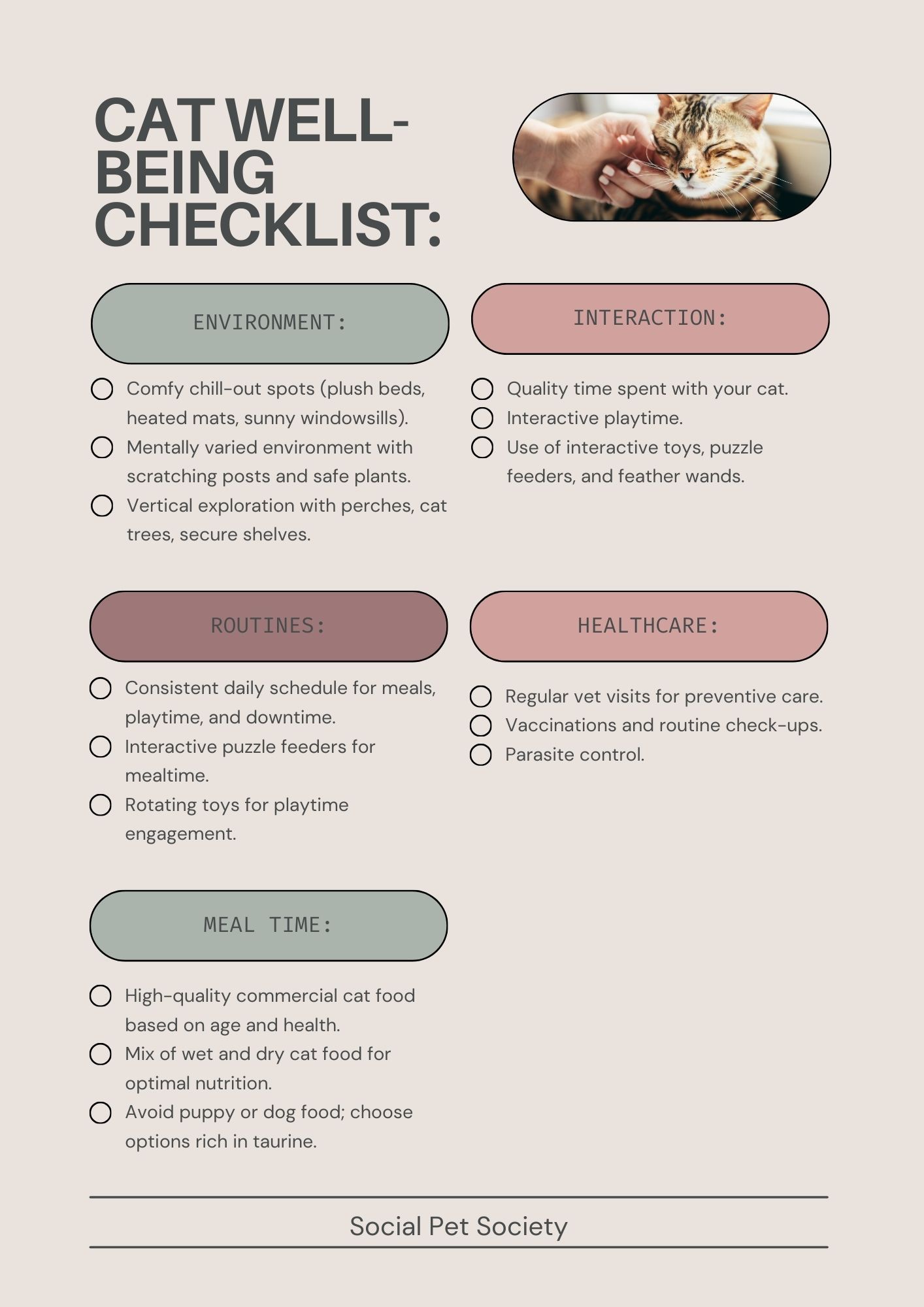
Checklist for a Cat-Friendly Home
Cosy Resting Areas
Cats love warmth and comfort. Provide soft beds, blankets, and access to sunny windowsills where they can nap peacefully.
Interactive Toys
Keep boredom away with wand toys, laser pointers, and puzzle feeders. Rotate toys weekly to keep them exciting.
Scratching Posts
Scratching is natural and necessary for cats. Place sturdy posts in high-traffic areas — not just in corners. This saves your furniture and supports claw health.
Cat-Friendly Plants
Safe greenery like catnip, cat grass, or silver vine encourages healthy play and chewing behaviours. Avoid toxic plants like lilies.
Vertical Space
Cat trees, wall shelves, or window hammocks let cats climb, perch, and survey their environment — a key source of confidence.
Safe Zones
Cats need quiet hideaways where they can retreat when stressed. Cardboard boxes, covered beds, or closets make perfect safe spaces.
Cats thrive when their instincts are respected. Providing vertical space, safe scratching options, and enrichment prevents unwanted behaviours like furniture destruction, nighttime zoomies, or constant meowing.
An enriched, cat-friendly environment transforms your home into a place where your cat feels safe, entertained, and in control.
Enforcing Healthy Routines for Your Cat
Cats are creatures of habit. A predictable routine makes them feel safe, lowers stress, and prevents behavioural problems. When routines are disrupted, cats can become anxious, withdrawn, or even develop health issues like digestive upset.
Building daily structure around meals, play, and quiet bonding is one of the simplest yet most effective ways to ensure long-term happiness.
Key Routines Every Cat Needs
1. Daily Interaction
Cats might seem independent, but they crave attention. Setting aside at least 15–20 minutes a day for interactive play (with wands, feathers, or chase toys) strengthens your bond. Grooming and cuddle sessions also count.
Why it matters: Cats who receive daily attention are less likely to develop stress behaviours such as overgrooming or destructive scratching.
2. Consistent Mealtimes
Cats feel secure when meals come at predictable times. Choose a schedule (morning/evening or three smaller feedings) and stick to it.
Why it matters: Reduces anxiety around food, helps prevent obesity, and aligns with their natural hunting rhythm.
3. Structured Playtime
Incorporate short bursts of play before meals to mimic a natural “hunt-eat-groom-sleep” cycle.
Why it matters: Satisfies instincts, prevents boredom, and supports physical health.
4. Puzzle Feeders
Instead of just placing food in a bowl, use puzzle feeders or treat-dispensing toys.
Why it matters: Encourages problem-solving and makes mealtime engaging, which boosts mental stimulation.
5. Quiet Time & Sleep Respect
Cats need space to nap undisturbed. Respect their rest times rather than forcing interaction.
Why it matters: Prevents overstimulation and builds trust.
Routines create predictability. Predictability creates security. A secure cat is a happy cat.
What to Do if Your Cat Shows Stress or Illness
Even in the happiest homes, cats can develop stress or health problems. The key is to act quickly — cats instinctively hide illness, so by the time obvious symptoms appear, the condition may already be advanced.
Knowing what to look for and how to respond could make a life-saving difference.
Steps to Follow if You Notice Changes
1. Observe Carefully
Any sudden change in eating, grooming, or energy levels is worth noting. Cats don’t usually “act out” without reason.
Small changes often signal the beginning of bigger health issues.
2. Keep a Behaviour Log
Write down what you notice: when your cat eats, how often they use the litter box, their vocalisations, and interactions.
Vets rely on detailed observations to make accurate diagnoses.
3. Book Regular Vet Visits
Schedule check-ups every 6–12 months, even if your cat seems healthy. Young adults may only need annual visits, while seniors often need twice a year.
Preventive care catches hidden issues like dental disease, arthritis, or parasites early.
4. Prioritise Nutrition
Feed high-quality, species-appropriate cat food. Always check for essential nutrients like taurine, which cats cannot produce themselves. Mix wet and dry food to support hydration.
A balanced diet boosts immunity, energy levels, and overall well-being.
5. Seek Professional Help When Unsure
If your cat shows persistent changes in mood, appetite, or litter box habits, consult your vet immediately.
Cats won’t “snap out of it” on their own — timely care prevents suffering.
Don’t ignore changes in your cat’s behaviour. Proactive care, regular vet visits, and good nutrition are your best tools for keeping your cat healthy and happy.
Why It’s Important to Educate Yourself as a Cat Owner
Owning a cat isn’t just about providing food and shelter. Cats are complex animals with emotional, physical, and psychological needs. Staying informed about feline behaviour, nutrition, and health ensures you can provide the best possible care.
Education helps you:
Recognise early signs of stress or illness
Catching subtle issues early prevents bigger health problems.
Understand breed-specific traits
Some cats are more vocal, active, or sensitive than others. Tailoring your care prevents misunderstandings.
Implement enrichment effectively
Knowledge of safe toys, interactive games, and vertical spaces helps your cat thrive mentally and physically.
Stay up-to-date on veterinary recommendations
From vaccinations to dental care, informed owners make better decisions for long-term health.
Knowledge is power. The more you understand cats, the better you can enrich their lives, prevent problems, and deepen your bond.
Conclusion
Cats bring joy, companionship, and quiet comfort into our homes, but their subtle nature can make it challenging to know when they’re truly happy. By understanding their cues, providing enrichment, establishing routines, and proactively managing health, you can ensure your cat enjoys a fulfilling, stress-free life.
Every cat is unique, and there’s no one-size-fits-all formula — but by observing, learning, and responding thoughtfully, you’ll give your cat the life they deserve.
What steps will you try first? Have you noticed subtle signs of happiness or stress in your cat? Share your experiences in the comments — your story could help other cat owners!
Sources:
[1] https://www.sciencedirect.com/science/article/abs/pii/S0376635716303254
[2] [PDF] How plants make cats happy S Bol, J Fuentes, R Garza, EM Bunnik – frontiersin.org
[3] Making the Indoor Cat “Happy” Terry Marie Curtis, DVM, MS, DACVB University of Florida Gainesville, FL
[4] https://www.rspcapetinsurance.org.au/pet-care/cat-care/cat-vet-visit-guide#:~:text=Young%20adult%20cats%20should%20visit,parasite%20control%2C%20diet%20and%20behaviour.
[5] https://vcahospitals.com/know-your-pet/taurine-in-cats#:~:text=Most%20mammals%20can%20manufacture%20enough,diet%20contains%20animal%2Dbased%20proteins.
[6] https://www.eastgateanimalhospital.com/site/blog/2023/11/15/cat-sad-depression
Related articles

Pet-Friendly Business Growth
Ultimate Guide to Starting a Pet Sitting Business in Australia: Steps and Tips
Starting a pet sitting business in Australia isn’t hard. Starting one that actually makes consistent money is. Most people begin with a simple idea: “I love animals, I’ll get paid to look after them.” But love alone doesn’t create demand – value does. From running my own service-based business,…
· Talitha Mulder

Pet-Friendly Hotels Ayr QLD – 2025 Verified Guide
Looking for pet-friendly hotels in Ayr QLD? Check our 2025 guide with verified pet policies, hotel contacts, and tips for staying with your dog.
· Talitha Mulder

How Brisbane Dog Owners Socialise Their Pets – Survey Insights
A community survey reveals how Brisbane dog owners socialise their pets, from off-leash parks and outdoor adventures to dog-friendly cafes and beaches. Whether you’re new to the city or a local, get insights into Brisbane’s dog-friendly lifestyle and best practices for keeping your furry friends…
· Talitha Mulder