
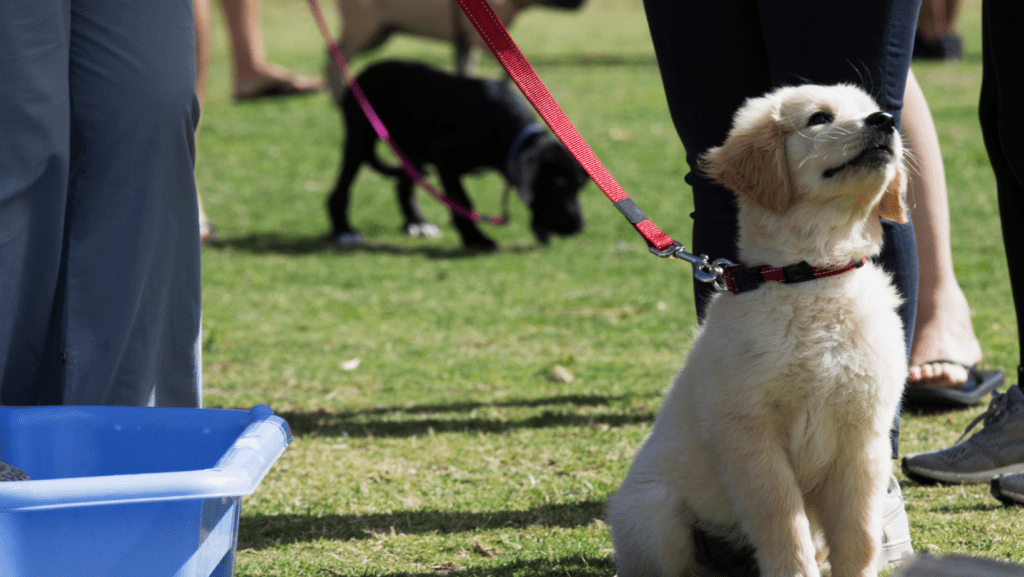
When I brought my new Border Collie puppy, I started home training early. I was keen to teach her to sit and wait and come, and she was keen to learn. She’s 14 weeks old now, but I still regularly think – should I take my puppy to a puppy training program? And would it make a noticeable difference in how she behaves? So, I went on the hunt for some answers.
In terms of teaching commands, attending puppy preschool is not crucial, as puppies trained at home have similar outcomes to puppies attending classes. However, certain breeds do have different behaviours when learning to follow commands, and for breeds that are considered harder to train (such as Dachshunds), having a professional trainer in puppy preschool could increase effectiveness of training compared to at home.
Table of Contents

Disclosure: This article includes affiliate links. If you click on these links and make a purchase, I receive a small commission. This comes at no extra cost to you but greatly supports the maintenance of this site. Learn more here.
Does Early Learning Matter?
When I researched early learning in puppies, most of the scientific discussion was around the benefits of early training to prevent problem behaviours – like anxiety and aggression. Apparently, dogs who have problem behaviours as adults, received less training as a puppy.
However, the most important factor to puppy training is the quality of the interaction between you and your dog, rather than the training itself. That means that strict obedience training alone won’t prevent poor behaviours in your dog [4].
So, if your puppy gets training at 6 months or younger, plus you work on building a great human-pet bond, they have a lower chance of developing the following behaviours:
- 29% lower odds of aggressive behaviour
- 36% lower odds of compulsive behaviour
- 40% lower odds of destructive behaviour
- 32% lower odds of excessive barking [5].
The Effects of Early Socialisation
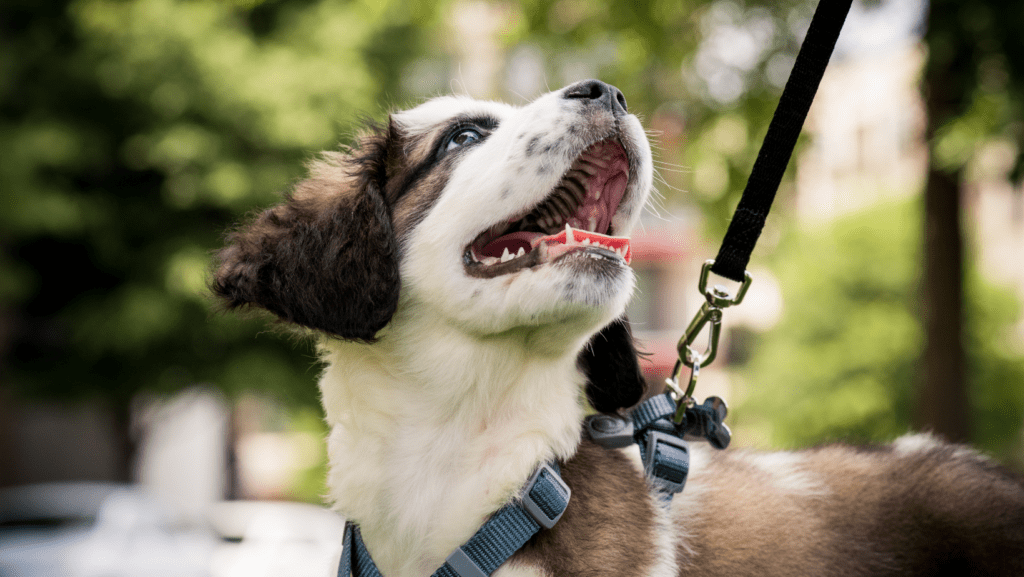
Now, if you’re like me, you may be thinking, “I know I can train my puppy at home, but what about getting socialised?” Well, you’d be right in thinking that when you have a puppy, it’s really important to expose them to different people, pets (as long as the other pets are friendly, vaccinated and healthy), and situations, to make them well-adjusted and comfortable with the world around them.
Social interactions are important in your puppy’s development, because the controlled exposure to different experiences helps your puppy build social skills and prevents them from developing fearful behaviour. Studies show that puppies are best socialised between 3-14 weeks of age, which is known as the “sensitive period for socialisation.”
Initially, your puppy would have learnt their social skills from their mother and littermates; after that, it’s your job to ensure your puppy is continuously exposed to new experiences so they can grow up to be a well-adjusted and happy adult dog [3].
According to the research I found, puppies who receive early socialisation at home do not have big differences in how they behave in social situations as adults compared to those who attend puppy pre school. So, while Puppy Preschool programs are valuable for support with command training and possibly assessing potential behaviour issues early, the specific social interaction with other puppies may not have a huge impact.
Basically, it is okay to wait until your puppy is well trained by you and introduced to different people and animals at home, before introducing them to social situations outside of the home [2].
Are Different Breeds Harder to Train?
I am sure my Border Collie pup is easier to train than my Pug cross puppy ever was. But, recent studies say that there isn’t a big difference in the learning abilities of different breeds of dogs.
One study I read showed that breeds perceived as highly trainable don’t outperform the ‘less trainable’ breeds competing at the same tasks. It is just that breeds perceived as less trainable are rarely trained in these areas. And, in my case this may be true – I was never in any rush to train my Pug puppy, I was happy just to love him and have him fit into the family.
The time it takes for a dog to master tasks also doesn’t change between breeds that are considered highly trainable and those that aren’t. So, in the world of dog training, it seems like every dog has the potential to be a top student. The key is to understand and appreciate the individual strengths and characteristics of each dog [1], such as, what treats they like, what commands they are most receptive to.
What this means for deciding if your puppy should attend Puppy Preschool or not, is just that you shouldn’t delay your puppy’s training or socialisation until you have the help of a trainer, thinking that your puppy will be too difficult to teach. Early and consistent training, tailored to your individual dog, is the key to having a well-behaved and happy puppy, regardless of breed.
Want the perfect tool for your home training? This Book is Perfect! Game On, Puppy! The fun, transformative approach to training your puppy. Elevate your puppy’s learning experience and ensure a well-adjusted adult dog.
Common Puppy Training Challenges
Dealing with challenging puppy behaviours can be overwhelming and may even lead to dogs being abandoned or rehomed. It’s really important that you understand the common challenges in puppy training, so you can anticipate the behaviours.
Although your dogs genetic make-up accounts for some of their behaviours, environmental factors will impact your dog’s behaviour greatly, which means that your approach to handling and training makes a big impact on their outcomes.
If you ever feel like you’re struggling with training, you’re not alone—approximately 76% of dog owners admit that their dogs exhibit at least one undesirable behaviour.
Common undesirable behaviours in puppies include:
Jumping up at owners (78%)
Pawing or demanding attention (other than jumping up) (75%)
Excitability with visitors (74%)
Pulling on the lead (69%)
Following the owner around the house (65%)
Fearful response to noise (55%)
Barking or whining while the owner is in the house (49%)
Excitability when out of the house (48%)
Aggression to other dogs when out on a walk (47%)
Not coming back when called on a walk (39%)
While these behaviours are common, it’s important to understand that they will probably require behaviour training or guidance from a dog handler. Puppy preschool, with its focus on socialisation and basic commands, will probably not be the solution for addressing these issues.
Seeking help from a professional dog trainer or behaviourist who specialises in behaviour modification is often more effective in addressing specific behavioural challenges.
Role of Professional Trainers
If you ever feel like you could use some help or guidance in raising your puppy, sending them to Puppy Preschool acts as a short and insightful crash course for both of you. It can help you grasp how dogs behave, teaches you the basics of training, and gets you comfortable with looking after your puppy.
Research even tells us that getting advice from experts during this period not only educates you but also strengthens the bond between you and your pup. Puppies whose owners receive guidance generally end up having fewer behaviour issues.
Interestingly, though, it’s found that getting advice super early, like before your pup is 4 months old, doesn’t create a massive impact on their long-term behaviour. However, attending Puppy Preschool doesn’t harm you or your puppy; in fact, it provides valuable tips on things like improving control, aiding your pup in socialising, and becoming a leader without using force. These tips not only contribute to better behaviour from your pup but also enhance the bond you share [6].
What To Look for in Puppy Pre School
If you would like to participate in a puppy class, it is most important to find a class that offers a safe environment for your puppy to interact with both people and other dogs. You want to look for a class that focuses on learning important social skills, such as how to politely greet others and also how to ignore things [3].
It is also crucial to choose a class with a strong safety protocol. This means that all puppies should be up to date on vaccinations, free of intestinal parasites, and have been in their new homes for at least ten days, appearing healthy during that time. The classes should also take place indoors in a space that can be easily cleaned and disinfected, ensuring a healthy and secure learning environment for your puppy. [3]
Post-Puppy Preschool
When you’ve had a puppy for a while, the good experiences usually stay the same, but the not-so-great ones can increase. It’s common to think that your dog’s troublesome behaviours will get better as they grow up. Also, we often treat our dogs like little people, which can lead to having unrealistic expectations and misunderstandings about why they do certain things.
While these ways of thinking might help us put up with challenging behaviour, they can also stop us from seeking help when we need it. In simpler terms, assuming things will get better on their own and seeing our dogs too much like humans might keep us from getting the support both we and our dogs could benefit from.
Below are the challenges we may have with different aged puppies:
Early Puppyhood (12-16 weeks)
- You may find joy in your puppies’ quick learning, housetraining, and adapting to family life.
- You may have problems with biting, mouthing, and night-time settling.
- You may forgive challenging behaviours in your pup when they are younger, however, as they mature, you may become less tolerant of the same behaviours, seeing them as deliberate or part of their personality.
- You may expect undesirable behaviours to naturally improve with age.
Adolescence (6-9 months)
- You may struggle with puppy behaviours like biting and mouthing, and new challenges, such as increased barking, mischief, and disobedience.
- You may observe shifts in your dogs’ confidence levels.
- Aggressive behaviours and reactivity may become more pronounced after 6 months, possibly linked to social maturity [8].
Conclusion
Essentially, if you’re willing and able to provide proper socialisation with dogs, cats, kids, and other controlled experiences in your home, along with consistent training, it can be as effective as attending a formal class. However, if you seek additional support or lack the resources to ensure proper socialisation at home, attending a class that prioritises socialisation would be beneficial for your dog’s development.

Talitha Mulder
- Helton, W. S. (2010). Does perceived trainability of dog (Canis lupus familiaris) breeds reflect differences in learning or differences in physical ability? Behavioural Processes, 83(3), 315-323. https://doi.org/10.1016/j.beproc.2010.01.016
- Seksel, K., Mazurski, E. J., & Taylor, A. (1999). Puppy socialisation programs: Short and long term behavioural effects. Applied Animal Behaviour Science, 62(4), 335-349. https://doi.org/10.1016/S0168-1591(98)00232-9
- Lindell, E., Feyrecilde, M., Horwitz, D., & Landsberg, G. Puppy Behavior and Training – Socialization and Fear Prevention. VCA Hospitals. [URL: https://vcahospitals.com/know-your-pet/puppy-behavior-and-training—socialization-and-fear-prevention#]
- Takeuchi, Y., Ogata, N., Houpt, K. A., & Scarlett, J. M. (2001). Differences in background and outcome of three behavior problems of dogs. Applied Animal Behaviour Science, 70(4), 297-308. https://doi.org/10.1016/S0168-1591(00)00156-8
- Dinwoodie, I. R., Zottola, V., & Dodman, N. H. (2021). An Investigation into the Impact of Pre-Adolescent Training on Canine Behavior. Animals (Basel), 11(5), 1298. https://doi.org/10.3390/ani11051298
- Gazzano, A., Mariti, C., Alvares, S., Cozzi, A., Tognetti, R., & Sighieri, C. (2008). The prevention of undesirable behaviors in dogs: effectiveness of veterinary behaviorists’ advice given to puppy owners. Journal of Veterinary Behavior, 3(3), 125-133. https://doi.org/10.1016/j.jveb.2008.04.004
- Blackwell, E. J., Twells, C., Seawright, A., & Casey, R. A. (2008). The relationship between training methods and the occurrence of behavior problems, as reported by owners, in a population of domestic dogs. Journal of Veterinary Behavior, 3(5), 207-217. https://doi.org/10.1016/j.jveb.2007.10.008
- Owczarczak-Garstecka, S. C., Da Costa, R. E. P., Harvey, N. D., Giragosian, K., Kinsman, R. H., Casey, R. A., Tasker, S., & Murray, J. K. (2022). “It’s Like Living with a Sassy Teenager!”: A Mixed-Methods Analysis of Dog Owners’ Perceptions and Experiences of Dog Behaviour between the Ages of 12 Weeks and 2 Years. 32 Pages Posted: 21 Jun 2022. Dogs Trust – Canine Behaviour & Research Department; Linnaeus Veterinary Limited.

