


As I sit in the evening, binging my favourite show, my dogs sleep soundly on either side of me.
If I get up to use the toilet, they’ll follow and collapse by the door for a quick nap before we head back to the couch. We share a sense of comfort and predictability with each other.
But sometimes, I see other people with their dogs who seem to share an even deeper closeness, and I start drawing comparisons. Although we have a good relationship, I still find myself thinking about how to strengthen my bond with my dogs.
That’s why I’ve scoured research papers to uncover the three key elements needed to improve my connection with them.
Did you know that dogs and humans can share deep emotional bonds – similar to parent-infant attachments?
Frequent physical touch by petting, regular exercise and a consistent routine increases oxytocin levels (the feel good hormone) and reduces stress in your dog, which results in an improved relationship between the you and them.
What I'll cover
Disclosure: This article includes affiliate links. If you click on these links and make a purchase, I receive a small commission. This comes at no extra cost to you but greatly supports the maintenance of this site. Learn more here.
The Human - Dog Relationship
Historical relationships between dogs and humans go back at least 18,000 years!
That’s probably because dogs are so good at interpreting and responding to human signals – in fact they are even better at it than chimpanzees.
This understanding of humans helps our dogs form an ‘attachment bond‘ (a close emotional relationship) with us – similar to the bond between infants and their parents.
Your dog wants to be near you in times of stress, and they see you as their safe haven [1].
Why is a Bond Important?
The way you interact and get along with your dog, affects how they behave and learn. And that’s because your dog see’s you as more than just a meal provider; they feel emotionally connected to you.
If you have regular and positive interactions with your dog, it will reduce their stress levels. That’s why positive reinforcement training is so important in your dogs early years, as well as they age (you can read more on positive reinforcement training here).
Plus, having a positive relationship with your dog is not just great for them but also good for your own emotional and mental well-being [1].
How to Know Your Dog is Bonding With You
Your dog has an amazing ability to establish eye contact, alter their behaviour based on human attitudes, and work well with humans.
Dogs know that their owner is providing them with important information about their environment [1], and so they pay attention.
There are many interesting qualities a dog has to communicate and bond with their owner, but here are the main behaviours that owners think builds a strong bond with their pet:
- Attunement: This is when your dog picks up on your emotions and needs, like knowing if you’re happy, sad, or just need some comfort.
- Communication: When your dog doesn’t just understand commands but also express themselves through barks, whines, or body language.
- Consistency and Predictability: Dogs like routine and knowing what’s coming. Having a regular schedule and predictable interactions helps dogs feel safe and makes the bond stronger.
- Physical Affection: Lots of owners say cuddling, petting, and hugs are crucial. Dogs really love the physical connection they have with their owners.
- Positivity and Enthusiasm: Dogs and owners get along best when there’s a happy and excited vibe. This includes having fun together, playing around, and just keeping things cheerful.
- Proximity: Dogs are social creatures, and being close to their owners matters. Whether it’s sitting beside you on the couch or following you around, being physically close strengthens the bond.
- Shared Activities: Doing stuff together is a big deal for dogs and their owners. Whether it’s going for walks, playing games, or just hanging out, doing things together makes the connection stronger.
So, according to dog owners, the awesome bond with their pets is all about getting each other, talking well, being consistent, showing love, keeping positive, staying close, and having a blast together [2].
How Long does it Take to Form a Bond?
When dogs haven’t spent long with their owners (less than a year) they are super playful, but they aren’t so good at telling who they are really attached to.
This means that if they got separated from you, they’d likely pay more attention to someone comforting or fun nearby instead of you, their owner.
But, after being with you for over a year, your dog would be really keen on reconnecting with you, even if there is a super friendly and fun stranger around.
And what’s great, is that this special bond grows and becomes stronger as your dog grows up or spends more time with you [3].
3 Steps to Improve the Bond With your Dog
Step 1. The Importance of Physical Touch
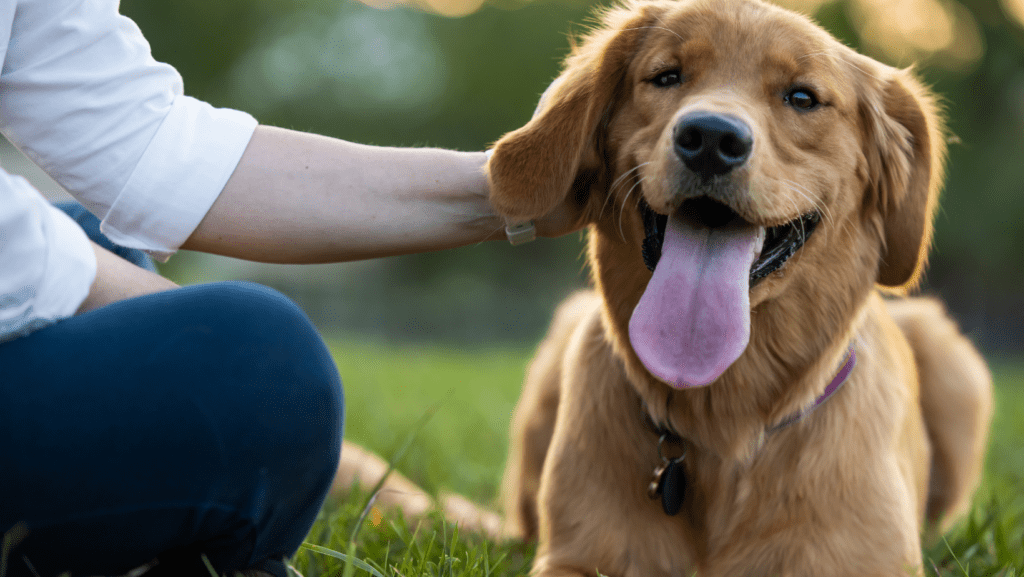
When you spend time petting your dog, it actually helps strengthen your bond.
People who feel they have a strong connection with their dogs tend to have higher levels of a hormone called oxytocin, which is linked to positive feelings and how well we get along with others.
Interestingly, when you pet your dog, their oxytocin levels also go up. This shows that these positive interactions and physical touch play a big role in making your connection with your furry friend even better.
So, keep up with the petting—it’s a great way for both you and your dog to feel more connected [4].
Another way to increase your physical touch is through grooming. And I found a great grooming brush on Amazon:
Effortlessly groom your pet with the Flying Pawfect Slicker Brush, a professional tool with soft stainless-steel pins for tackling lose hair, mats, and tangles. – Plus, enjoy peace of mind with its lifetime warranty! Elevate your pet’s grooming routine—explore it on Amazon now!
Step 2. Incorporating Regular Exercise
A stronger connection between you and your dog will happen when the environment at home is stress free.
And regular physical activity plays a role in creating a steady routine, which reduces stress in your dog.
When you engage in positive activities together, like exercise, it also helps to boost their oxytocin levels, which supports a healthier relationship.
Exercise should be your focus to develop a strong and stress-reducing bond between you and your pup [4].
Step 3. Reducing Stress in the Environment
There are many elements that can cause stress in your dogs environment, which will hinder your ability to build a strong connection with them.
For instance, if your dog spends time outdoors while you’re at work, being close to a busy road or a path with lots of people can stress them out.
To reduce stress, you should prioritise positive interactions like petting and playing, known to increase oxytocin levels for both you and your dog.
Incorporate these activities into your daily routine, perhaps by dedicating some time in the morning for a cuddle session.
Being relaxed around your pet and spending time without distractions, such as other pets, children, or music, also helps create a calm environment.
If you have kids, ensure their interactions with the dog are positive and respectful by teaching them about the dog’s needs and boundaries.
By maintaining a consistent routine that addresses your dog’s needs and minimises external stressors, you’re fostering a healthier relationship with your furry friend.
Conclusion
Positive interactions like petting and regular exercise to boost oxytocin levels and prevent stress is so important for strengthening your connection with your dog.
By understanding that the bond you share is similar to the attachment between parents and infants, you can make the changes to build a strong and meaningful connection with your pup.
Do you think there are other ways to improve the bond between you and your dog? Let me know in the comments!
Owners who report a stronger bond with their dogs have higher oxytocin levels.
Social Pet Society X
Sources:
- Payne, E., Bennett, P. C., & McGreevy, P. D. (2015). Current perspectives on attachment and bonding in the dog–human dyad. Anthrozoös, 28(1), 71–79. https://doi.org/10.2752/175303714X13903827458899
- Riddoch, K. A., Hawkins, R. D., & Cross, E. S. (2022). Exploring behaviours perceived as important for human–Dog bonding and their translation to a robotic platform. PLOS ONE, 17(9), e0274353. https://doi.org/10.1371/journal.pone.0274353
- Valsecchi, P., Prato Previde, E., Accorsi, P. A., & Fallani, G. (2010). Development of the attachment bond in guide dogs. Applied Animal Behaviour Science, 123(1–2), 43–50. https://doi.org/10.1016/j.applanim.2009.12.012
- Handlin, L., Nilsson, A., Ejdebäck, M., Hydbring-Sandberg, E., & Uvnäs-Moberg, K. (2015). Associations between the Psychological Characteristics of the Human–Dog Relationship and Oxytocin and Cortisol Levels. Journal of Comparative Psychology, 129(3), 215-228. https://doi.org/10.2752/175303712X13316289505468

