

Waiting for dental recommendations from the vet often come too late to prevent dental issues in our dogs – in fact, only 18% of owners get dental advice on their dogs at initial puppy vaccination appointments [1]. I didn’t receive advice on my 15 week old Border Collie Puppy, Bindi, so I am interested in what to expect during her teething phase. I’ll dive into some facts below.
Puppies start losing their teeth at 4-5 months, ready for adult teeth to erupt at 6-8 months. It is hard to spot fallen teeth as they are usually swallowed, but normal signs include bleeding gums, drooling, and increased chewing. Worrying signs to watch for are increased pain or eating changes.
Later in this article I recommend these treats – because they are a favourite for puppies and grown dogs alike – especially for training treats. You can check out the Chicken – wrapped rawhide dog chew here, on Amazon.
Table of Contents
Disclosure: This article includes affiliate links. If you click on these links and make a purchase, I receive a small commission. This comes at no extra cost to you but greatly supports the maintenance of this site. Learn more here.
Puppy Teething Timeline
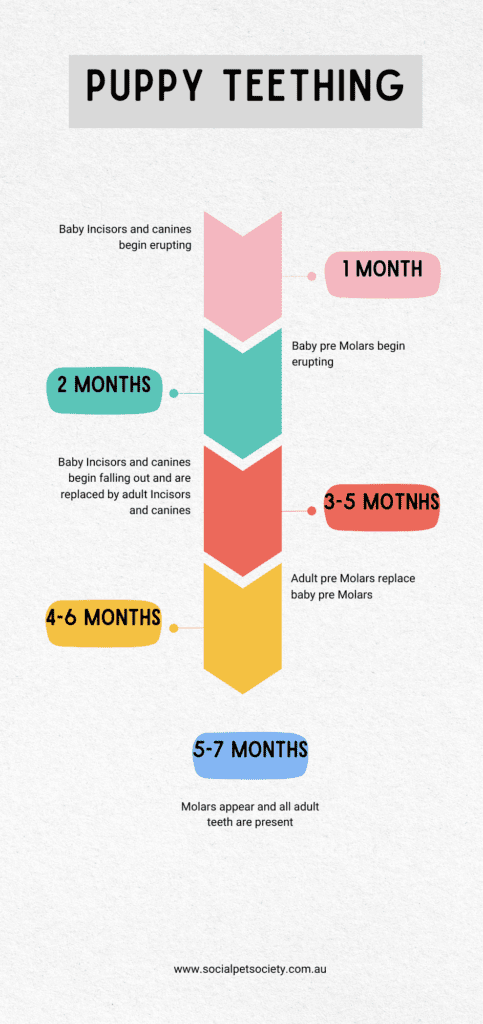
Puppies start teething very early, possibly even before you bring them home. Their baby teeth, often called “milk teeth,” begin to show up a few weeks after they’re born, sometimes as early as two weeks. These teeth, all 28 of them, should be in by 1 month or so [8]. Which is where the timeline below kicks off:
Anatomy of Puppy Teeth
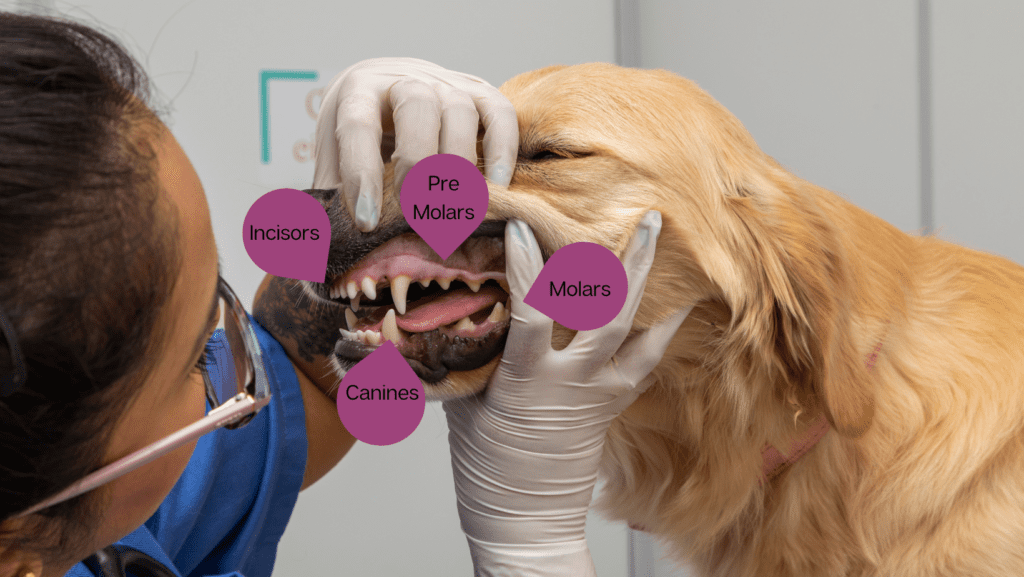
The time it takes for a puppy to start loosing their baby teeth, and the speed that they loose them, is pretty consistent between the left and right sides of a puppy’s mouth and between male and female puppies. But, your puppy’s breed size and skull shape do affect the timing of when their adult teeth will emerge. Smaller and toy breeds, plus dogs with short, broad heads (like Pugs, English bulldogs, French bulldogs, Shi Tzus), tend to get adult teeth later than bigger dogs.
When you look at the sequence of what teeth your puppy will loose, and when, it is very similar across all breeds. Usually, the upper premolars or incisors, and the lower incisors are the first adult teeth to emerge. And most adult teeth come in within 3 days after their matching baby tooth fell out (except for the canines, which have a longer wait time [4].
Symptoms of Teething
The following symptoms are what your puppy will experience while teething:
- Bleeding, red, swollen gums: The gums around their new teeth might look a bit red and swollen, and there could be some minor bleeding.
- Frequent drooling: Your puppy might drool more than usual during teething.
- Increased chewing behaviour: Teething puppies often chew on things more to help soothe their gums.
- Missing teeth: As their baby teeth fall out, you might notice some gaps in their smile.
- Decreased appetite: Teething can make some puppies less interested in eating.
- Whining: Your puppy might whine a bit more than usual during this teething phase.
These are usually normal signs of teething, but if you notice your puppy has stopped eating, is losing weight, has excessively bleeding gums, or seems to be in pain, it’s a good idea to contact your local vet to schedule an appointment. They can help make sure everything is okay and provide guidance on how to make your puppy more comfortable during this teething process [7].
Collecting Puppy Teeth
As your pup grows, their 42 adult teeth will start coming in, so if you find tiny teeth around or notice your puppy chewing a lot, it’s just part of them growing up. When your puppy is loosing teeth, they will probably swallow most of them, and that’s completely normal and harmless. But, you might also see a few tiny teeth on the floor – so good luck if you are wanting to collect them!
Chewing and Teething
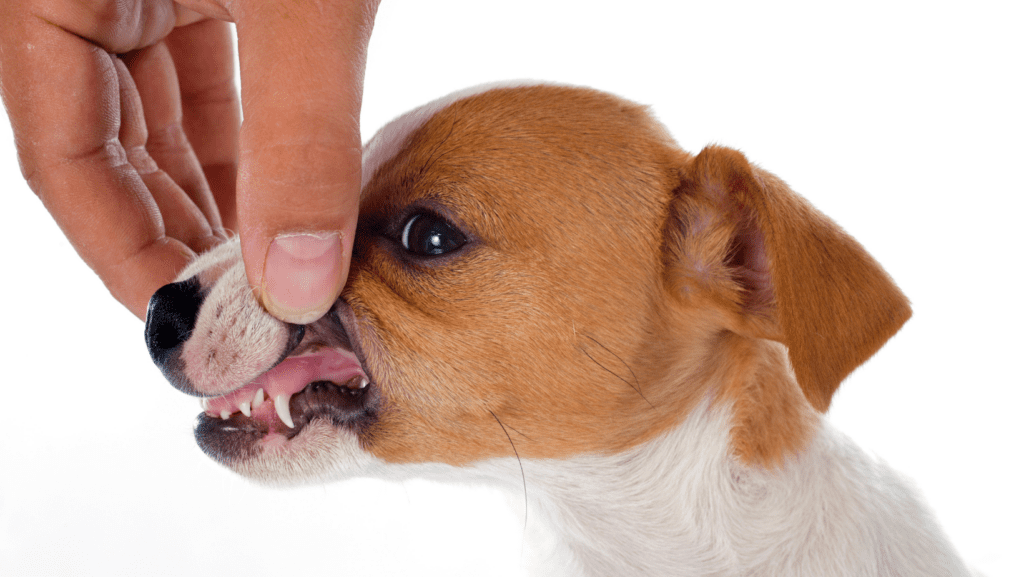
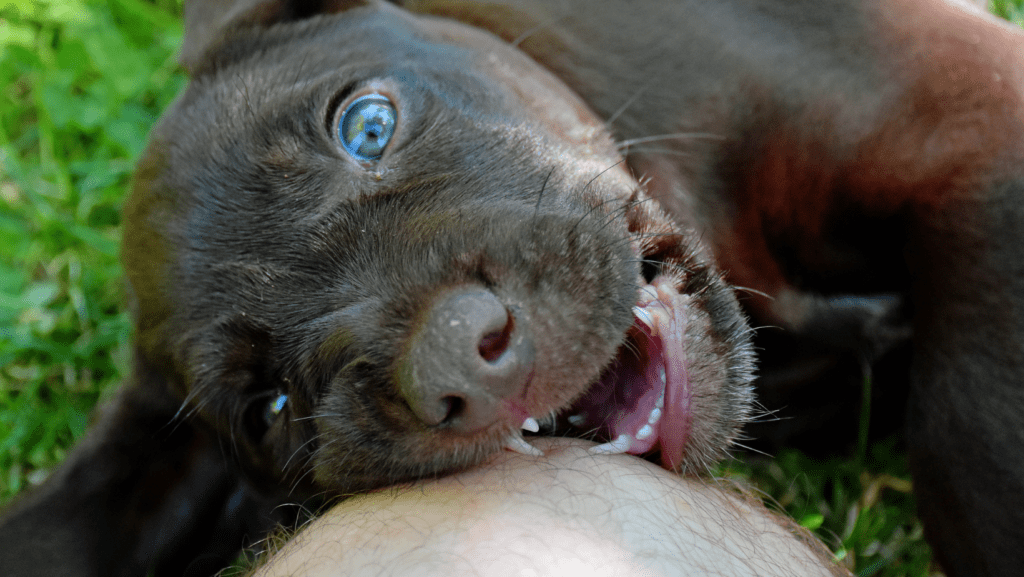
Teething puppies, experiencing discomfort from their adult teeth erupting, often chew various objects to soothe the pain. Similar to giving teething toys to babies, providing hard objects to chew may help. When your puppy is teething you may notice they hold a stick between their front paws to stabilise it, this serves to help their tooth pain. Dogs chew sticks or similar items for the sensation rather than trying to break them – which you’ll notice because they often spit out the wood fragments until not much remains [2].
Younger dogs, especially puppies and adolescents, tend to chew a lot more. Puppies usually start chewing around weeks 2 to 3 of their lives. Border collie puppies, for instance, tend to chew the most on objects before turning 2 months old. Initially, they start by sucking on things and then shift to chewing. Unfortunately, if your dog chews on things around the house, it can lead to damage (known as destructive chewing) and can strain the relationship between them and you.
It’s important to know there is a strong connection between being left alone and chewing on objects. Puppies who are teething tend to only chew on items for a few minutes at a time. But they will chew more out of stress. It’s also interesting to know that chewing doesn’t prevent boredom in puppies – that’s why you’re unlikely to see your puppy’s destructive behaviour in the act [3].
What Chew Toys?
When looking at what toy to buy your teething puppy, the following is worth keeping in mind:
- Dogs usually like softer and easily movable toys rather than tougher ones.
- Dogs tend to prefer toys lying around on the floor rather than hanging ones.
- Dogs seem to like plush toys and cotton ropes the most.
However, interestingly, out of all materials, dogs showed a strong liking for edible stuff like dried innards, meat, and bones. This type of material can be seen as a source of food, making it more biologically meaningful when it comes to chewing for dogs [3].
Want to train your dog easily or just give a treat to praise them? Give them a taste of joy with Pet ‘n Shape Chik ‘n Skewers—a chicken-wrapped rawhide dog chew that’s all-natural and grain-free. These delicious treats, designed for puppies, adults, and seniors of all breeds, bring more than just flavour. Crafted from natural chicken breast filets and cowhide, they offer a satisfyingly crunchy and chewy snack. Free from artificial additives and conveniently packed for freshness, these Chik ‘n Skewers ensure guilt-free indulgence. Find it on Amazon now.
Potential Complications
The structure of a dog’s teeth is determined during the early stages of development. As your puppy gets older, they tend to experience more dental issues like gum disease. And although tooth abnormalities in puppy’s aren’t very common, even young dogs can have dental problems. Even though they are rare, it is important to be aware of what is normal, so you are able to identify and treat problems early on, to prevent more severe issues down the road.
One of the most commonly encountered puppy tooth abnormality is called focal enamel hypoplasia, and is suggested to be caused by trauma to a developing tooth, possibly from bite wounds [5]. If you would like to know more on that, you can read a study on Enamel Hypoplasia here.
Conclusion
So, in a nutshell, when your adorable puppy starts teething, it’s a natural phase marked by increased chewing. Their baby teeth fall out, making room for adult teeth to come in. While some discomfort is normal, keep an eye out for signs like bleeding gums, drooling, and increased chewing. Most puppies handle it fine, but if you notice extreme discomfort or other unusual signs, it’s best to check with your vet. Remember, as your pup grows, they’ll eventually have a full set of 42 adult teeth by around six to eight months. So, embrace the chewing phase, keep an eye on their dental health, and enjoy watching your furry friend grow!

Talitha Mulder
- https://pub.epsilon.slu.se/23249/1/brunius_enlund_k_210412.pdf
- https://www.frontiersin.org/journals/psychology/articles/10.3389/fpsyg.2020.577100/full
- https://www.sciencedirect.com/science/article/pii/S0168159121001593
- https://onlinelibrary.wiley.com/doi/abs/10.1111/ahe.12904
- https://www.vetsmall.theclinics.com/article/S0195-5616(05)00023-9/abstract
- https://www.frontiersin.org/articles/10.3389/fvets.2016.00009/full
- https://www.woofpurnayvet.com.au/ultimate-guide-to-puppy-teething
- https://www.nylabone.com/dog101/puppy-teething-stages-symptoms-solutions#:~:text=Dogs%20swallow%20most%20of%20their,the%20telltale%20signs%20of%20teething.

