

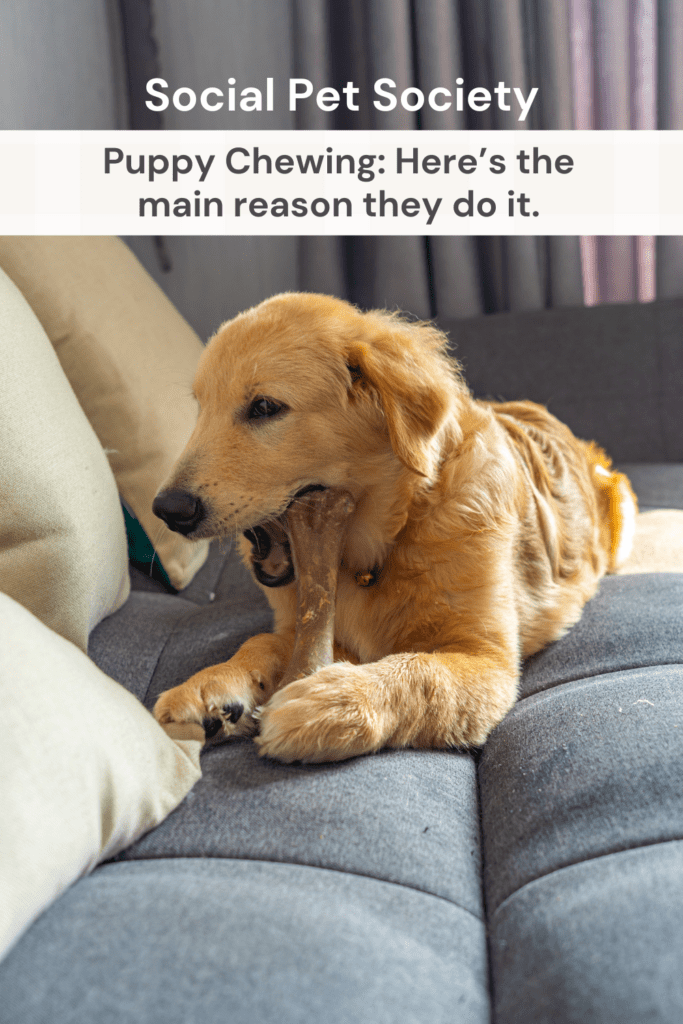
Today I came home to a chewed pool cue, from on top of my pool table. Not only had my 15 week old puppy found a way on top of the pool table, but she’d also decided the long timber stick looked like the perfect morning activity. So, how do I stop her chewing things she isn’t supposed to during the 3-6 month old chewing period?
To deter your puppy from chewing on household items, provide a diverse range of toys, including both soft and hard options, to keep them engaged. Consistency in your routine is crucial, as sudden changes can stress your puppy. One of the most common reasons for destructive chewing in puppies is when they are left alone for more than 15 minutes.
Later in this article I recommend these treats – because they are a favourite for puppies and grown dogs alike – especially for training treats. You can check out the Chicken – wrapped rawhide dog chew here, on Amazon.
Table of Contents
Disclosure: This article includes affiliate links. If you click on these links and make a purchase, I receive a small commission. This comes at no extra cost to you but greatly supports the maintenance of this site. Learn more here.
What Owners Give Their Puppys
Firstly, lets look at what most pet owners are doing to see if we fall somewhere in the range of the ‘average’ pet owner.
Type of Chewable
It’s likely you are giving your puppy a chew treat or toy, because that’s what 94% of puppy owners do. And owners tend to give their dogs edible chewing items like rawhide (the white bone shaped edible treats) about four to six times a week. Other owners opt for longer lasting chewables such as non-edible chew toys, toys filled with food, as well as hard chewing materials like wood or antlers.
Risks
When it comes to risks of chew toys or foods, 67% of dogs don’t have problems with chewing materials. However, about one in three dogs will ingest non-edible materials, with 3.6% needing veterinary treatment, leading to surgery in 1% of cases. It’s also important to keep an idea on your dogs teeth, as tooth fractures can be associated with bones or hard materials like antlers.

Top 5 Treats Chosen by Owners
- Ropes
- Hard Rubber Toys
- Plush Toys
- Soft Rubber Toys
- Rawhide [1]
Top 5 Treats Chosen by Dogs
- Dried Innards
- Plush Toys
- Bones
- Dried Pizzle
- Chew Toy with Canned Food [1]
Want to train your dog easily or just give a treat to praise them? Give them a taste of joy with Pet ‘n Shape Chik ‘n Skewers—a chicken-wrapped rawhide dog chew that’s all-natural and grain-free. These delicious treats, designed for puppies, adults, and seniors of all breeds, bring more than just flavour. Crafted from natural chicken breast filets and cowhide, they offer a satisfyingly crunchy and chewy snack. Free from artificial additives and conveniently packed for freshness, these Chik ‘n Skewers ensure guilt-free indulgence. Find it on Amazon now.
Why Do Puppies Chew?
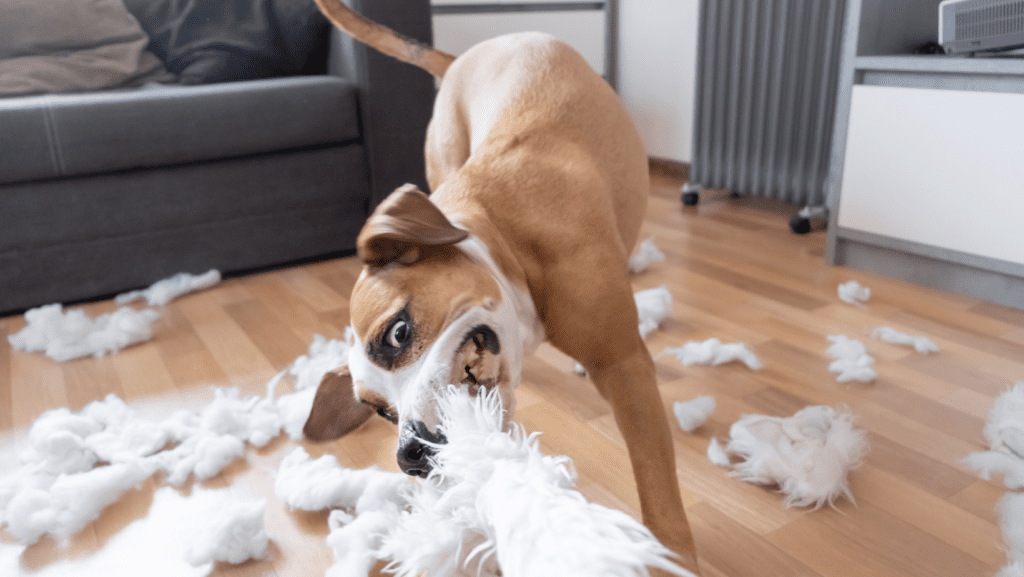
About 2.5% of dogs will chew daily on soft household objects they aren’t supposed to, and this behaviour is more common in dogs under one year old.
If a puppy chews on objects, it doesn’t seem closely linked to the dog’s motivation to play or the frequency of activities with the owner. However, it does occur more often when dogs are left alone (associated with negative emotions) or when there are changes in routine activities [1].
Puppy Behaviours When Left Alone
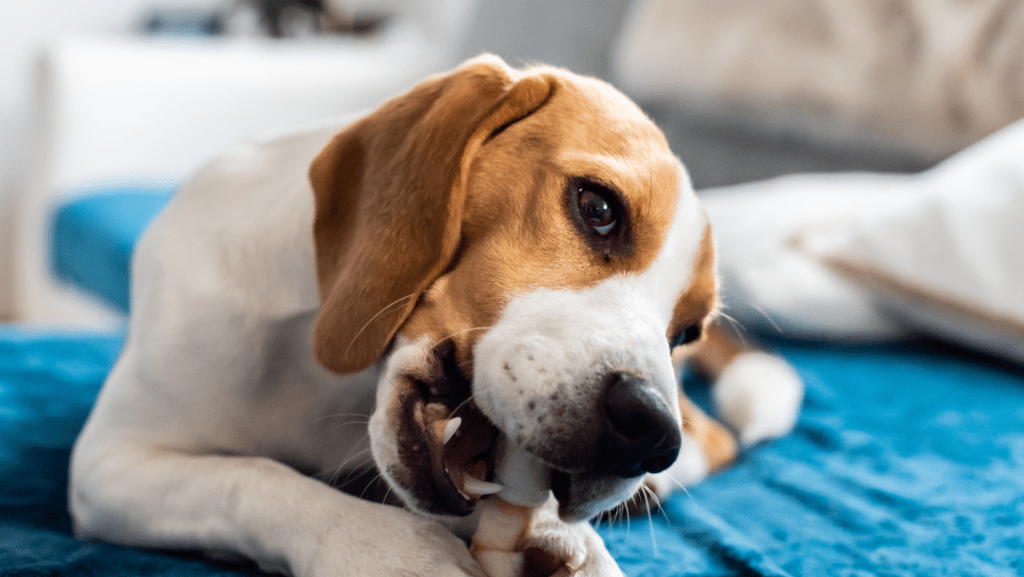
A study I found looked at the 90 minutes after owners leave their puppy alone at home. It showed that puppies are likely to engage in one of three types of behaviours
1. playing and exploring
2. passive behaviours (i.e. chewing)
3. behaviours like lip licking, yawning, scratching, orienting to the environment, and vocalising.
During the 90 minute period, passive behaviours (like chewing) increased significantly, especially after the first 15 minutes, while all the other behaviours decreased.
And regardless of the age of the puppy, passive behaviour was the main behaviour observed in all puppies when left alone [2].
Are Chew Toys Good for Puppy Development?
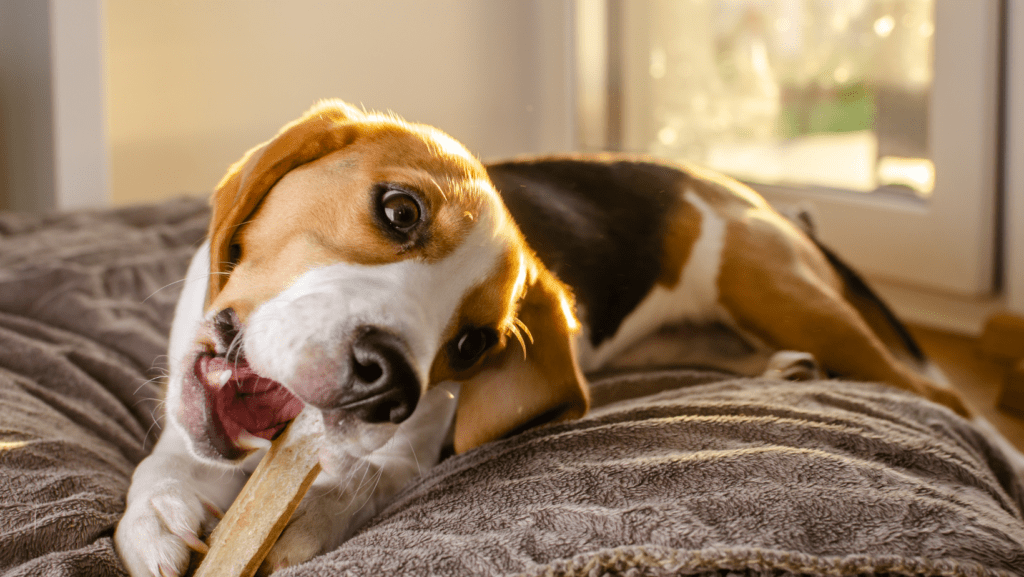
So, does giving chew toys to your pet dog improve their well-being? Well, providing toys to dogs doesn’t really change their activity levels, how much they eat, or their overall mood. Even when dogs play with more complicated toys, it only slightly improves their ability to solve problems.
But, although toys given to pet dogs may not have a big impact on their development or behaviour, if you provide toys to your pooch that they personally seem to love, then it does impact their happiness. This means that you need to consider your individual dogs’ needs and preferences when providing enrichment [3].
So all-in-all, if your dog loves chew toys, yes they are good for their development and wellness. And if they don’t seem. fazed by them, then don’t stress, their development wont be hindered.
Conclusion
To prevent your puppy from chewing on household items, offer a variety of toys, including both soft and hard options, to keep them engaged and discourage destructive chewing. Consistency in your routine is essential, as changes can induce stress in your puppy, and providing diverse toys helps them cope with potential boredom or anxiety. By understanding your puppy’s need for mental and physical stimulation through various toys and maintaining a stable routine, you can create a positive environment that reduces the likelihood of unwanted chewing behaviours.

Talitha Mulder
- Arhant, C., Winkelmann, R., & Troxler, J. (2021). Chewing behaviour in dogs – A survey-based exploratory study. Applied Animal Behaviour Science, 241, 105372. https://doi.org/10.1016/j.applanim.2021.105372
- Frank, D., Minero, M., Cannas, S., & Palestrini, C. (2007). Puppy behaviours when left home alone: A pilot study. Applied Animal Behaviour Science, 104(1–2), 61-70. https://doi.org/10.1016/j.applanim.2006.05.003
- Chan, K., Arellano, C., & Horowitz, A. (2023). Here Puppy, Chew on This: Short-Term Provision of Toys Does Not Improve Welfare in Companion Dogs. Animals, 13(21), 3340. https://doi.org/10.3390/ani13213340

