

Calling after my 16-week-old puppy, reassuring her that I didn’t mean to hurt her and that I’m not scary, is a gut-wrenching experience.
If only my pup didn’t insist on staying so close to my feet, her tail wouldn’t have gotten caught in the screen door. Luckily for me, I think she blamed the door more than she blamed me, but still—did she know it was an accident? And would she forgive me?
I go over how to determine if your dog forgives you in the article below.
Research shows that dogs are sensitive to our emotions and can recognise when we’re sorry.
Table of Contents

Disclosure: This article includes affiliate links. If you click on these links and make a purchase, I receive a small commission. This comes at no extra cost to you but greatly supports the maintenance of this site. Learn more here.
Does My Dog Understand When I Accidentally Hurt Them?
The good news is, your dog probably does understand that you’ve accidentally hurt them.
Your dog has the ability to read your emotions – and because they are so sensitive to slight changes in your behaviour, tone of voice, and facial expressions, they are able to detect signs of distress or when you accidentally cause them harm.
Studies have shown that your dog recognises your emotions and then responds differently based on those emotional cues.
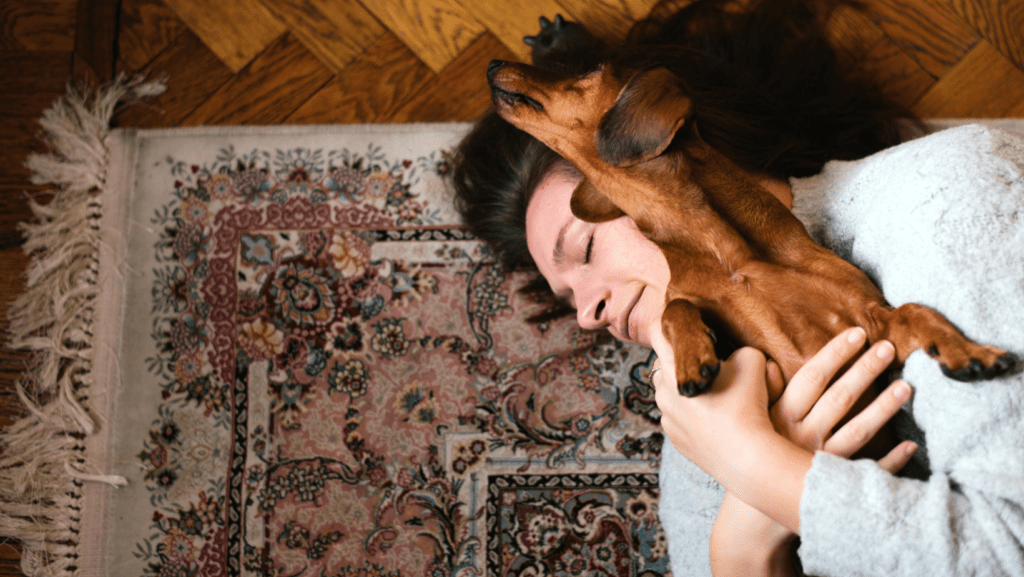
Why do Dogs Lick You When you Accidentally Hurt Them?
If there is any sense of conflict between you and your dog, then they may approach and lick you as a way of apologising.
It’s important to know that your dog doesn’t understand forgiveness in the same way you do, but they will act in a way to promote social cohesion and reduce tension after conflicts [4].
What Should I do if I Hurt my Dog?
When your dog experiences physical pain (which tells them something is wrong), they observe your immediate reaction to that pain, to better make sense of what is happening.
That means that comforting your dog and showing them affection after accidentally hurting them is super important for them to understand your intensions of the accident.
Plus, it is just generally better for your pooches emotional well-being, if you comfort them when they need it [1].
The specific steps to take if you have hurt your dog:
- Calm your dog and make sure they feel safe again: If there is a lot going on where you are, take them some place quiet to do this.
Comforting your dog with a soothing voice and gentle touch can help reassure them and strengthen your bond.
- Assess whether veterinary care is needed: Even if the injury seems minor, it’s really critical to carefully observe your dog for any signs of distress, change in behaviour, or movements, that could indicate a more serious problem.
If your dog does show persistent signs of pain, discomfort, or if there are any visible wounds or swelling, it’s best to consult with a veterinarian promptly.
Remember, it’s always better to err on the side of caution when it comes to your pet’s health.
Top tip: If you’re ever feeling guilty and want to treat your pup, I have found the PERFECT gift… it’s affordable (and available now on Amazon), the Nocciola Mexican Plush Squeaky Dog Toys: 9-in-1 Funny Stuffed Chew Toys. Trust me, nothing makes you feel better than getting a gift for your fur pal!
Signs of Injury in a Dog
If you are concerned, spotting signs of injury in your dog isn’t always easy, especially if the injury is hidden inside.
Here are some things to look out for:
- Limping or Favouring a Limb: If your dog is limping, favouring one leg, or seems hesitant to put weight on a certain limb, it could mean they have a sprain or a fracture.
- Reluctance to Move or Play: If your dog suddenly doesn’t want to play or move around like they usually do, it might be a sign that something’s wrong.
- Changes in Behaviour: Watch out for signs like increased irritability, restlessness, or any other unusual behaviour that could indicate your dog isn’t feeling well.
- Whimpering or Vocalisation: If your dog makes unusual sounds, especially when moving, it could mean they’re in pain and trying to tell you.
- Swelling or Discoloration: Check for any swelling, bruising, or discoloration around your dog’s joints or limbs, as these could be signs of an injury.
- Guarding an Area: Your dog might instinctively protect an injured area by guarding it from touch.
- Abnormal Posture: Keep an eye on your dog’s body posture. If they’re standing or sitting in an unusual way, it could be a sign of discomfort.
- Changes in Appetite: Injuries can sometimes affect a dog’s appetite, so watch for any changes in how much they’re eating.
- Excessive Grooming: If your dog is licking, biting, or grooming a certain area more than usual, it could mean they’re trying to soothe pain from an injury.
- Restlessness or Pacing: An injured dog might seem restless, have trouble settling down, or keep pacing around.
- Changes in Interaction: Notice if your dog becomes more withdrawn or less interested in interacting with people or other pets.
- Temperature Changes: If your dog feels unusually warm or cold to the touch, it could be a sign that something’s not right internally.
Keeping an eye out for these signs can help you spot if your furry friend is injured and needs some extra care [3].
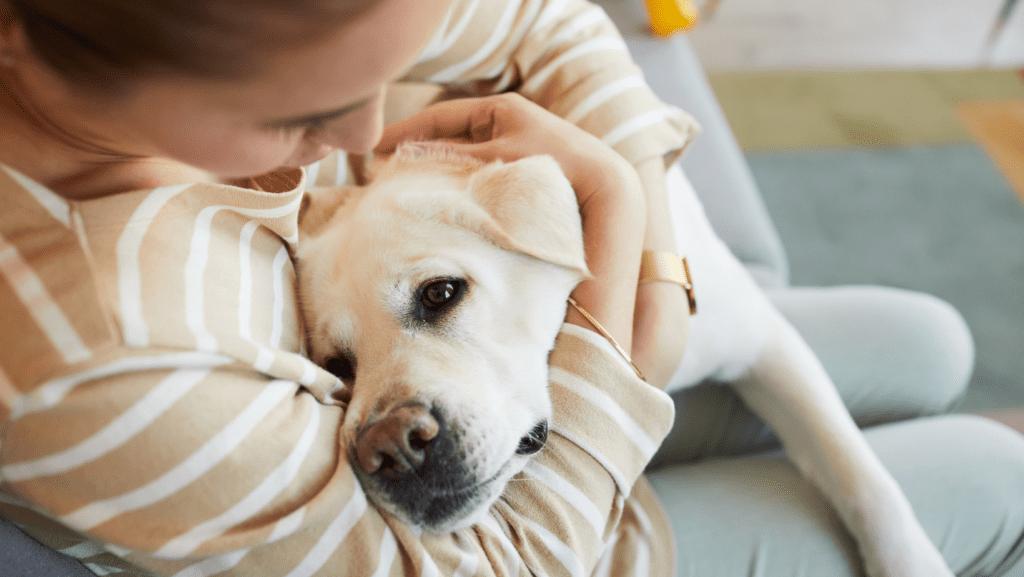
How to Apologise to your Dog After Accidentally Hurting Them
You’re probably feeling pretty down that you’ve hurt your dog.
And you likely want them to know it was an accident. So, how do you do that?
Well, in order to apologise to your dog in a way they will understand, it’s really important to understand their ability to recognise and respond to your emotional cues.
Your dog understands you through the way you talk and the way you move about. At a basic level, your dog will categorise your emotions based on those two things together.
This means that if you want to ‘get through‘ to your pup, you need to be mindful of your verbal and non-verbal cues.
Verbal Cues
You should talk to your dog in a soothing tone of voice to show sincerity and remorse.
Dogs can pick up on the emotional intention of human speech, so expressing regret verbally can help reassure them of your intentions.
Non-verbal Cues
You should use calming body language, like crouching down and avoiding direct eye contact, to show them you are not a threat.
If they aren’t too worked up, you can also offer physical comfort, such as gentle petting or cuddling.
Physical touch is a powerful way to communicate affection and help to heal emotional distress caused by the accidental harm.
And, by acknowledging your dog’s emotional sensitivity and responding appropriately, you can strengthen your bond and restore trust in your relationship [2].
Treats and Gifts
If you’ve ever felt bad after accidentally hurting your furry friend, you know the desire to make it up to them.
One way to express your remorse and reinforce the bond you share is by treating them to something special, offering them a token of appreciation for their forgiveness.
If you don’t know what to get them, you could treat them to the Nocciola Mexican Plush Squeaky Dog Toys available on Amazon! These toys aren’t just cute; they’re packed with features that will keep your dog entertained and healthy.
They have squeakers, crinkle paper, and ropes built-in, making playtime exciting and engaging.
Plus, they can help with your dog’s anxiety and keep their teeth clean and healthy by encouraging chewing.
But, whether you’re looking to say sorry or just want to treat your furry friend, any type of safe toy is a great choice.
They’re sure to bring joy and happiness to both you and your beloved pup!
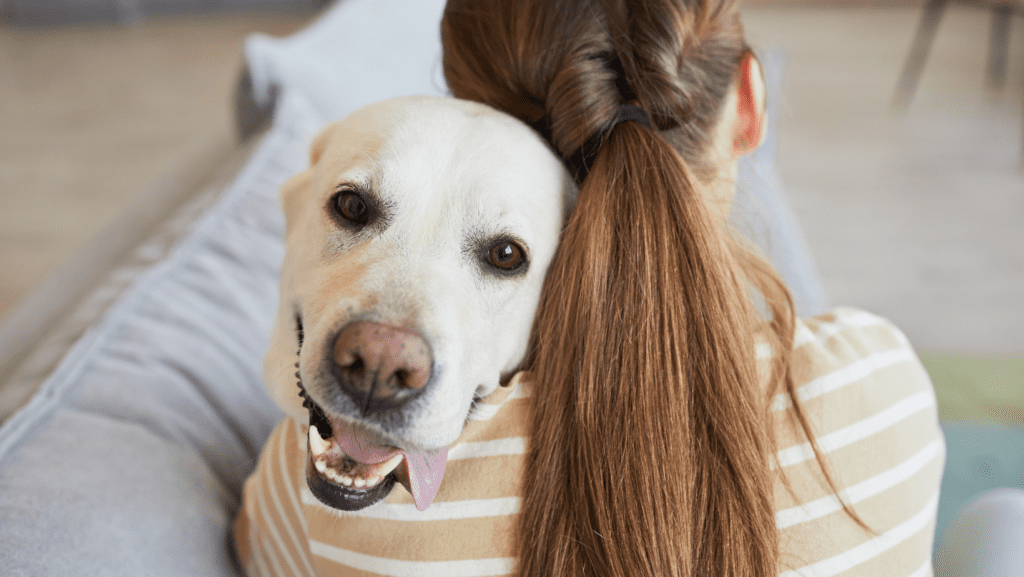
Will my Dog Forgive me if I Accidentally Hurt Them?
Want some good news?
Based on scientific research, dogs do demonstrate forgiveness in certain situations.
When there is a conflict, or an unintentional accident between two dogs, one dog will often try to mend the relationship afterward, to reduce tension and uncertainty.
Example: If the first dog charges at another in a playful manner, and the second dog misinterprets this as aggression, the first dog may quickly switch to a more playful posture to indicate that there was no bad feelings behind it.
Your dog is sensitive to your social cues. So, if you provide comfort and reassurance, you may see your dog forgive you [4].
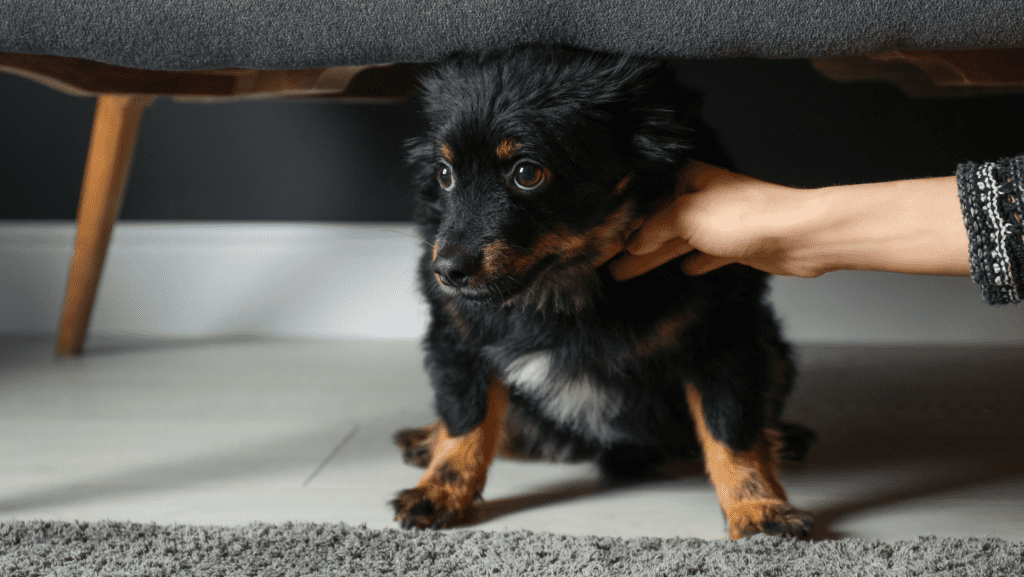
Conclusion
In short, dogs can tell when we accidentally hurt them and might forgive us afterward.
They show this by acting friendly or affectionate after a conflict.
So, if you accidentally hurt your dog, comforting them is important.
Have you ever accidentally hurt your pet?
Do you think they forgave you afterward?

Talitha Mulder
- Albuquerque, N., & Resende, B. (2022). Dogs functionally respond to and use emotional information from human expressions. Evolutionary Human Sciences, 5.
- Albuquerque, N., Guo, K., Wilkinson, A., Savalli, C., Otta, E., & Mills, D. (2016). Dogs recognize dog and human emotions. Research Article. Retrieved from https://doi.org/10.1098/rsbl.2015.0883
- https://www.australiawidefirstaid.com.au/resources/the-ultimate-guide-to-identifying-dog-injuries
- Walters, K. A. F., King, C., Scolaro, C. L. C., & Shyan-Norwalt, M. R. (2020). Reconciliation in domestic dogs (Canis familiaris): Evidence for the uncertainty reduction hypothesis. Applied Animal Behaviour Science, 226, 104987. https://doi.org/10.1016/j.applanim.2020.104987

