
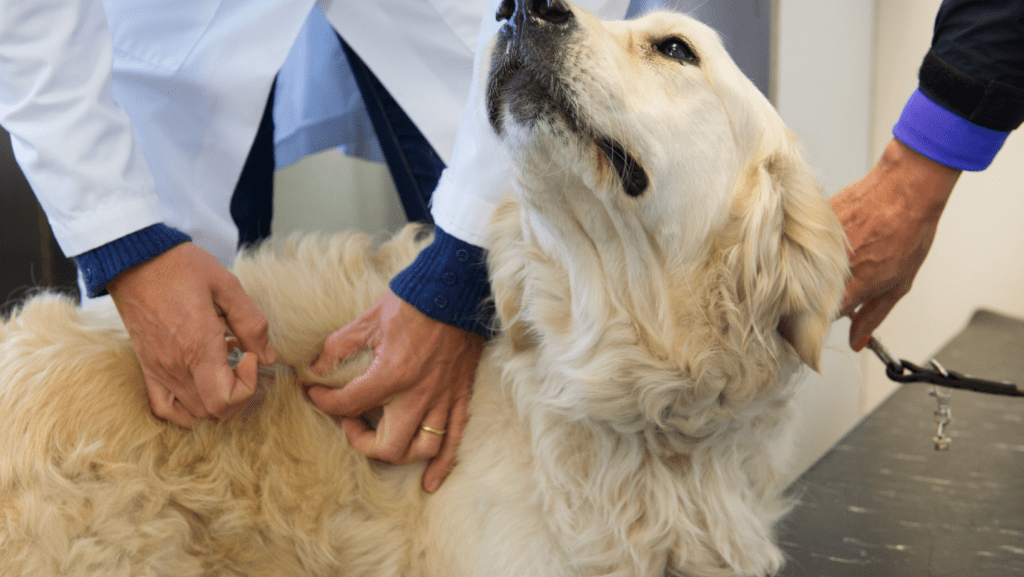
When my puppy was getting her shots, it felt like forever between each one because I couldn’t wait to take her out. Even after she finished her last shot, I was told to wait two more weeks. I wondered why it had to be so long, so I decided to look into it.
Puppies require three C3 (or C4 for added protection) vaccinations to defend against key diseases, typically administered at 6-8 weeks, 10-12 weeks, and 14-16 weeks, with a potential booster at 6 months. Additional shots may be necessary depending on their living environment.
Later on in this article, I’ll recommend you use a Canine health record: Dog vaccine record book – its great value on Amazon!

Table of Contents
Disclosure: This article includes affiliate links. If you click on these links and make a purchase, I receive a small commission. This comes at no extra cost to you but greatly supports the maintenance of this site. Learn more here.
Does My Puppy Need Vaccinations?
The biggest risk for your dog catching viruses is when their immune system is low. This can happen when;
- Your puppy doesn’t get enough antibodies from their mum’s milk when they were born (so if they were separated too early)
- If they missed some of their first shot
- If the vaccines they got didn’t work as well as they could have because they got them too early.
Puppies between six weeks and six months old, especially if they haven’t been vaccinated yet, are the most likely to get diseases like Parvovirus. In fact, most cases of Parvovirus (around 89.5%) are in dogs that are younger than a year old. That’s why any good vet will suggest waiting until puppies are a little older (around 16 weeks) to give them their final vaccination.
It is also important to know that there are things that change the likelihood of your pup catching diseases.
For example, Parvovirus is more common in warmer places and at warmer times of the year.
Also, certain breeds like Rottweilers, Dobermans, German Shepherds, American Pit Bull Terriers, Labrador Retrievers, Springer Spaniels, and Yorkshire Terriers seem to be more at risk of getting Parvovirus.
How Do Dog Immunisations Work?
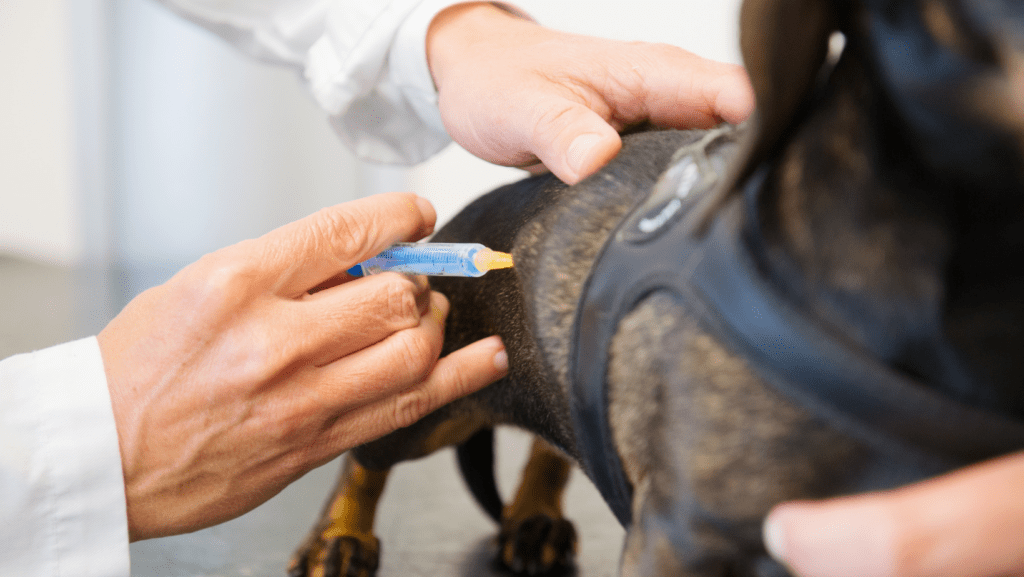
Puppies, like human babies, enter the world with immune systems that still have to develop, which makes them more likely to catch infectious diseases.
Vaccinations teach their body to recognise and fight diseases early. This reduces their risk of serious illness, long-term issues, and even death when they are exposed to those diseases later on in life.
What Does a Vaccination Protect my Dog From?
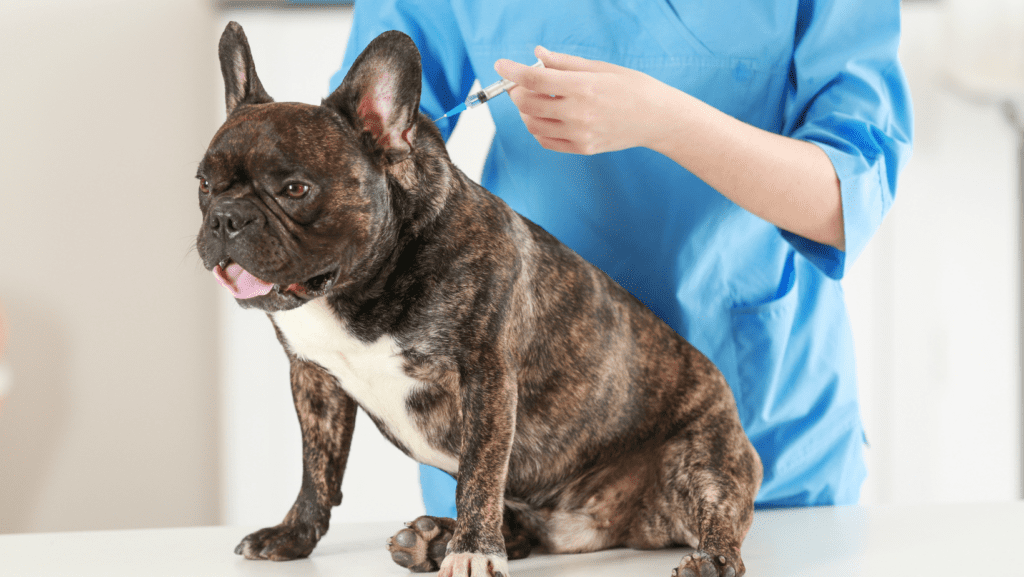
In Australia, it’s really important to make sure puppies get at least a course of three C3 vaccinations.
The C3 vaccine protects them from three serious diseases: Parvovirus, Distemper, and Adenovirus (hepatitis). These diseases can make puppies very sick, and the vaccination helps keep them healthy and safe.
I’ve broken down what each disease is:
Canine Distemper Virus:
This is a highly contagious virus that can cause severe illness and even death in dogs.
It affects breathing, digestion, and can mess with the nervous system.
It’s not just pet dogs that can get it; wild animals like dingos, foxes, and even pandas can catch it too. When there’s an outbreak, it can lead to lots of animals dying.
Canine Adenovirus:
- There are two types of this virus. One type affects the liver and can make dogs really sick, while the other affects the respiratory system, causing coughing and breathing problems. So, depending on the type, this virus can hurt a dog’s liver or make it hard for them to breathe.
Canine Parvovirus:
- This virus mostly affects dogs, especially young puppies.
- It causes really bad stomach problems, especially in puppies between six and 20 weeks old. But it can also make older dogs sick.
- Sometimes, very young puppies can even get heart inflammation from it.
- Symptoms include tiredness, not wanting to eat, fever, throwing up, and diarrhoea, which might have blood in it. In severe cases, it can lead to dehydration, shock, and even death.
Apart from the core basic vaccine C3, there are some extra ones you can get (the C4 or C5) which protect against more diseases.
C4:
This vaccine not only protects against Parvovirus, Distemper, and Adenovirus but also guards against parainfluenza.
Parainfluenza is like a cold in humans, causing coughs and breathing problems in dogs.
It’s not usually deadly, but it can make pets very sick and sometimes cause pneumonia, which is serious.
C5:
- This vaccine goes a step further by protecting against Bordetella bronchiseptica, a bacterium that causes kennel cough.
- Kennel cough gives dogs a rough, dry cough and affects their breathing.
- With this vaccine, along with protection from parainfluenza, it helps keep dogs safe from respiratory illnesses.
How Many Vaccinations Does a Puppy Need?
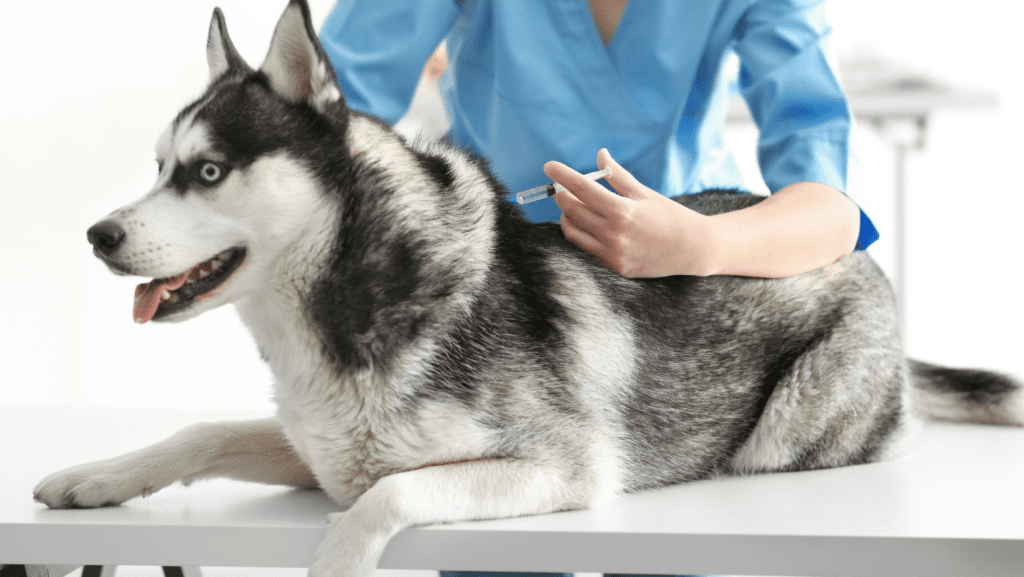
Puppies get their vaccinations at specific times to make sure they keep being protected. Usually your puppy will have 3 vaccinations (one is probably before you get them home).
- The first one is usually when they’re about 6-8 weeks old because that’s when the antibodies they got from their mum start to wear off.
- The second one is at 10-12 weeks (at this one my vet recommended a C4 instead of a C3).
- Third one at 14-16 weeks old to make sure they stay protected (Again, my vet gave my pup a C4 vaccine).
But vaccinations aren’t just for puppies. Even when they grow up, dogs may need booster shots around 6 months old to keep their immunity strong.
After that, they’ll typically need an annual booster shot to maintain health – some types of vaccines even last 3 years!
Extra Vaccinations
It is important to understand that like people. every puppy is unique, and veterinarians may customise vaccination protocols based on individual health status, lifestyle factors, and the area you live.
For example, puppies residing in places with heaps of leptospirosis (this usually comes from contaminated water from rat wee) may need earlier and more frequent vaccinations against this bacteria.
Also, if you wanted to take your puppy when you move, you might need extra vaccinations to meet specific requirements and lower the risk of getting sick to a different places diseases.
Keeping Track of Your Puppy's Needles
When you’re taking your puppy to get their shots, it’s really important to keep track of everything. This means writing down when they got vaccinated and what they got vaccinated for. This is especially important because different vets might not know what the other has done for your pup.
To make it easier, there’s this thing called a Canine Health Record that you can get. It’s like a little book where you can write down all the important stuff about your puppy’s health. You can find it on Amazon now!
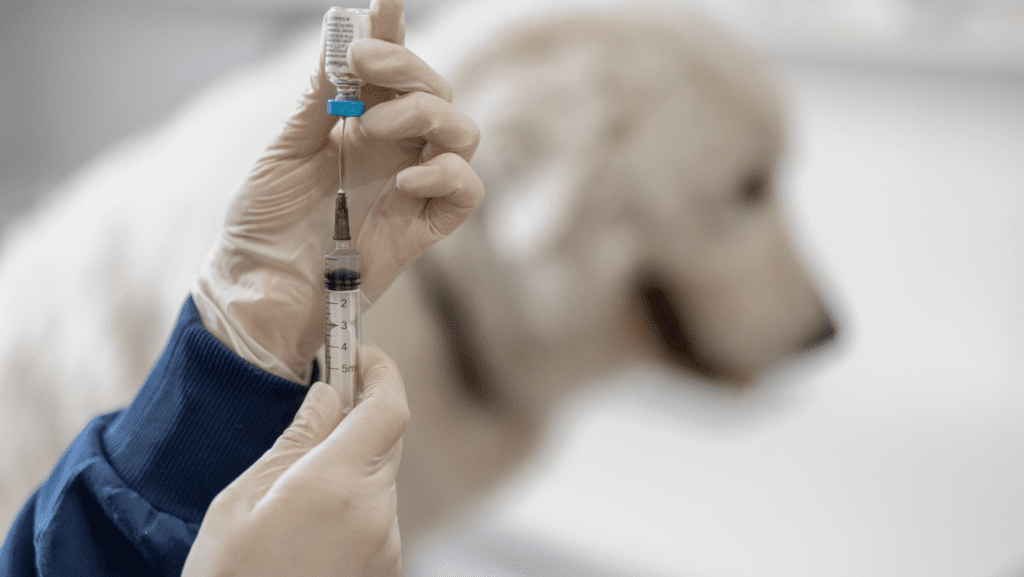
Puppy Vaccination Schedule
Understanding the puppy vaccination schedule is essential for ensuring your furry friend receives timely protection against infectious diseases. Here’s a straightforward breakdown of the vaccination timeline.
6-8 Weeks:
- First core vaccination (C3 vaccine)
- Protection against canine distemper virus, canine adenovirus, and canine parvovirus
- Initial booster shots to kickstart immunity.
10-12 Weeks:
- Second core vaccination (C3 or C4 vaccine)
- Reinforcement of immunity against core diseases
- Further strengthening of the puppy’s defence system
- You are able to have non-core vaccinations at this visit such as parainfluenza, Bordetella and heartworm.
14-16 Weeks:
- Third core vaccination (C3 vaccine)
- Final booster dose to ensure robust, long-lasting protection
- Completion of the core vaccination series.
6 Months:
- Booster vaccination appointment
- Additional reinforcement of immunity, especially for puppies with incomplete response to initial doses.
Throughout the vaccination process, it’s super important to to consult with your veterinarian to tailor the schedule to your puppy’s specific needs and lifestyle factors [1, 2, 3, 4].
Can I Take my Puppy Out After Their First Vaccination?
While vaccination plays an important role in protecting your puppy, it also helps your community by reducing the spread of infectious diseases for all dogs in your area.
As a responsible pet owner, it is really important to stick to vaccination rules and make sure you don’t take your unvaccinated puppy to high-risk areas until 2 weeks AFTER they complete their third vaccination period. This includes avoiding public places such as dog parks, beaches, and pet-friendly gatherings where diseases can spread easily.
But, you might be worried about socialisation remains a crucial part of a puppy’s development, because there is a delicate balance between safety and socialising. Here’s an article I wrote if you want to know more about puppy preschool if you want to know more on this topic.
You should explore safe options for socialisation, such as puppy classes, controlled playdates with vaccinated dogs, and supervised interactions in sanitised environments.
Conclusion
In conclusion, safeguarding your puppy’s health through appropriate vaccinations is a crucial responsibility for pet owners. Understanding the vaccination schedule, including the timing and types of vaccines, is essential to ensure your furry friend receives adequate protection against infectious diseases. Consulting with your veterinarian to tailor the vaccination plan to your puppy’s specific needs and lifestyle factors is paramount.

Talitha Mulder
- https://kb.rspca.org.au/knowledge-base/what-vaccinations-should-my-dog-receive/
- https://www.bayviewvets.com.au/pet-advice/puppy-vaccinations/
- https://www.greencrossvets.com.au/pet-library/puppy-vaccinations/
- https://www.petbarn.com.au/petspot/puppy/puppy-vaccinations/
- https://www.sciencedirect.com/science/article/pii/S0378113512001447
- https://onlinelibrary.wiley.com/doi/abs/10.1111/avj.13002
- https://www.sciencedirect.com/science/article/pii/S2352771415000087
- https://www.frontiersin.org/articles/10.3389/fcimb.2022.854876/full
- https://www.vet.cornell.edu/departments-centers-and-institutes/baker-institute/our-research/canine-parvovirus

