
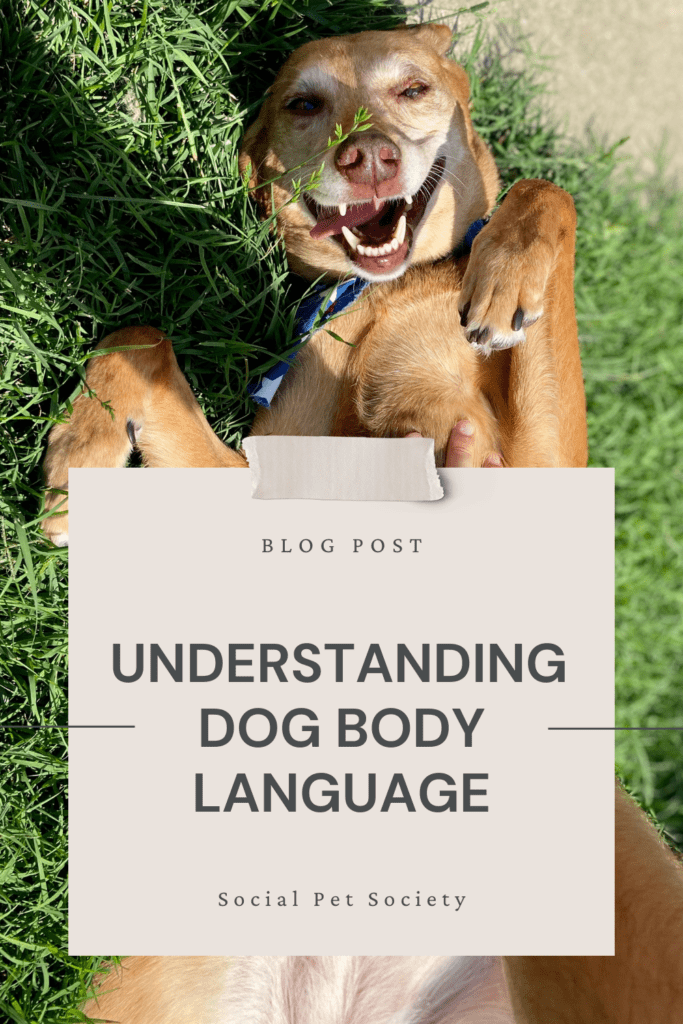
My Border Collie pup, Bindi, has body language that is a clear reflection of her feelings.
When Bindi is happy, her tail wags, her ears perk up, and her eyes shine. Her happiness is contagious.
When she’s scared (usually from my cat taking a swipe at her getting too close), her tail tucks, ears flatten, and she seeks comfort by hiding behind me, seeking my reassurance.
But, my other dog, Giggy – a pug cross, expresses himself more subtly – his body language requires closer attention.
When Giggy’s happy, his tail wags gently and his eyes soften. But, knowing whether he is sad, or just tired, can be hard to tell.
To better understand both my dogs, I’ve researched canine body language.
In this article I share everything I have discovered!
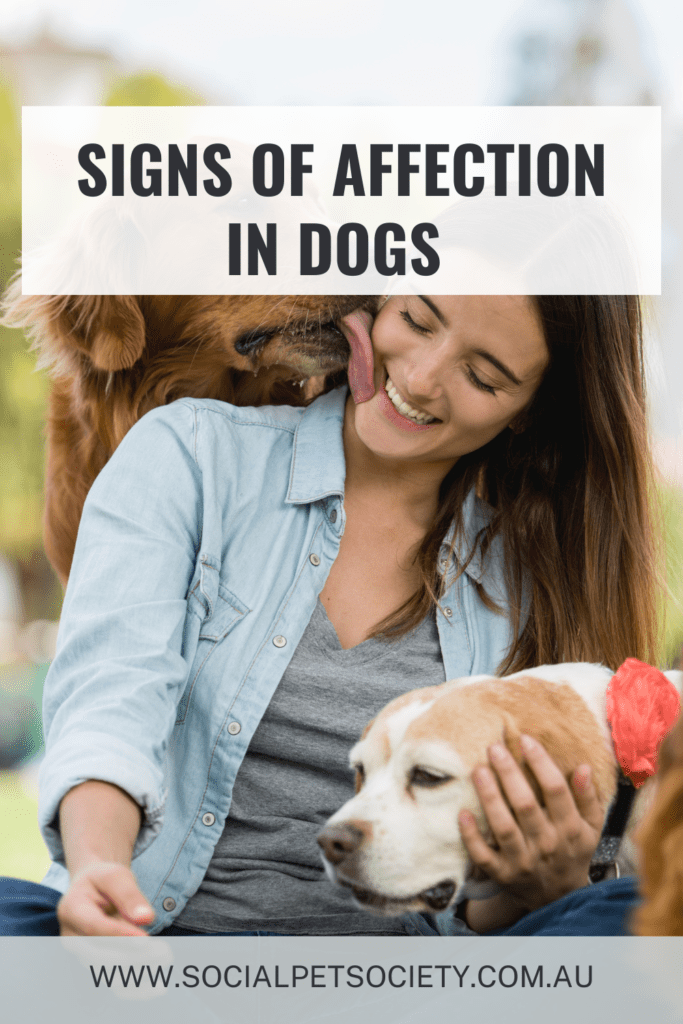
Dogs convey affection through tail wagging, soft eyes, relaxed mouths, body leaning, exposing their belly, and soft barks.
What I'll Cover
Disclosure: This article includes affiliate links. If you click on these links and make a purchase, I receive a small commission. This comes at no extra cost to you but greatly supports the maintenance of this site. Learn more here.
The Importance of Understanding Dog Body Language
Benefits of Understanding Your Dog
Your dog is happier when they can easily interact with you- this relies mainly on you understanding each other.
When you and your dog better understand one another, you form a strong bond.
And this bond does more than just make you both feel good, it also allows you to use social attention (like petting) as a reinforcer for good behaviour in your dog [1]. This in turn, creates harmony in your day to day routine.
What is Dog Body Language?
Most people are aware that in human to human interaction, only a tiny part of communication occurs through verbal signals – most communication is non-verbal.
This is the same in human to dog communication.
You can try to understand your dog through their barking or whinging, you will do better reading their non-verbal cues [2].
Key Non-Verbal Cues to Watch
Non verbal cues you can interpret from your dog include;
- Expressions: Your dogs eyes, mouth, and ears
- Gestures: Tail movement and wagging
- Body Posture: The way they are standing, moving and leaning
Your ability to interpret your dog correctly is so important in your relationship. Understanding what they are communicating to you, allows you to form the correct emotional reactions and behaviour in response.
Your dog is even better at non verbal communication than you.
Your dog uses verbal and visual cues, but they also use smell as a communication method.
You may not clearly display your emotional state through your posture or words, so your dog may use your smell to help them [2].
How to Read Your Dog's Expressions
Studies show that we are pretty bad at understanding the body language and vocalisations in our dogs.
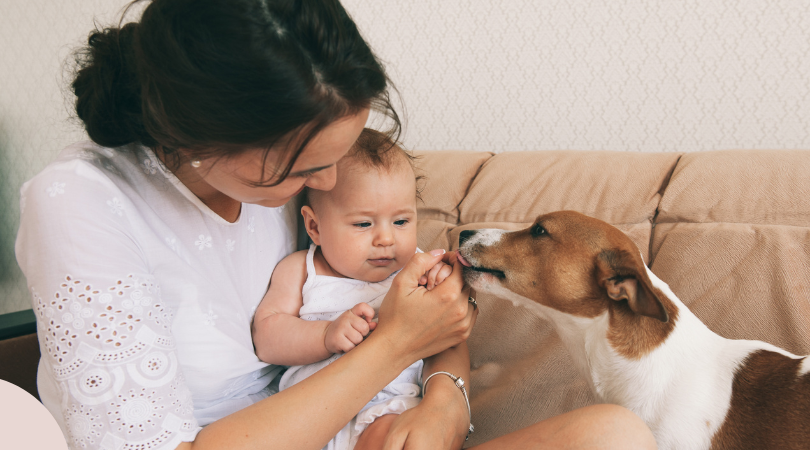
Humans often misunderstand their dog during human-dog play and petting and hugging sessions.
This misinterpretation can cause your dog to feel;
- Discomfort
- Anxiety
- Fear
- Distress
- Confusion
And all of those feelings can result in a break down of your human/dog bond [3].
So, here are the signs to learn.
Tail Wagging
When you look at your dogs tail, you shouldn’t just watch for if it’s wagging – which is where owners can go wrong.
It is also really important to observe your dogs tail carriage (it’s position).
What does tail carriage show you about your dog?
If your dog wags their tail and has low carriage -this is a sign of them formally saying “you are the boss and I am not a threat”
As owners we often see tail wagging as a positive sign, however tail wagging can also show signs of aggression.
Dogs tails are an extension of their spine – this means that their tail is linked to their brain, through their spinal cord and nerves.
Tail wagging is often asymmetrical – meaning your dog uses one part of their brain to wag it one way, and the other part of their brain to wag it the other way.
Studies have shown that if your dog wags their tail to the right, they are indicating a positive emotional state – like spending time with you or a familiar dog. But, if they wag their tail to the left, it is usually because of negative feelings – like if they are shown an unfamiliar or dominant dog, or they are in a stressful situation.
In fact, your dog will experience stress if they see another dogs wagging their tail to their left.
Your dog will wag their tail more when the are with you, versus when they are alone or with someone else, which scientists think is because dogs use tail wagging as a way to tell you how they are feeling [4].
Facial Expressions
Understanding your dogs facial expressions can be confusing.
An aggressive snarl can be confused with a submissive grin.
Here are the features to focus on when trying to understand your dogs emotions:
Eyes
Soft Eye Contact: When your dog looks at you gently, it means they’re feeling social, confident, and friendly.
Hard Eye Contact: An intense stare with little body movement often signals that your dog isn’t friendly and could be ready to act aggressively.
Squinty Eyes: Partly closed eyes can show friendliness or fear. You’ll need to check their body language to understand better.
Avoiding Eye Contact: When your dog looks away, it’s trying to avoid conflict, not being sneaky.
Whale Eye: If you can see the whites of their eyes, it’s usually a warning. Their overall body language will tell you if they might become aggressive.
Ears
Ears Pricked Hard Forward: Your dog is alert and interested. Look at other signs to figure out if they’re excited or aggressive.
Ears Relaxed: Relaxed ears mean a calm dog. For pointy-eared dogs, their ears will be up but not stiff. For floppy-eared dogs, their ears will hang down.
Ears Pulled Back: Pulled-back ears can mean your dog is happy, scared, or stressed. Their body language will give you more clues
Mouth
Mouth Relaxed: A relaxed mouth is slightly open or closed, with smooth skin around it. Tense: If their mouth slowly closes and lines appear around it, they might be gearing up for aggression.
Open, Panting: Panting can mean they’re hot, tired, or stressed. Think about what they’ve been doing and the temperature.
Licking: Licking can be a greeting, a way to calm themselves, or a sign of stress. Look at the situation for more context.
Yawning: Yawning could mean they’re tired, copying you, or feeling stressed. The context will help you figure out why.
Corners of the Mouth: If the corners are forward in a “C” shape, it’s offensive aggression. If they’re tightly back in a “V” shape, it’s defensive aggression.
Snarl: Curling their lips to show their teeth is a clear sign of aggression. Check their ears and body posture for more info.
Facial Muscles
Submissive Grin: This looks like a snarl but is actually a friendly gesture. Their body language will help you confirm.
Lack of Brow Lines: A smooth brow means your dog is calm.
Mouth Lines: Tense lines around the mouth show stress.
To help you out a little more, here are the facial expressions of a dog in different situations:
 [5].
[5].
Body Posture
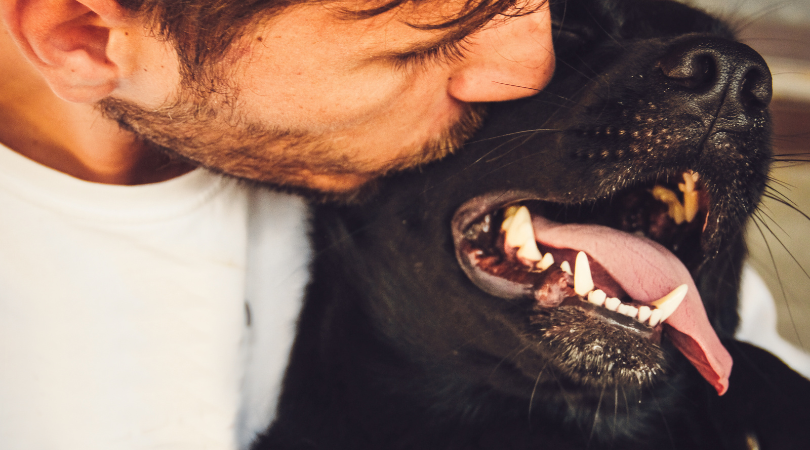
When your dog leans against you, or rolls over to expose their belly, or gently presses their body against yours – they are showing you that they trust you and want to be closer to you.
If they nudge, paw, or gently place their paw in your lap, they are showing affection and are looking for attention from you [7].
How is My Dog Feeling?
If you are wondering what your dog is feeling, here is a simple guide to try to interpret their mood at any given time.
Happy Dog
Body Posture: If your dog’s body is relaxed, it means they’re happy.
Hair: Smooth hair shows your dog is relaxed and content.
Mouth: An open and relaxed mouth means your dog is comfortable.
Ears: Ears in a natural position indicate your dog is at ease.
Tail: A wagging tail is a sign your dog is happy and friendly.
Eyes: Normal-shaped eyes mean your dog is calm and content.
Whole Body: If your dog’s weight is evenly distributed across all four paws, they’re stable and at ease.
Bottom: If your dog’s bottom is raised, they want to play and are excited.
Barking: Excited barking means your dog is playful and happy.
Worried Dog
Body Posture: A low body posture shows your dog is uncomfortable and cautious.
Head Position: A low head position indicates submission.
Tail: A tucked tail means your dog is fearful.
Ears: Ears pulled back indicate anxiety.
Mouth: Yawning can be a sign of stress.
Eyes: Avoiding eye contact means your dog is fearful.
Head: Turning their head away shows they’re trying to avoid confrontation.
Lips: Licking their lips is a sign of anxiety or stress.
Sitting: A lowered head while sitting indicates submission.
Paw: Raising a front paw shows discomfort.
Angry or Very Unhappy Dog
Body Posture: A stiffened body posture means your dog is aggressive or defensive.
Weight: Leaning forward indicates they’re ready to attack or defend.
Hair: Raised hair shows agitation.
Eyes: Dark, enlarged pupils mean your dog is aggressive or fearful.
Nose: A wrinkled nose indicates anger.
Tail: A stiff, up tail shows aggression.
Mouth: A tight mouth with lips drawn back and teeth exposed means your dog is ready to bite.
Ears: Ears back and down indicate defensiveness.
Sitting: Weight towards the back with a tilted head shows alertness and readiness to defend or attack.
Lying Down: Cowering with ears flat and teeth showing means extreme fear or submission.
Snarling: Exposed teeth while snarling is a clear warning to stay away.
Understanding Vocalisations
While dogs mostly communicate with their bodies, their sounds matter too.
Soft barks, whines, and sighs often come during bonding moments or when they’re excited.
Knowing these affectionate sounds from regular barking helps you understand and meet your dog’s emotional needs better.
Affectionate Sounds
Soft Barks: Gentle and short barks often happen during play or when they’re happy to see you.
Whines: Soft whining usually means they want attention or are excited.
Sighs: A contented sigh can indicate relaxation, often heard when they’re settling down.
Anger or Stress Sounds
Growls: A low, rumbling growl is a clear sign of discomfort or aggression.
Barking: Loud, rapid barking can indicate anxiety or a need to protect.
Whimpering: High-pitched whimpering usually means they’re scared or stressed.
The Individuality of Your Dog
Every dog has a unique personality shaped by their specific breed traits, their own past experiences, and their individual preferences.
Understanding your dog’s specific cues within their personal context—like how they react to new environments or interactions with other pets—helps you interpret their affectionate signals more accurately.
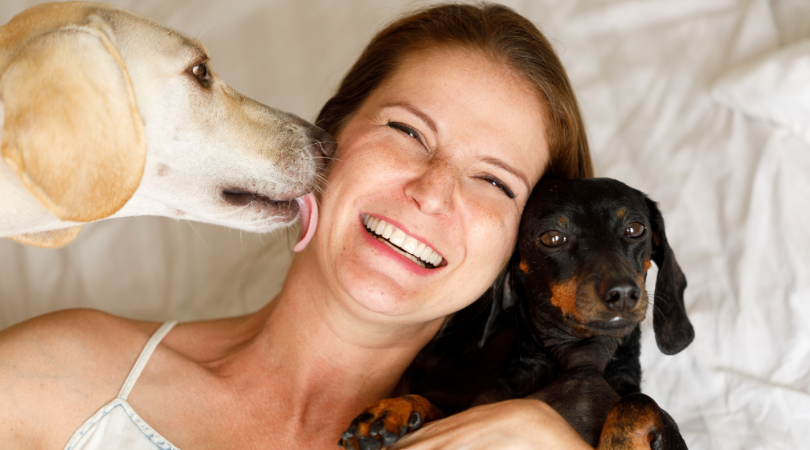
Another interesting thing is that your own dog likely prefers seeing you smile to seeing you with a blank expression.
And, they’ll prefer smiling faces from people of your same gender, because they have learnt how to understand those subtle differences in facial movements.
This individual ability of your dog to read your facial expressions is likely what helped their ancestors adapt to living with humans.
Tips for Strengthening Your Bond
Observational Skills
Closely watching your dog is super important for understanding their body language accurately.
Watch for small shifts in their posture, facial expressions, and tail movements in different situations.
By consistently observing these cues, you will be able to better grasp your dog’s emotions and behaviours over time.
Positive Reinforcement
Encouraging and reinforcing affectionate behaviours strengthens the bond between you and your dog.
You can use positive reinforcement techniques such as treats, praise, or extra playtime to reward moments of affection, like a gentle nuzzle or a welcoming tail wag.
The consistency of this helps your dog feel encouraged to express affection more often.
Conclusion
Understanding your dog’s body language isn’t just about figuring out what they’re saying—it’s about building a strong bond based on trust and understanding.
When you recognise and respond to your dog’s affectionate signals, you can make them happier and create lasting memories together.
Share your stories or ask questions below—we’re all learning and growing as dog owners!

Talitha Mulder
This is where I got my information for this article:
- Bradshaw, J., Rooney, N., & Serpell, J. (2017). Dog social behavior and communication. In D. C. Turner & P. Bateson (Eds.), The domestic dog: Its evolution, behaviour and interactions with people (2nd ed., pp. 131-154). Cambridge University Press. https://books.google.com/books?id=9lFNDwAAQBAJ
- Hasegawa, M., Ohtani, N., & Ohta, M. (2014). Dogs’ body language relevant to learning achievement. Animals, 4(1), 45-58. https://doi.org/10.3390/ani4010045
- Walsh, E. A., Meers, L. L., Samuels, W. E., Boonen, D., Claus, A., Duarte-Gan, C., Stevens, V., Contalbrigo, L., & Normando, S. (2024). Human-dog communication: How body language and non-verbal cues are key to clarity in dog directed play, petting and hugging behaviour by humans. Applied Animal Behaviour Science. https://doi.org/10.1016/j.applanim.2024.106206
- Leonetti, S., Cimarelli, G., Hersh, T. A., & Ravignani, A. (2024). Why do dogs wag their tails? Biology Letters. https://doi.org/10.1098/rsbl.2023.0407
- Bloom, T., & Friedman, H. (2013). Classifying dogs’ (Canis familiaris) facial expressions from photographs. Behavioural Processes, 94, 67-73. https://doi.org/10.1016/j.beproc.2013.02.010
- Racca, A., Amadei, E., Ligout, S., Guo, K., Meints, K., & Mills, D. (2010). Discrimination of human and dog faces and inversion responses in domestic dogs (Canis familiaris). Animal Cognition, 13(3), 525-533. https://doi.org/10.1007/s10071-009-0303-3
- RSPCA UK. Understanding your dog’s behaviour. Retrieved from https://www.rspca.org.uk/adviceandwelfare/pets/dogs/behaviour/understanding

