
Pet-Friendly Workplaces in Australia: Benefits, Rules and How to Set One Up
Thinking about letting dogs into your workplace? Here’s what the research says about the benefits, what Australian law requires, and a simple step-by-step plan to create a pet-friendly workplace that works for everyone, including staff who’d rather not share their desk with a dog.

A dog snoozing under a desk can change the whole feel of a workplace. People smile more, chat more and take proper breaks. It’s no surprise that more Australian businesses are opening their doors to pets.
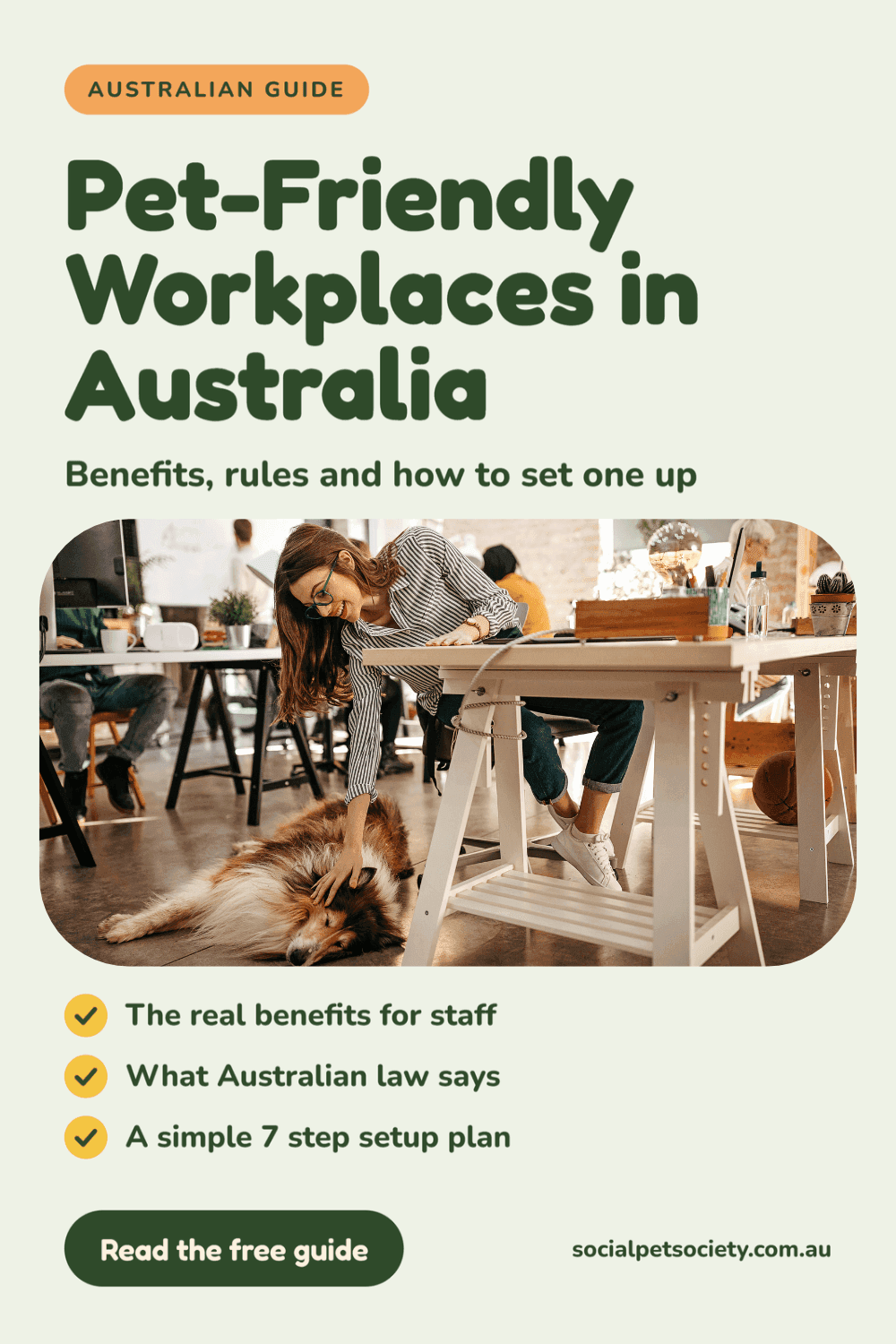
But a pet-friendly workplace only works when it’s planned well. Get it right and you have happier staff and a business people want to work for. Get it wrong and you have allergies, barking, complaints and a policy that quietly falls apart.
This guide covers what a pet-friendly workplace is, the real benefits, the legal side in Australia, and exactly how to set one up.
Quick answer: A pet-friendly workplace is a business that allows staff to bring well-behaved pets (usually dogs) to work under clear rules. Research links it to lower stress and better connection between staff. In Australia, pets have no automatic right to be at work, so employers should consult staff, do a risk assessment and write a clear pet policy before the first dog walks through the door.
What is a pet-friendly workplace?
A pet-friendly workplace is any business that lets employees bring their pets to work, either every day, on set days, or for special events like Take Your Dog to Work Day. Most programs focus on dogs, because dogs are easier to train, walk and manage in a shared space than most other pets.
The best pet-friendly workplaces have three things in common: a written pet policy, a pet-free zone, and a clear process for handling problems.
Why are pet-friendly workplaces becoming more popular in Australia?
Australians love their pets. Australia now has slightly more pets than people, and almost half of pet owners have a dog. After years of working from home with pets at their feet, many people don’t want to give that up.
For employers, allowing pets can also make the business more attractive to job seekers, especially in a tight labour market.
What are the benefits of a pet-friendly workplace?
1. Lower stress
Research suggests dogs at work can lower stress and lift mood. In one well-known study from Virginia Commonwealth University, staff who brought their dog to work reported lower stress levels over the course of the day. A five-minute pat or a quick walk around the block is a simple, natural reset.
2. Better relationships between staff
Pets are great conversation starters. Staff who rarely speak often bond over a dog that wanders between desks. That helps break down barriers between teams and makes new starters feel welcome faster.
3. Happier, more productive people
Australian research from Mars Petcare found people linked pet-friendly workplaces with better work-life balance, better relationships with colleagues, better productivity and better focus. Staff also don’t have to rush home to let the dog out or worry about it being lonely all day.
4. Easier hiring and staff retention
A pet-friendly policy is a perk that costs very little but means a lot to pet owners. The same Mars Petcare research found businesses that allow pets are much more attractive to potential employees.
5. A warmer welcome for customers
For customer-facing businesses, a friendly, calm dog can make clients feel relaxed and at home. It also tells pet-loving customers your business shares their values, which is exactly why we list pet-friendly businesses here on Social Pet Society.
What are the downsides of pets at work?
A good policy plans for the problems before they happen. The main ones are:
- Allergies. Some staff may react to pet hair or dander, and this can make shared spaces hard for them to use.
- Fear and phobias. Around 5 per cent of Australians have an animal phobia. Some people also have cultural or personal reasons for not wanting to be around dogs.
- Hygiene and safety. Accidents, trip hazards, cables, chemicals and open doors all need managing.
- Distraction and noise. A barking or anxious dog can disrupt a whole office.
- The pet’s own welfare. Not every dog enjoys a busy workplace. Some find it stressful, noisy and tiring.
Is it legal to have pets at work in Australia?
Yes, if the employer allows it. But ordinary pets have no automatic right to enter a workplace in Australia. It’s the business owner’s decision, and it may also depend on your lease, strata rules or building management.
Two important points:
- Work health and safety still applies. Employers must identify hazards, consult workers and put sensible controls in place. This applies whether dogs are allowed or not. WHS laws now also require businesses to manage psychosocial hazards, like stress, which a poorly managed pet policy could create for some staff.
- Assistance animals are different. Under the Disability Discrimination Act, it’s unlawful to treat someone unfavourably because they use an assistance animal, except in a few narrow situations. Your pet policy should never be used to refuse a genuine assistance dog.
If you’re unsure, check with your industry association or a workplace lawyer before you start.
How do you create a pet-friendly workplace? (Step by step)
Step 1: Ask your staff first
Run a short, anonymous survey. Ask who would bring a pet, who has allergies or concerns, and what rules people would want. Most people support pets at work as long as there is a pet-free area. Starting with staff input builds trust and stops resentment later.
Step 2: Check your lease and insurance
Read your lease or strata by-laws, and speak to your insurer about public liability and workers’ compensation. Make sure you’re covered if a dog causes an injury or damage.
Step 3: Do a risk assessment
Walk through your workplace and look for hazards from a dog’s point of view. Think about cables, chemicals, food, stairs, exits, car parks and hot surfaces. In North Queensland, also think about heat, shade and fresh water, especially in summer.
Step 4: Write a clear pet policy
Keep it simple and put it in writing. A good policy covers:
- Which pets are allowed (most businesses start with dogs only)
- How many pets can be on site at once
- Proof of up-to-date vaccinations, flea and worm treatment
- Basic obedience and good social skills
- Lead or crate rules
- Clean-up rules for toilet accidents
- What happens if a pet bites, damages property or causes a complaint
- How the policy will be reviewed
Step 5: Set up the space
Create a pet-free zone for staff who need one, such as the kitchen, meeting rooms or a section of the office. Then create a comfortable pet area with a bed, water bowl and some shade. A quality dog bed gives dogs a calm spot to settle so they’re not wandering all day.
Step 6: Make training a requirement
A well-trained dog makes or breaks a pet-friendly workplace. Ask owners to show their dog can sit, stay, walk calmly on a lead and settle quietly. A good training book is a useful resource to offer staff. If you’re starting from scratch, follow along with our weekly obedience training series with Bindi the Border Collie.
Step 7: Start with a trial
Begin with one pet-friendly day a week, or a small group of dogs, for a month or two. Ask for feedback, fix what isn’t working, then decide whether to expand.
Is my dog suitable for the workplace?
Before bringing your dog to work, ask yourself honestly:
- Is my dog calm around strangers and other dogs?
- Can my dog settle and rest for long periods?
- Is my dog toilet trained and fully vaccinated?
- Does my dog cope with noise, people and new places?
- Will my dog actually enjoy this, or just put up with it?
If the answer to any of these is no, your dog may be happier at home, at doggy day care, or visiting the office just for short periods.
The bottom line
A pet-friendly workplace can make staff happier, less stressed and more connected, and it can help your business stand out. But it only works when it’s built on clear rules, staff consultation and respect for the people (and pets) who find it harder. Start small, plan well and keep listening to your team.
Frequently asked questions
Do pet-friendly workplaces really reduce stress?
Research suggests they can. Studies link dogs at work with lower perceived stress, better mood and stronger social connection between staff, as long as the program is well managed.
Can my employer refuse to let me bring my dog to work?
Yes. In Australia, ordinary pets have no automatic right to be in a workplace. It’s up to the employer. Assistance animals are treated differently under the Disability Discrimination Act.
What should a pet policy for work include?
Which pets are allowed, vaccination and health rules, training expectations, lead rules, pet-free zones, clean-up rules, and what happens if there’s an incident or complaint.
How do you manage staff allergies in a pet-friendly office?
Ask staff about allergies before you start, set up pet-free zones, limit the number of pets on site, keep pets off furniture and clean shared areas regularly.
What is the best type of pet for the workplace?
Calm, well-socialised, fully trained dogs that are comfortable around strangers usually do best. Anxious, reactive or very young dogs may struggle.
When is Take Your Dog to Work Day in Australia?
It’s usually held in late June each year, often on a Friday, and is a great way to trial a pet-friendly day in your business.
This article is for general information only and isn’t a substitute for professional advice. The sources we used are listed below.
References
- Carabetta, G. 2026, ‘Want a dog-friendly workplace? Here’s what you’ll need to get right’, UTS Business School, University of Technology Sydney, viewed 21 October 2026, https://www.uts.edu.au/news/2026/04/want-a-dogfriendly-workplace-heres-what-youll-need-to-get-right
- Pet Secure n.d., ‘Pet-friendly workplaces’, Pet Secure, viewed 21 October 2026, https://petsecure.com.au/?p=13718
- Ray White Commercial n.d., ‘Pawsing for thought: can Australia’s 29 million pets help fill empty offices?’, Ray White, viewed 21 October 2026, https://www.raywhitecommercial.com/research/pawsing-for-thought-can-australias-29-million-pets-help-fill-empty-offices
- Australian Industry Group n.d., ‘Assistance animals in the workplace: what employers need to know’, Ai Group, viewed 21 October 2026, https://www.australianindustrygroup.com.au/resourcecentre/resource-centre-blogs/hr-blogs/assistance-animals-in-the-workplace-what-employers-need-to-know/
- HC Magazine n.d., ‘International Take Your Dog to Work Day approaching’, HC Magazine, viewed 21 October 2026, https://www.hcamag.com/au/news/general/lighter-side-are-you-ready-for-international-take-your-dog-to-work-day/143049
Related articles

How-To Guides
How to Teach Your Dog a Praise Word (Marker Word) in 4 Easy Steps
A praise word like “YES!” tells your dog the exact moment they got it right. Here’s how to teach one in 4 easy steps, the gear you need, the mistakes to avoid and what happened when our Border Collie Bindi learnt hers in week one of obedience training.
· Talitha Mulder

How-To Guides
How to Start a Pet Sitting Business in Australia: 9 Steps to Real, Consistent Income
Want to start a pet sitting business in Australia? This step by step guide covers choosing your niche, setting up your ABN and insurance, pricing your services, finding your first clients and building a business that earns consistent income, with lessons from running a real service business.
· Talitha Mulder
Pet-Friendly Hotels Ayr QLD – 2025 Verified Guide
Looking for pet-friendly hotels in Ayr QLD? Check our 2025 guide with verified pet policies, hotel contacts, and tips for staying with your dog.
· Talitha Mulder