
How to Teach Your Dog a Praise Word (Marker Word) in 4 Easy Steps
A praise word like “YES!” tells your dog the exact moment they got it right. Here’s how to teach one in 4 easy steps, the gear you need, the mistakes to avoid and what happened when our Border Collie Bindi learnt hers in week one of obedience training.
Jump to Quick GuideBy Talitha MulderPublished Updated 6 min read
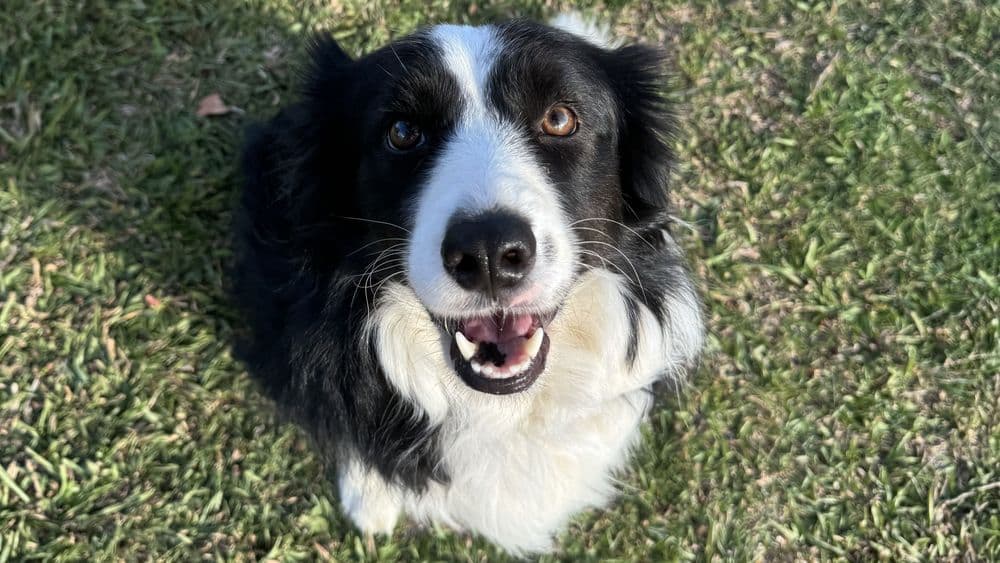
Quick answer: A praise word (also called a marker word) is a short, happy word like “YES!” that tells your dog the exact moment they’ve done the right thing. To teach it, say “YES!” and give a treat straight away, then repeat this in short sessions until your dog’s head turns the second they hear it. Most dogs pick it up within a few days.

Before your dog can learn sit, stay or loose lead walking, they need a way to know when they’ve got it right. That’s the job of a praise word. This guide is for anyone starting obedience training, and it’s the first post in our weekly series following my Border Collie, Bindi, through basic obedience.
Meet Bindi: why we started obedience training
Bindi is the easiest dog I’ve ever had the privilege of training. I remember watching working dogs when she was just 8 weeks old, thrilled with everything I could surely teach her. Fast forward a few years and she was obedient. She could sit, come, leave it, go out the back and drop, and she was loyal as anything.
But she’d pull on the lead, creep back inside whenever she got the chance, and need to be told “leave it” quite a few times before she believed I meant it. So I booked her into basic obedience training. Our first session was education only (no dogs allowed, just us humans!), and the very first thing we learnt was the praise word.
What is a praise word in dog training?
A praise word is a verbal signal that marks the exact moment your dog does something right, and promises a reward is coming. Trainers often call it a marker word. We chose “YES!” but any short, upbeat word works, as long as you use the same one every time.
It’s part of reward based training, which is the approach the RSPCA recommends. Reward based training sets your dog up to succeed, rewards the behaviour you want and avoids punishment, which makes training enjoyable and builds a stronger bond between you and your dog.
Why does a praise word matter?
Dogs live in the moment. If your dog sits and you take three seconds to dig a treat out of your pocket, they might think the treat was for looking at the cat. A praise word bridges that gap. It tells your dog “that, right there, is what earned the reward.”
The benefits of a praise word:
- It’s always with you. No clicker to forget at home.
- It marks the exact moment. Your dog learns precisely which action earned the reward.
- It works at a distance. You can mark good behaviour from across the yard or the park.
- It sets up every command to come. Once “YES!” means something, you can use it to teach sit, stay, recall and loose lead walking.
Praise word vs clicker: which is better?
Both work the same way. I’ve used clickers with dogs in the past, and the praise word is just the verbal version. Here’s how they compare:
Praise word (“YES!”)
- Cost: Free
- Always on hand: Yes, it’s your voice
- Sounds the same every time: Mostly, with practice
- Hands free: Yes
- Best for: Everyday training, walks and the park
Clicker
- Cost: Small cost
- Always on hand: Only if you remember it
- Sounds the same every time: Yes, every time
- Hands free: No, one hand holds it
- Best for: Precise trick training
For most families, a praise word is the easier choice because you’ll always have your voice with you.
What do you need to teach a praise word?
- An easy access treat pouch so rewards are fast
- Kibble for training at home
- High value treats for busy places, like wet food logs cut into small pieces
How to teach your dog a praise word: step by step
Time: 15 minutes a day | Difficulty: Easy
- Say it and treat. Say “YES!” in a happy voice and give your dog a treat straight away, within a second or two. We used kibble because Bindi is very easy to bribe!
- Repeat. Do this 10 to 15 times in a row. Your dog doesn’t need to do anything yet. You’re simply teaching them that “YES!” means a treat is coming.
- Practise daily. Aim for up to 3 short sessions a day, if you remember (which I did not!).
- Test it. When your dog is looking away, say “YES!” from across the room. If their head whips around, eager for the treat, they’ve got it. Now you’re ready to use it for real commands.
How long does it take a dog to learn a praise word?
Every dog is different. Bindi seemed to understand after just one session, but she’s a Border Collie and very food motivated. Most dogs get there within a few days of short, daily practice. Puppies, older dogs and dogs that aren’t food driven may take a little longer, and that’s completely fine.
Tips for success
- Use everyday kibble at home and save the high value treats for busy places with lots of distractions.
- Keep sessions short and fun so your dog stays keen. Stop while they still want more.
- Use the same word and tone every time. Pick one word for the whole family to use.
- Start somewhere quiet before you try it at the park or on walks.
Common mistakes to avoid
- Saying “YES!” without a treat. Every “YES!” should be followed by a reward, or the word loses its meaning.
- Using it as general chatter. If “YES!” also means “yes, we’re going for a walk”, it gets watered down. Keep it just for training.
- Waiting too long to reward. The treat should arrive within a second or two of the word.
- Training when your dog is overexcited. A calm dog learns faster, which is where the settling mat helps.
What I learnt in Bindi’s first week
Even with an easy dog, the praise word was a lightbulb moment for me. I’d been rewarding Bindi for years, but I hadn’t been telling her exactly what she was being rewarded for. The biggest lesson? Consistency matters more than session length. A couple of quick “YES!” and treat rounds while the kettle boiled did more than one long session ever would.
Next week we’ll put the praise word to work on loose lead walking, Bindi’s biggest challenge. Follow along with the series on the Social Pet Society blog.
Key takeaways
- A praise word like “YES!” tells your dog the exact moment they’ve got it right.
- Say the word, then give a treat within a second or two, every single time.
- Short daily sessions work best, and most dogs learn it within a few days.
- Once your dog knows the word, you can use it to teach every other command.
Reference: RSPCA Australia, “What is reward based dog training and why does the RSPCA support it?” (link to kb.rspca.org.au)
Quick Guide: How to Teach Your Dog a Praise Word (Marker Word) in 4 Easy Steps
A praise word like “YES!” tells your dog the exact moment they got it right. Here’s how to teach one in 4 easy steps, the gear you need, the mistakes to avoid and what happened when our Border Collie Bindi learnt hers in week one of obedience training.
- Time
- 15 minutes a day
- Difficulty
- Easy
Checklist
- Easy access treat pouch
- Kibble for home training
- High value treats for busy places
Steps
- Say “YES!” in a happy voice and give a treat straight away.
- Repeat 10 to 15 times in a row.
- Practise up to 3 short sessions a day.
- Say “YES!” from across the room and watch for the head turn.
Frequently asked questions
What is a praise word in dog training?
A praise word, also called a marker word, is a short word like “YES!” that tells your dog the exact moment they did the right thing. It’s always followed by a reward, so your dog learns to love hearing it.
What is the best praise word for a dog?
Any short, upbeat word you’ll use consistently. “YES!” is popular because it’s quick and easy to say. Avoid words you use in everyday chat, like “good”, so the meaning stays clear.
Is a praise word better than a clicker?
Both work the same way. A praise word is handy because you always have your voice with you, even when the clicker is left at home. A clicker sounds identical every time, which some trainers prefer for precise trick work.
How long does it take a dog to learn a praise word?
Most dogs learn it within a few days of short, daily practice. Bindi seemed to understand after one session, but every dog learns at their own pace.
Can you teach an older dog a praise word?
Yes. Dogs of any age can learn a praise word. Bindi was a few years old when we started, and it clicked straight away.
Do I have to give a treat every time I say the praise word?
Yes, especially while your dog is learning. If the word stops predicting a reward, it loses its meaning. The reward can be a treat, a favourite toy or a quick game.
Related articles

How-To Guides
How to Start a Pet Sitting Business in Australia: 9 Steps to Real, Consistent Income
Want to start a pet sitting business in Australia? This step by step guide covers choosing your niche, setting up your ABN and insurance, pricing your services, finding your first clients and building a business that earns consistent income, with lessons from running a real service business.
· Talitha Mulder

Pet-Friendly Business Growth
Pet-Friendly Workplaces in Australia: Benefits, Rules and How to Set One Up
Thinking about letting dogs into your workplace? Here’s what the research says about the benefits, what Australian law requires, and a simple step-by-step plan to create a pet-friendly workplace that works for everyone, including staff who’d rather not share their desk with a dog.
· Talitha Mulder