
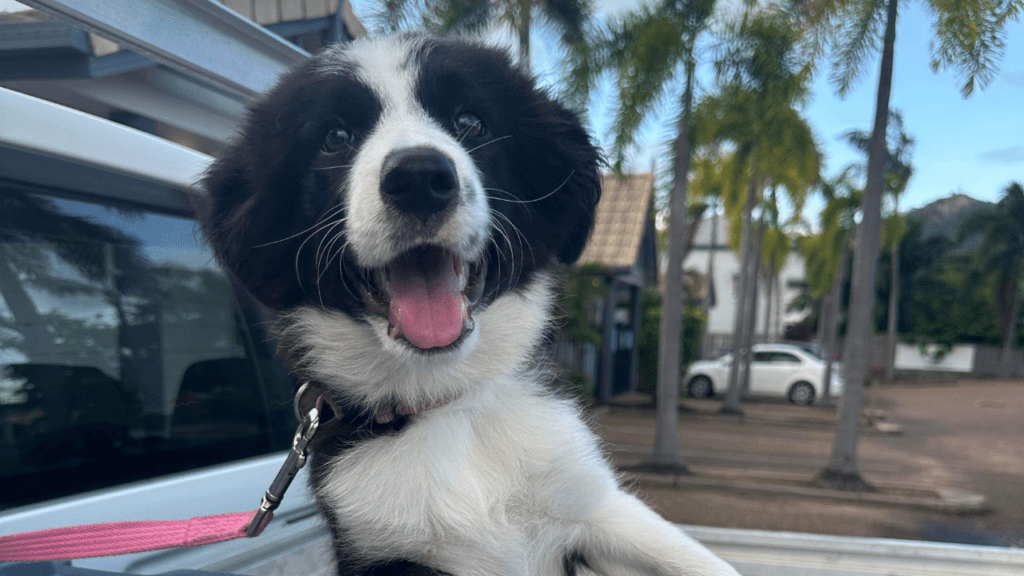
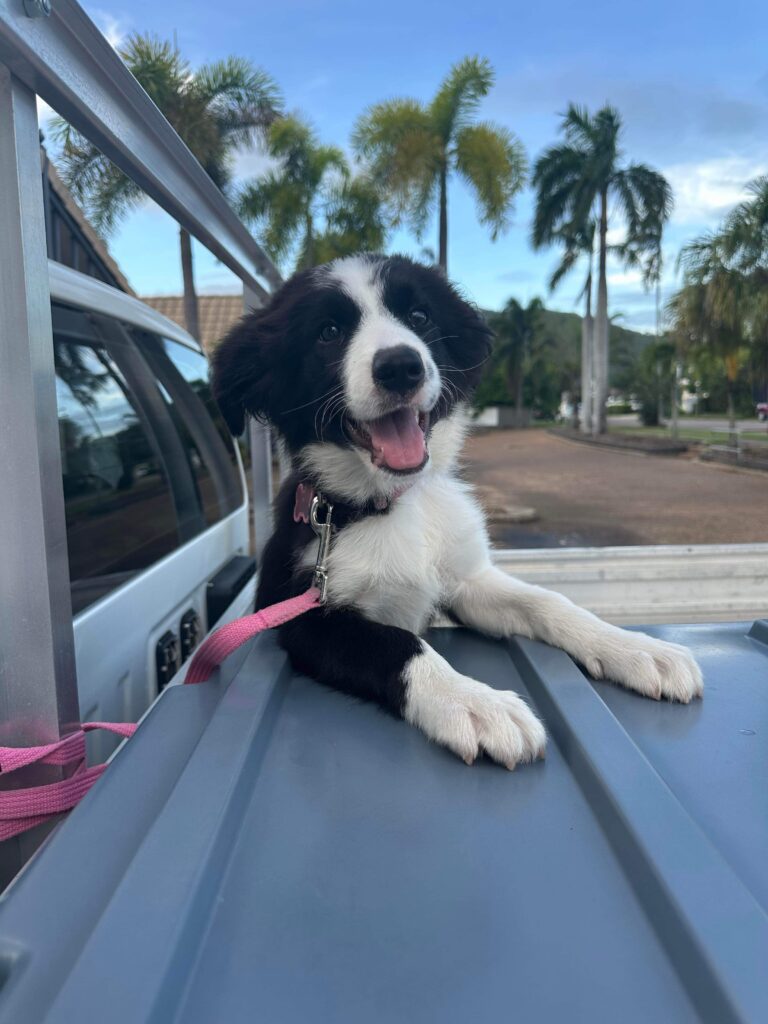
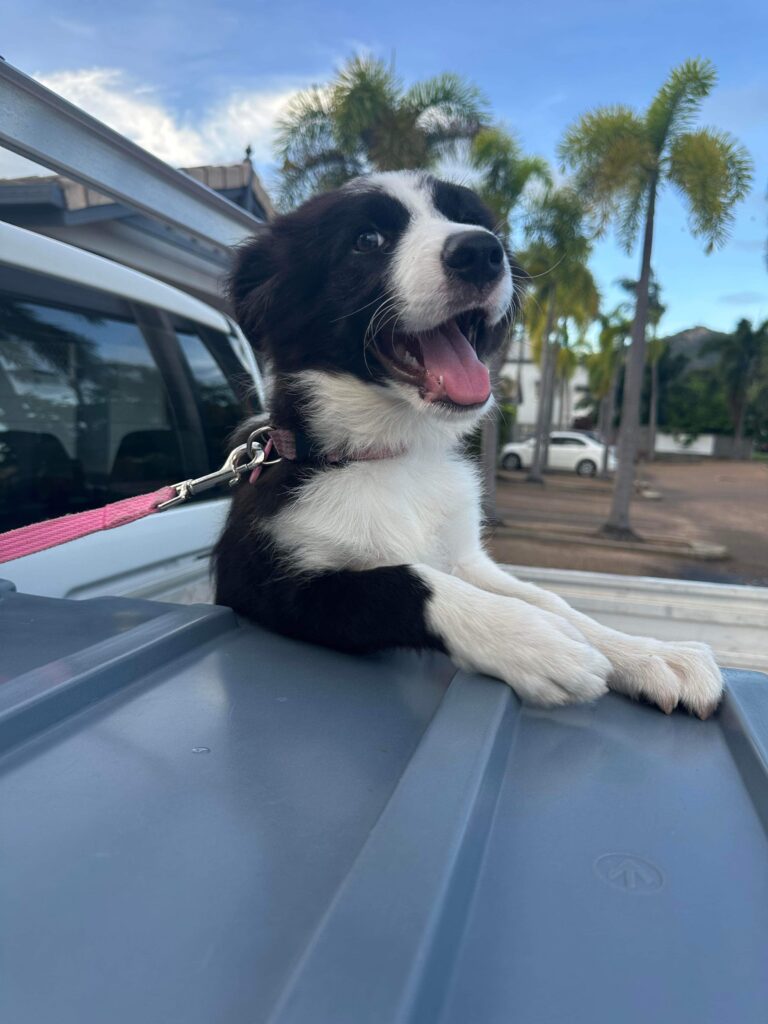
Yesterday, I tried something new with my Border Collie puppy, Bindi. I put her in the back of a ute and took her for a slow and careful drive around the street to see how she would react. After that, I was curious about the rules for having a dog in the back of a ute, so I searched the web to find the answers.
In Australia, laws prohibit unrestrained travel for dogs in utes and trailer trays, with fines ranging up to $8,625. Always secure dogs using appropriate restraints, such as ute ties that allow them to stand and lie down, but prevent jumping or falling. Follow a gradual training process to get them used to the ute slowly, to allow enjoyable experiences in the future.
Table of Contents
Disclosure: This article includes affiliate links. If you click on these links and make a purchase, I receive a small commission. This comes at no extra cost to you but greatly supports the maintenance of this site. Learn more here.
The Law
Australia has a nationwide ban on unrestrained travel for dogs in ute and trailer trays. This means that now, in every state, dogs must be properly restrained while traveling to ensure their safety [1].
The is also laws that relate to dogs in utes, such as a ban on prong collars and penalties for breaches of duty of care resulting in animal harm [4]
State Laws
In New South Wales, you must secure your dog on the open back of a moving vehicle, or you could face fines up to $5500 or six months imprisonment.
Similar rules apply in the Australian Capital Territory, Victoria, and South Australia, with fines ranging from $1850 to $3200.
Queensland recently passed a law requiring dogs on a tray or trailer to be secured at all times even when parked, with a hefty maximum penalty of $8625.
In the Northern Territory, strict rules apply, and the maximum fine is $8100.
Dogs in Western Australia must be adequately sheltered or secured in a transport crate or tethered with specific conditions.
In Tasmania, while specific rules aren’t outlined, dog owners must restrict their dogs in a vehicle, with potential fines up to $905 [2].
The legislation includes an exception for dogs involved in moving livestock, and that is based on their specific working needs [4].
The RSPCA
The RSPCA recommends using restraints that allow your dog to stand and lie down but prevent them from jumping or falling off the vehicle. They mention that the restraint shouldn’t tangle – so general leads are a no-no.
They also mention that it’s really important to consider the weather, because extreme conditions like heat can be harmful. Metal surfaces, like ute trays, can get hot, so also take precautions to protect your dog’s paws [2]. They recommend using rubber matting for dogs to lie on. Sadly, they’ve seen cases where dogs are left in the full sun on hot ute trays outside shopping centres, resulting in paw injuries and severe heat stress [3]. Amazon has a great product – The Green Pet Shop Dog Cooling Mat, Extra Large. You can see their current prices by clicking here.
The RSPCA also suggests that it is generally safer to keep your dog inside the vehicle cabin using a safety-belt restraint, rather than in a ute tray – so if you are able, this is the best option [2]. (Amazon has a great Dog Seat Belt available – you can check out the price here). If your dog is in the ute tray and something unexpected did happen, like a sudden stop or swerve, they can get seriously hurt. Especially in the city where there’s a danger they could be thrown into traffic. That’s why, if they are in the ute tray, taking a few minutes to secure them properly is crucial.
The Rules
I went on a search for the perfect way to secure my dogs in the back of a ute, that meets the requirements and rules, and found the Prestige Pet Adjustable Ute Dog Tie on Amazon. You can see their current prices by clicking here.
The road rules state that you can not travel with a pet on your lap while driving. This is considered an offense as it can be distracting and unsafe in the event of a traffic incident. While there’s no specific requirement to restrain animals within the vehicle, it’s recommended for safety. Recommendations for ute travel are;
- Avoid using choker chains.
- Restrain the dog securely behind the cabin and in the middle, using a neck collar or harness.
- Ensure the lead allows comfortable movement without the dog jumping over the side.
- Consider placing the dog in an enclosed shelter or cage to protect it from elements and projectiles.
- Cover the metal floor of the ute to prevent the dog’s claws from burning in hot conditions. [5]
RSPCA Queensland says the safest ways to transport dogs (in order of best to worst) are;
1. Inside the cabin.
2. In an enclosed cage for comfort, water, and shelter.
3. Secured with a proper restraint [4].
Training
These steps will help you train your dog to ride comfortably and securely in the back of your ute, making every journey an enjoyable one.
Getting Started
The initial step is enticing your dog into the back of the ute. Open the tailgate and use treats to encourage your dog to jump into the bed. (If your dog is too small to jump that height, or is too young, skip this step and simply lift your pup into the tray)
Prepare the Ute
Enhance your dog’s grip and comfort by adding a mat to the bed. This provides traction and makes the space more inviting for your pup.
Establish Commands
Introduce a command such as ‘load,’ ‘load up,’ or ‘get in.’ Consistency is key, so use the same command each time. Reward your dog with treats and praise when they comply.
Encourage Lying Down
Instruct your dog to lie down on the mat and reward this behaviour with treats. Keep them in this position for a few minutes before allowing them up.
Gradual Progression
Repeat this training over several days, gradually increasing the time your dog spends in the back of the ute. Ensure they becomes comfortable before proceeding.
Familiarise with Ute Noise
Have your pup jump into the bed, attach the leash to the securing lug, and start the ute. Allow them to get used to the noise before driving. Progress slowly to build confidence.
Start with a Slow Drive
Begin driving slowly in a quiet location with no or minimal traffic. If your dog shows signs of wanting to jump out, stop and instruct them to lie down. Patience is key during this phase.
Gradually Increase Speeds
As your dog becomes accustomed to the moving truck, gradually increase your speed and introduce more traffic. This may take a few weeks, so proceed at a pace that ensures your dog feels completely at ease.
By following these gradual steps and incorporating positive reinforcement, you can train your dog to ride safely and comfortably in the back of your ute. Enjoy the adventures together with the confidence that your furry friend is both secure and content during the journey.
Conclusion
After testing a new experience with my puppy Bindi in the back of a ute, I discovered there are specific rules for dog travel in Australia. Laws demand dogs be restrained in the ute, with hefty fines for violations, emphasising the importance of safety. Utilising appropriate restraints, following RSPCA guidelines, and gradually training dogs for ute travel ensures both their security and enjoyment.
So, where does your pup sit when travelling in a vehicle?
- Jesse Hyland. (2023, January 5). Dogs are now banned from travelling in ute and trailer trays unrestrained right across Australia. Daily Mail Australia. https://www.dailymail.co.uk/
- RSPCA Knowledgebase. (2024, January 19). Is it legal to have unrestrained dogs on ute trays or other open vehicles?
- RSPCA Queensland. (2021, May 19). Dogs and Utes.
- Clifton, C. (2023, February 1). Queensland Introduces Offence for Unrestrained Dogs in Utes and Trailers. ABC News.
- McMeniman, R. (2019, January 2). Do I restrain my pet whilst travelling in a motor vehicle? myPolice Moreton.


