
This morning, my toddler didn’t finish her breakfast, so my older Chug (Chihuahua cross Pug – quite the handsome mix) ended up with the natural yoghurt and kiwi fruit – which he polished off in seconds! I knew that those foods were okay for him to eat, because I have done a little research on those foods before. In fact, I have an article on Dairy for Dogs here if you are interested. But I was keen to know; what other fruits are okay for him to eat, and how much should he have in a sitting? So I did a little research on the topic.
A heap of fruits like berries, melons, and bananas are healthy treats for dogs. But, it is best to limit fruit treats to less than 10% of their total food intake. It’s also really important to note that certain fruits such as sultanas and grapes are toxic to dogs.
Table of Contents

Disclosure: This article includes affiliate links. If you click on these links and make a purchase, I receive a small commission. This comes at no extra cost to you but greatly supports the maintenance of this site. Learn more here.
What is the Best Fruit for Dogs?
A huge benefit of feeding your dog fruit snacks is the high fibre content they contain.
When a dogs gut bacteria break down the fibre in fruit, essential nutrients, called fatty acids, are produced (essential means those that are necessary for healthy body functioning).
Fibre amounts are different between different fruits, particularly the ‘soluble’ fibre – which is the fibre your dogs body can actually use.
Scientists have compared some types of fruit fibre to see which was best at being broken down by a dogs gut. They found that citrus was the best at being broken down and used up by a dogs body [1], but unfortunately, dogs don’t particularly care for citrus.
So this didn’t really help me – I was still left wondering what fruit is good for my dog.

So, below are the top 10 fruits for your dog (in order of best to a little less best).
- Kiwis: Kiwis are a tropical fruit rich in fibre, vitamin C, and potassium, all of which contribute to a healthy immune system and digestion in dogs.
- Apricots (fresh is better than dried): They are a good source of vitamins A and C, which contribute to immune function and skin health. However, make sure to remove the pit, leaves, and stem, as they contain cyanide and can cause digestive issues.
- Mango: They’re packed with vitamins A and C, which promote healthy skin and immune function. However, be sure to remove the pit, as it contains cyanide and, again, can cause digestive issues.
- Pears: Pears are a good source of fibre and copper, which can promote digestive health and contribute to the production of red blood cells. Offer them in small, bite-sized pieces, and be sure to remove the core and seeds, as they contain cyanide too.
- Berries (Strawberries are the best for fibre content! But you can also give blueberries, blackberries and cranberries): These sweet and juicy berries are a favourite among dogs and humans alike. They’re rich in vitamins B1 and B6, which support muscle function and energy metabolism. Offer them as a tasty treat or mix them into your dog’s regular food for added flavor and nutrients.
- Peaches: Fresh peaches are a tasty snack for dogs, offering a good dose of vitamin A, which supports vision and immune function. Just be sure to remove the pit, as it contains cyanide and can cause digestive upset. Stick to fresh peaches, as canned ones often contain added sugars, which are not ideal for dogs.
- Apples: These crunchy fruits are not only delicious but also packed with fibre, which can aid in digestion for your pup. Additionally, they contain vitamins A and C, which support your dog’s overall health. Just be sure to remove the core and seeds, as they contain cyanide, which can be harmful in large amounts.
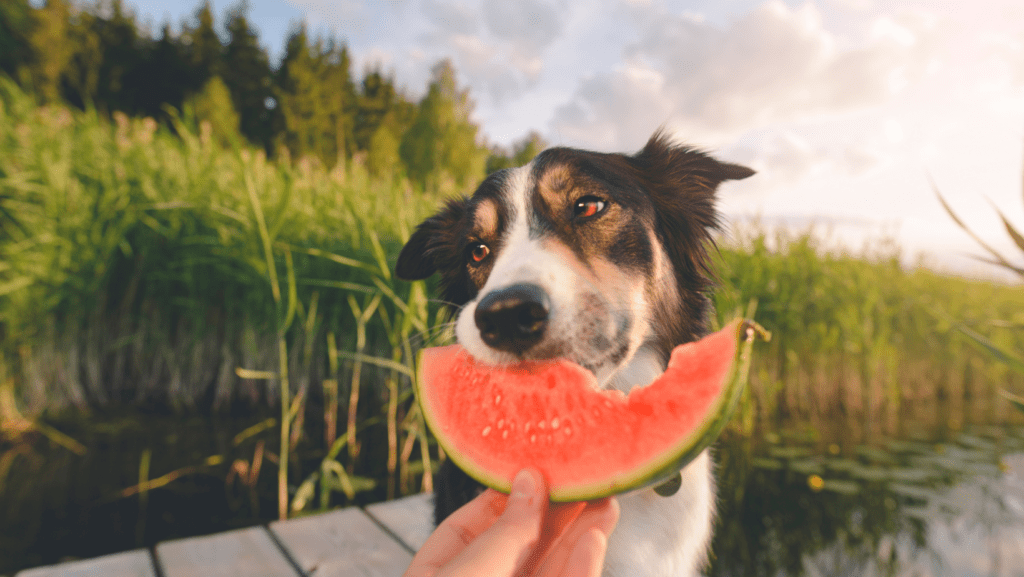
- Melons (Watermelons have more fibre than rockmelons): These sweet and refreshing melon is not only hydrating but also rich in beta-carotene, which supports eye health. They are made up of 92% water and are low in calories and packed with vitamins A, B6, and C, which support overall health. Offer seedless slices as an occasional treat, and be sure to remove the rind, as it can be difficult for dogs to digest.
- Bananas: Bananas are a fantastic source of potassium, which is essential for muscle and nerve function in dogs. They’re also rich in carbohydrates, providing a quick energy boost. Slice them into small, manageable pieces for your pup to enjoy as a snack or training treat.
- Pineapples: This tropical fruit is not only delicious but also packed with vitamins and minerals, including vitamin C and manganese. It’s also low in calories, making it a great option for dogs on a weight management plan. Remove the tough skin before serving, as it can be difficult for dogs to digest.
Remember to always feed fruits to your dog in moderation (do not give any more than 10% of their total food intake in fruit snacks), and monitor for any signs of digestive upset or allergic reactions.
Enjoy experimenting with different fruits to find your pup’s favourites! [2, 3].
Can I Feed my Dog Fruit Everyday?
The main issues with figuring out how much fruit your dog can have is to do with;
- Having a complete and nutritionally sound diet.
- Receiving the correct calorie (energy) intake.
Just like people, dogs need a certain amount of calories (kilojoules for us Aussies) each day to stay healthy. They also require a certain amount of nutrients from their food.
While it’s fun for you (and obviously, your dog!) to give them treats, it’s important not to overdo it. Treats, snacks, or left overs should make up only about 10% or less of your pooches total calorie intake each day. This ensures they have a complete food (i.e kibble) most of the time, and treats only for a small portion – this keeps their diet balanced and healthy.
Fruits, like watermelon, can make great treats for dogs as they have very little calories. For example, a Border Collie usually needs between 800 to 1,500 calories a day, depending on things like their age, how active they are, and if they’re pregnant or not.
So, two cups of watermelon (which contains about 100 calories) would fit within the 10% guideline, assuming they required approximately 1000 calories.
But, every dog is different, so I’d recommend you talk to your vet about your dog’s diet specifically at their next annual (or maybe not so annual if it’s been a little while…) health check. Your local vet should happily give you some personalised advice based on your dog’s age, health, and other factors. They’ll help you figure out the right amount of treats and fruit for your furry friend if you’re not confident [4].
Do Dogs Like Fruit?
Scientists often look at free-ranging or wild dogs to understand a domestic dogs preferences.
By doing this, scientists are able to remove an owners preference or bias of what they think their dogs would like to eat. Unfortunately though, if we look to wild dogs and their preference for food types, we see that they scavenge and eat just about anything they find! Wild dogs have learned to prioritise meat, but really, they’ll eat whatever smells edible to them.
So, what does this mean? Well, to be honest, it just means you’ll have to lay the fruit out in front of your dog, and see what they think smells edible to them! [5].

What Fruits Can't my Dog Eat?
You probably know that some foods that are safe for humans can be harmful to dogs if they eat them by accident.
Here are the main fruits dogs shouldn’t eat:
Chocolate and Cocoa-based Products:
- Chocolate contains substances called methylxanthines, such as theobromine and caffeine, which are toxic to dogs and cats.
- Dark chocolate and baking chocolate contain higher levels of these substances compared to milk chocolate.
- Symptoms of chocolate poisoning include vomiting, diarrhoea, rapid breathing, increased heart rate, tremors, seizures, and even death in severe cases.
- The severity of symptoms depends on the amount and type of chocolate ingested, as well as the size of the animal.
Onions, Garlic, Leek, and Chives:
- These plants contain compounds called organosulfoxides, which can damage red blood cells and cause anaemia in dogs and cats.
- Symptoms of onion and garlic poisoning include vomiting, diarrhoea, weakness, pale gums, rapid breathing, and even collapse.
- Cats are more sensitive to these compounds than dogs, but both species can be affected.
- Cooking does not deactivate these harmful substances, so even cooked onions and garlic can be dangerous.
Grapes, Raisins, Sultanas, and Currants:
- Grapes and their dried forms (raisins, sultanas, currants) can cause kidney failure in dogs.
- The toxic substance in grapes is unknown, and not all dogs are affected, but even small amounts can be dangerous.
- Symptoms of grape toxicity include vomiting, diarrhoea, lethargy, loss of appetite, abdominal pain, and decreased urine production.
- Prompt veterinary treatment is essential if a dog ingests grapes or raisins, as kidney damage can be irreversible.
Xylitol:
- Xylitol is an artificial sweetener found in sugar-free gum, candy, baked goods, and some other products.
- In dogs, xylitol can cause a rapid release of insulin, leading to hypoglycaemia (low blood sugar) and potentially fatal liver failure.
- Symptoms of xylitol poisoning include vomiting, weakness, lethargy, seizures, and collapse.
- Even small amounts of xylitol can be toxic to dogs, so it’s crucial to keep products containing xylitol away from pets. [6].
What Fruit is Good For my Dogs Stomach?
Scientists have discovered that what our pets eat can have a big impact on their health and how long they live. Fibre is found in foods like grains, fruits, and veggies, and it plays a big role in how well pets poop and the quality of their stool.
As more people become aware of how important fibre is for overall health, and as natural and healthy diets become more popular, even pet food companies are starting to use different kinds of fibre sources in their products.
Even though there’s not a ton of scientific info yet about all these new fibre sources, studies show that some of them, like fibre from corn, are really good for pets. Corn fibre doesn’t seem to make pet food taste bad or make it harder for pets to digest their food, and it even helps control how quickly their blood sugar rises after they eat.
Fruit fibre and things like fruit pomaces (the pulpy leftovers from making fruit juice) are also being used because they can hold onto water really well. This is great for making wet pet food because it keeps the food moist while still being firm.
Overall, these alternative fibre sources are turning out to be great ingredients for pet food. They’re not only nutritious but also have extra health benefits that can keep pets feeling their best for a long time. Any fruit mentioned above is great for stomach health [7].
Are Fruits Better for my Dogs Health?
Using different kinds of fiber in pet foods is becoming more important because there’s growing evidence that they can make pets healthier. Some types of fiber, like those from corn, fruit, rice bran, and β-glucans, are good for adult dogs and cats and are easy for them to digest.
Understanding more about these fiber sources can help pet food companies make better products and help pet owners keep their furry friends healthy and happy. It can also be useful for managing common health problems in pets, like high cholesterol, insulin resistance, and diabetes.
But there’s still a lot we don’t know. We need more research to figure out how much of these fiber sources should be in pet diets for different health conditions and in different types of pet food. We also need to learn more about how these fibers are different from each other and how they react to being processed into pet food.
In the future, we’ll need to study how these fibers interact with the nutrients and the gut bacteria in pets’ bodies to understand exactly how they make pets healthier.
https://www.mdpi.com/2072-6643/5/8/3099
Researchers wanted to see how adding different types of fiber to a low-calorie diet affected dogs’ hunger and eating habits. They tested variations of a standard low-energy diet by adding one of five different fiber-rich ingredients. They fed these diets to six dogs for 12-day periods, and then observed the dogs’ behavior after introducing the test diets.
During each 12-day period, the dogs were given two “challenge meals” to see how much they would eat. After each 12-day period, the dogs had a 6-day break from the test diets.
The results showed that the type of diet didn’t affect how much the dogs ate during the challenge meals or during the rest periods. The dogs’ behavior also didn’t show any significant changes in hunger levels after eating the test diets.
In short, adding moderate levels of fiber to a low-calorie dog food didn’t seem to make the dogs feel more full or less hungry when they were on a diet to lose weight.
https://www.sciencedirect.com/science/article/abs/pii/S0022316623061151
Signs my Dog Needs More Fruit
An 11-year-old male Miniature Poodle dog, who had been neutered, was brought to the vet because he had been eating plants every day for 7 years and then vomiting afterward. Every time the dog went for a walk, he would munch on grass and then throw up. The vet didn’t find anything wrong during the check-up. After looking into the dog’s behavior and discussing with the owner, they diagnosed the dog with a plant-eating problem. They thought maybe the dog was eating plants because he needed something in his diet or to help with his digestion. So, they suggested the owner stop feeding the dog his usual food and switch to a high-fiber diet. When they checked back later, the owner said the dog hadn’t been eating plants and hadn’t thrown up since three days after changing his diet. The dog stayed healthy for 13 months afterward. This shows that a diet lacking in certain nutrients, especially fiber, might cause a dog to eat plants.
https://www.jstage.jst.go.jp/article/jvms/69/7/69_7_779/_article/-char/ja/
Conclusion
xx

Talitha Mulder
- https://academic.oup.com/jas/article-abstract/79/4/919/4682821?login=false
https://www.hillspet.com.au/pet-care/nutrition-feeding/can-dogs-and-cats-eat-fruit?lightboxfired=true#
https://www.ncbi.nlm.nih.gov/books/NBK570127/table/lipid_diet_cardiov.T.fiber_content_of_se_2/
- https://journals.sagepub.com/doi/full/10.1016/j.jfms.2011.05.009
http://eprints.iiserkol.ac.in/1337/
https://www.frontiersin.org/articles/10.3389/fvets.2016.00026%20/full
https://pubmed.ncbi.nlm.nih.gov/23925042/

