
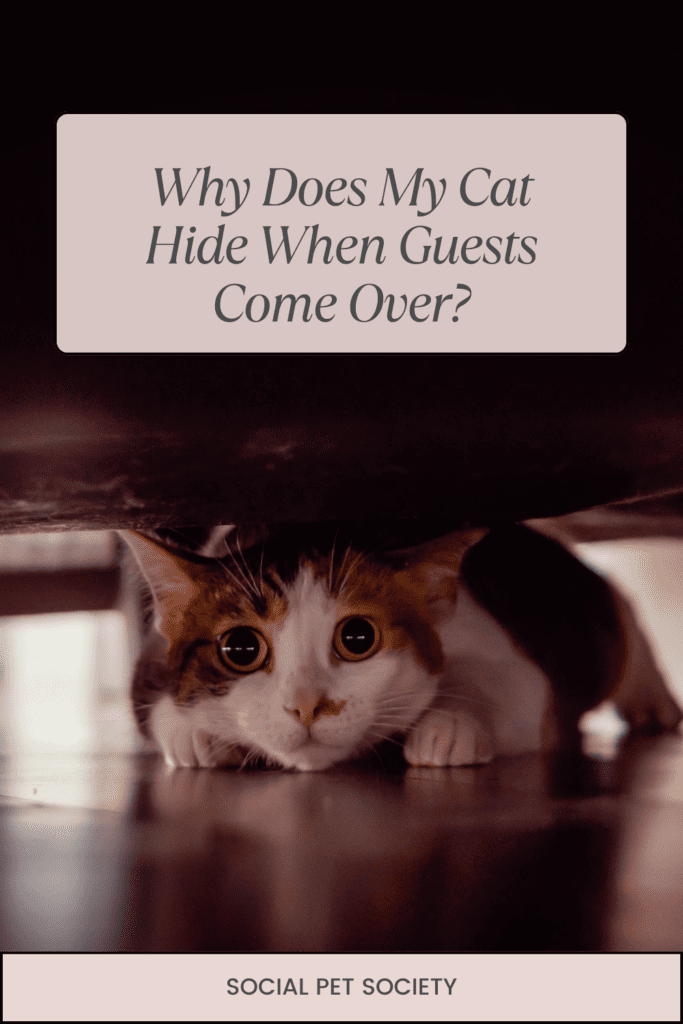

When guests come over, your cat may suddenly retreat, hiding under the bed or in a quiet corner.
This cat hiding behaviour isn’t just about seeking solitude – it’s an instinctive response to feeling vulnerable or uncertain. Having a cat that hides from guests is common, as most cats are highly sensitive to changes in their environment.
If you can understand this behaviour, you will be able to create a safe space where your pet can retreat when feeling anxious.
What I'll Cover
Disclosure: This article includes affiliate links. If you click on these links and make a purchase, I receive a small commission. This comes at no extra cost to you but greatly supports the maintenance of this site. Learn more here.
The Special Bond Between Cats and Their Owners
One of the most interesting things about cats is the attachment they form with their owners. Attachment is a natural, important behaviour in social animals, and it explains why we feel such a deep connection with our pets. This bond is what makes us care for them so deeply. While there isn’t as much research on attachment in cats as there is with dogs or even humans, it’s clear that the connection cats have with their owners is strong and meaningful. A recent study looked at how cats behaved when they were with their owners, when they were alone, and when they were with a stranger. The results were fascinating. Cats behaved very differently depending on the situation. For example, when they were with their owners, cats spent more time exploring and moving around. This shows that they felt safe enough to explore their surroundings with confidence. However, when left alone, the cats spent a lot more time inactive—likely because they didn’t feel as secure without the presence of their owner. This shift in behaviour highlights how important the comfort and security of their caregiver is to them. Interestingly, when the cats were around a stranger, they showed more alertness—a sign that they were more cautious and on high alert in an unfamiliar situation. This is very similar to the way human children react when they’re with strangers, versus when they’re with their parents. It’s a natural, protective behaviour. These findings suggest that cats form deep, emotional bonds with their owners—just like humans and children do. When they feel safe, they’re more relaxed and playful, but when they feel uncertain, they become more cautious or retreat to familiar places. Understanding this bond helps us appreciate just how much our cats depend on us for comfort, security, and emotional connection. [1]
Cats are intuitive creatures, keenly in tune with their surroundings
They are remarkably sensitive to changes in their environment, and much like us, they seek out places where they feel most safe and secure. When new people come into their space, it’s not necessarily that your cat wants to avoid the guest—rather, they instinctively turn to their hiding spots because they provide a sense of control over their environment. The bed, the closet, the box—these are their safe havens, their sanctuaries. These quiet places allow them to recalibrate, to rest and assess before interacting again with the outside world. In many ways, your cat’s instinct to seek shelter from the unfamiliar reflects a natural, protective behaviour. It’s an example of how we too, as humans, sometimes need moments of solitude to feel centred again in the face of change or uncertainty. It’s a simple yet profound reminder that we all deserve a space to retreat, recharge, and reconnect with our own sense of comfort.
We all have our own "hiding spots"
It might not always be as literal as a cat slipping under the bed, but we all have our places of quiet retreat. In today’s fast-paced world, these moments of peace are increasingly important. Whether it’s a room where we can be alone with our thoughts, a long walk in nature, or a favorite activity that helps us unwind, these “hiding spots” offer a sense of calm in times of overwhelm. When life feels too busy, when we’re faced with new situations, or when our energies feel drained, we instinctively search for refuge to regain our footing. For example, think about a time when you faced a new challenge—whether at work, in your personal life, or during a social gathering. The temptation to retreat, to step back from the unfamiliar, is strong. Like a cat seeking shelter, we too need space to assess, to process, and to prepare ourselves to re-engage when we are ready. It’s a natural coping mechanism, not a sign of avoidance, but rather an act of self-care. In fact, retreating is not a weakness—it’s a form of preservation. Just as your cat takes refuge in their favorite hiding spot, it’s important for us to recognize the value of taking a step back when needed. These moments of solitude offer a chance to recharge and replenish our energy reserves. This isn’t about avoidance—it’s about nurturing our mental, emotional, and physical well-being so that we can return to life with renewed vigor and clarity.
The power of the hidden space
What if we viewed these moments of retreat not as signs of weakness but as opportunities for growth? By embracing the power of our own “hiding spots,” we give ourselves permission to be vulnerable in a healthier, more balanced way. Just as your cat knows when it’s time to step back, we too can cultivate the wisdom of knowing when to pause, reflect, and recharge. In doing so, we can avoid burnout, manage stress, and restore our sense of peace. These quiet moments of reflection are often when we learn the most about ourselves. They allow us to process our emotions, gain perspective, and emerge stronger and more centered. The next time you find yourself seeking solitude, take a moment to acknowledge the wisdom in that choice. Just as your cat retreats to safeguard their peace, you too can retreat to safeguard your well-being. When you’re ready, you will re-enter the world with more authenticity, confidence, and clarity.
The value of allowing space to retreat
It’s essential to understand that retreating isn’t about running away from the world or hiding in fear—it’s about finding the space to restore your inner balance. Just as your cat doesn’t hide out of fear but out of a desire to preserve their energy, we can learn to honor our own need for rest and rejuvenation. When we acknowledge the importance of these moments of solitude, we free ourselves from the pressure of constant engagement. We give ourselves the grace to step back, to reflect, and to recharge. And when we return, we do so with renewed clarity and strength—just as your cat, after their moment of peace, re-emerges ready to face the world once more.
Conclusion
The next time you notice your cat retreating when guests arrive, think of it as an invitation to reflect on your own need for space. Embrace the wisdom in their behavior and recognize the value of retreat. By doing so, you’ll discover that these moments of quiet reflection can lead to greater clarity, energy, and presence when you’re ready to return to the world. Whether it’s a hidden corner under the bed or a quiet room in your home, there is great value in allowing yourself the time and space to recharge—just like your cat does so gracefully.

