
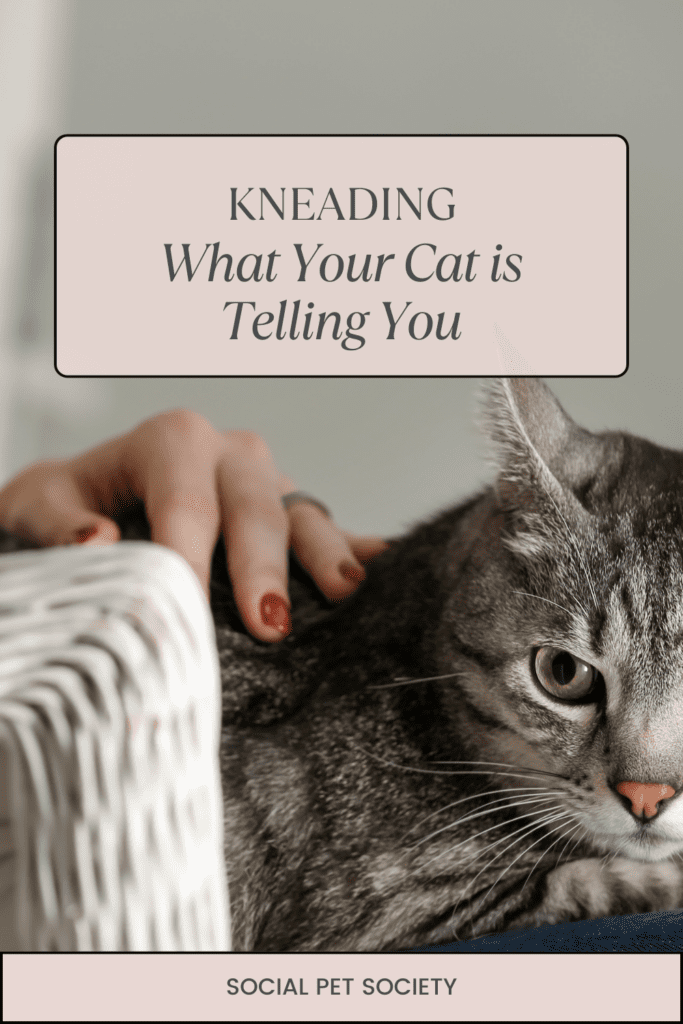

There is no doubt you’ve experienced your cat climbing onto your lap and gently kneading with its paws, like it’s working dough.
Kneading is a common cat behaviour that many cat owners witness, but why do cats knead?
This comforting action stems from their kittenhood, when they kneaded their mother’s belly to stimulate milk production. As adults, this behaviour shifts from instinct to comfort. Your cat kneads to create a safe, affectionate space, demonstrating trust and warmth.
Understanding this cat behaviour helps explain why your cat seeks out this special bonding moment.
What I'll Cover
Disclosure: This article includes affiliate links. If you click on these links and make a purchase, I receive a small commission. This comes at no extra cost to you but greatly supports the maintenance of this site. Learn more here.
Ever notice your cat climbing onto your lap, curling up, and kneading you with its paws like its working dough? It’s a familiar feeling for many cat owners, but why do they do it?
A Comforting Gesture from Kittenhood
Kneading is something cats carry with them from kittenhood. When they were tiny, they kneaded their mother’s belly to help stimulate milk production. It’s instinctual, something they learned as babies. But as adults, it’s not about milk anymore. It’s about comfort.
Kneading as a Sign of Love
When your cat climbs onto your lap or snuggles in close, kneading with those paws, they’re not looking for milk. They’re looking for safety. They’re looking for warmth. Kneading is a way for them to create a soft, comfortable space. It’s like how a dog spins around a few times before laying down. Your cat is making sure everything is just right for its nap.
When they knead, they’re also telling you that they trust you. It’s a sign of affection. A cat only kneads when it feels safe, content, and comfortable. So, when your cat settles on you after kneading, it’s not just about getting cosy. It’s about bonding with you. You’re their person, their safe place.
The Science Behind Kneading
While it’s largely a comforting and emotional gesture, there is a practical side to kneading as well. Adult cats use this behaviour to mark their territory. Their paws have scent glands, and kneading leaves a scent that’s unique to them.
By kneading on you or on a favourite blanket, your cat is marking you as their own.
When Kneading Becomes a Problem
Kneading is typically harmless, but if your cat is kneading in excess or in an area that causes discomfort, such as with claws out, it’s important to address it. Providing your cat with soft surfaces to knead and ensuring their claws are regularly trimmed can help prevent any issues.
If you feel uncomfortable with your cat kneading you, gently redirect them to a designated kneading spot, such as a blanket or cushion.
Conclusion
So next time your cat kneads your belly or chest, remember: It’s not about seeking milk. It’s about seeking comfort – and sharing their trust.

