
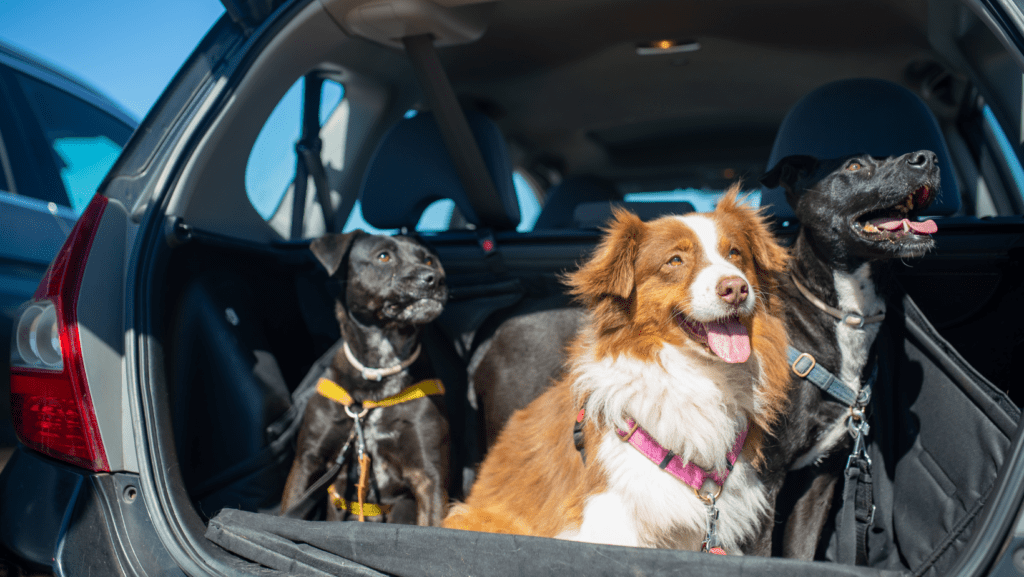
When I’m about to leave the house, my older dog happily follows me to the front door, excited for a car ride. He has his own spot on the passenger floor in a cosy bed. However, my new puppy is a bit different – she’s not a fan of sitting still and prefers attempting to sit on my lap if she’s not held by someone else. With a pup that likes to climb around the car, what steps should I take to ensure both my dogs are safe during our rides? I did some digging online to find out.
Even though it’s not a legal requirement, using a seat belt for your dog in the car is essential for their safety. Statistics show around 5,000 dogs are injured or killed annually in Australian road accidents due to inadequate restraint. Affordable seatbelt attachments designed for dogs secure them in place, reducing the risk of injuries and distractions while driving. Also, be aware that police can charge you if your dog causes distractions in the car.
I’ll recommend the SlowTon Dog Car Harness Seat Belt Set later; it’s a fantastic deal on Amazon, ensuring your pet’s safety and comfort during car rides with breathable materials, adjustable straps, and versatile design serving as both a car harness and a walking collar for everyday convenience.
Table of Contents
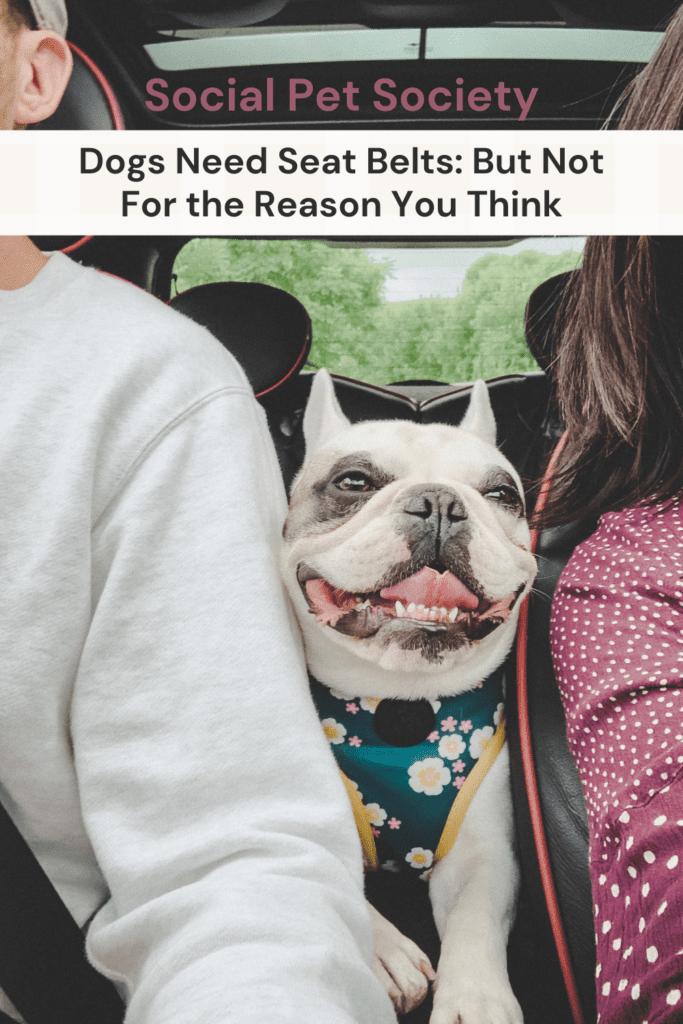
Disclosure: This article includes affiliate links. If you click on these links and make a purchase, I receive a small commission. This comes at no extra cost to you but greatly supports the maintenance of this site. Learn more here.
The Risks of Unrestrained Dogs
While it’s delightful to have our dogs close, allowing them to move freely in the car can have great risks. Statistics show a huge number (around 5,000) of dogs are injured or killed in road accidents in Australia each year due to no or incorrect restraint [1]. This alarming statistic shows that there is a real danger in not prioritising the safety of our furry friends during car rides.
If your dog is unrestrained in the car, it increases the risk of accidents because it’s a distraction to you as the driver. Then, if a crash was to happen, your unrestrained dog would become at risk of having serious injuries and being thrown around inside the vehicle.
It’s also important to be aware that police are able to issue you a fine and take points off your licence if your unrestrained animal reduces your control of their vehicle [1].
Safe Travel Solutions
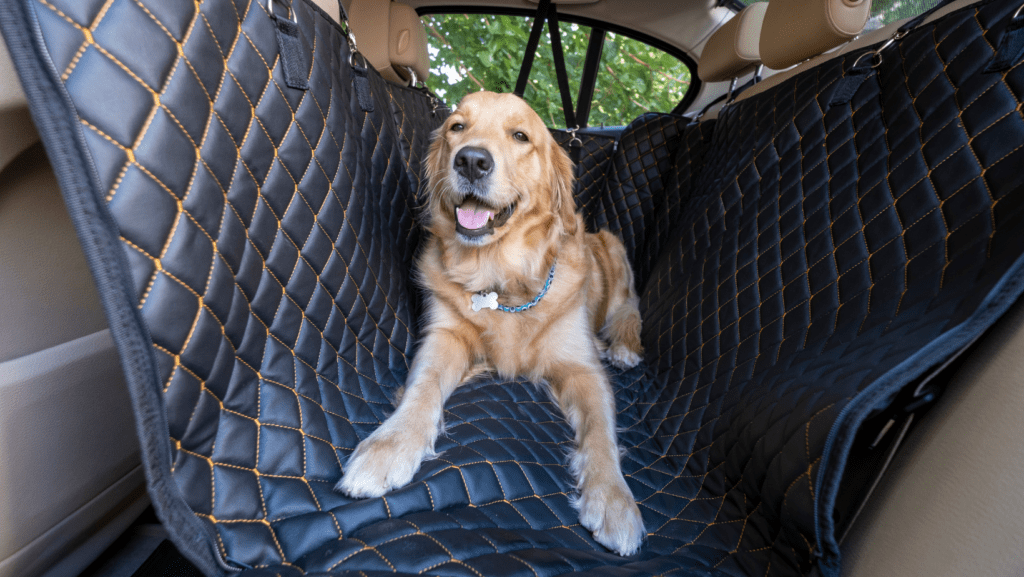
A lot of dogs do need the balance between closeness and safety to make them feel relaxed and safe during a trip. An affordable solution is the use of seatbelt attachments designed specifically for dogs. These attachments allow you to connect your dog’s harness or collar to the back seat, preventing excessive movement during sudden stops or crashes. These restraints keep your doggie securely in place, reducing the likelihood of injuries and distractions on the road.
I found a great deal on Amazon in the SlowTon Dog Car Harness Seat Belt Set. It not only ensures your pet’s safety and comfort during car rides but also offers exceptional value. Made from breathable materials with adjustable straps, it guarantees a secure fit for dogs of all sizes. Its versatile design serves as both a car harness and a walking collar, providing convenience for everyday use.
Dog Restraint Laws by State
Western Australia
In Western Australia, you must keep your pets secured in the car to avoid distractions. Dogs can’t be on the driver’s lap, in the front seat, or in a way that blocks the driver’s view. If an unrestrained dog gets injured, fines up to $5000 and even jail time could happen. For motorcyclists, it’s crucial to make sure dogs don’t mess with controlling the bike, except for certain activities by farmers [3].
Queensland
In Queensland, there’s no exact law saying dogs must be restrained in cars, but you could get fines if your dog gets hurt while unrestrained. For safety, it’s strongly suggested that pet owners use restraints, especially when dogs are in the back of a ute. This keeps dogs from falling out, jumping off, or getting pulled away by things outside the car [3].
New South Wales
In New South Wales, pet owners must make sure their pets are safely restrained to avoid distracting the driver. If a driver loses control due to an unrestrained pet, fines and demerit points can be given. Similar to other states, dogs should be securely restrained in the tray of a ute, and penalties can be imposed for injuries if proper vehicle restraints aren’t used [3].
Victoria, South Australia, and Northern Territory
In Victoria, like in other places, they want to make sure dogs don’t distract drivers. National rules say dogs can’t be in the boot of a sedan, unless it’s an SUV or wagon. It’s also against the law to leave dogs alone in a car for more than 10 minutes if it’s hotter than 28 degrees.
South Australia and the Northern Territory have the same rules, saying it’s crucial to prevent distractions and they can give fines if dogs get hurt because they weren’t restrained while traveling [3].
Tasmania
In Tasmania, laws say dogs must be properly restrained in a car, and they can’t sit on the driver’s lap. Tethering them correctly to a ute is also required, and you could face penalties if you don’t follow these rules [3].
How to Restrain Your Dog Safely
Ensuring your dog’s safety during car rides involves choosing appropriate restraint methods based on the dog’s size and the type of vehicle. Here are some recommended approaches for securing your furry friend while on the road:
Harnesses to Secure Your Dog
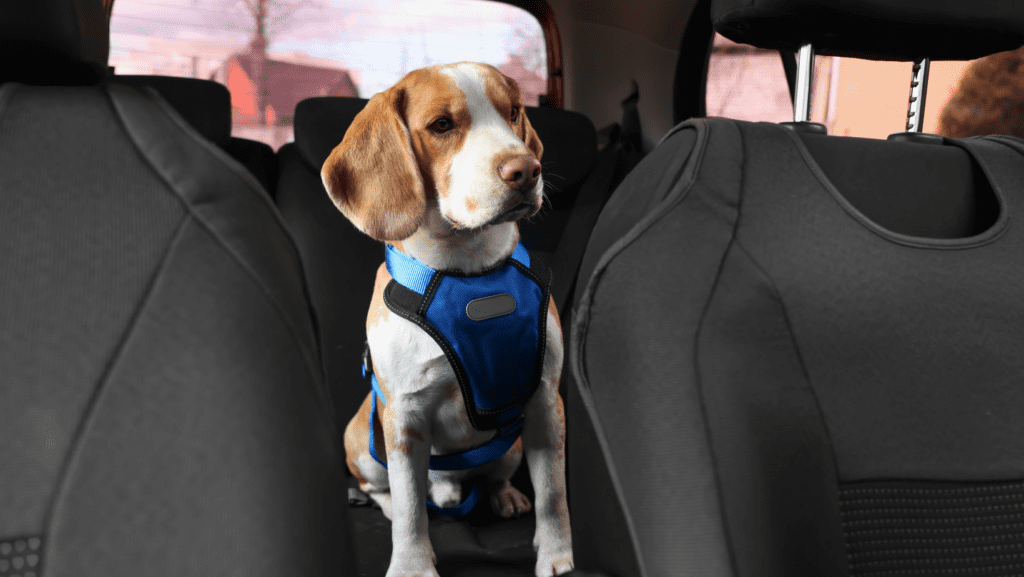
Harness Up: Use a special harness as a dog seatbelt to keep your furry friend secure.
Back Seat Comfort: Place your dog in the back seat, allowing them space to stand, sit, and enjoy the view while keeping the driver focused.
Minimise Distractions: Having your dog in the back seat reduces distractions for the driver compared to having them in the front seat.
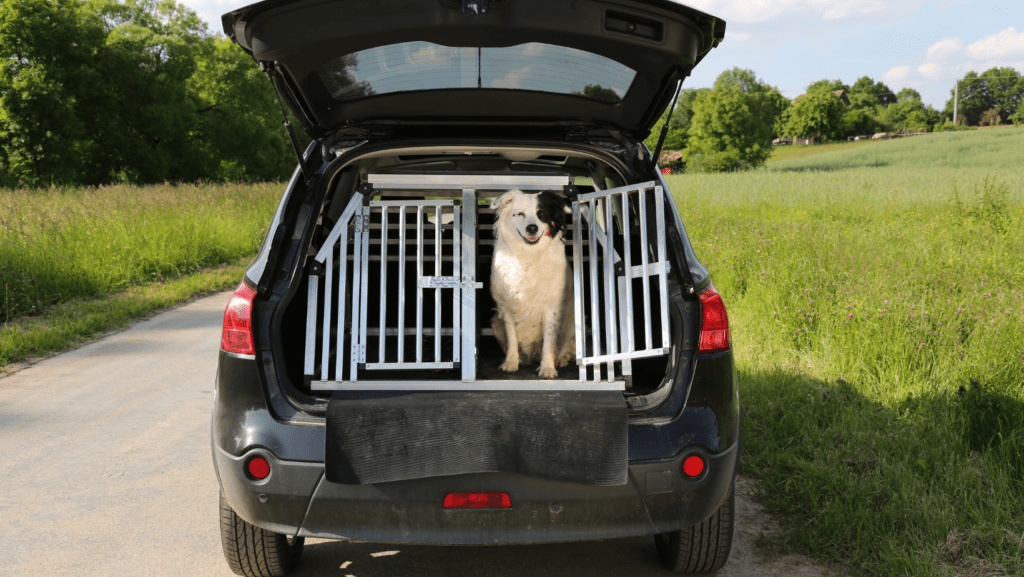
Mesh Barriers
If you have a dog that tends to move around a lot in the car, consider getting mesh barriers installed between the front and back seats. These barriers are like a see-through fence that provides visibility for both you and your dog. The great thing is that they act as a physical barrier, preventing your furry friend from climbing into the front seat and causing distractions for the driver. It’s a win-win – your dog can still see you, and you can drive without any distractions.
Dog Booster Seats for Medium-Sized Dogs
If you have a small to medium-sized dog that loves getting a better view by sitting on your lap during car rides, think about investing in booster seats. These special seats elevate your dog, giving them a comfy perch with a window view. Not only does this keep your pup content, but it also prevents them from scratching at the doors to catch a glimpse outside. I found a great buy on Amazon for the booster I use for my Pug x, the Pet Gear Lookout Booster Car Seat – with Removable Comfort Pillow and Safety Tether Included – getting a this booster means your pup gets to enjoy the scenery, and you can maintain a scratch-free car interior!
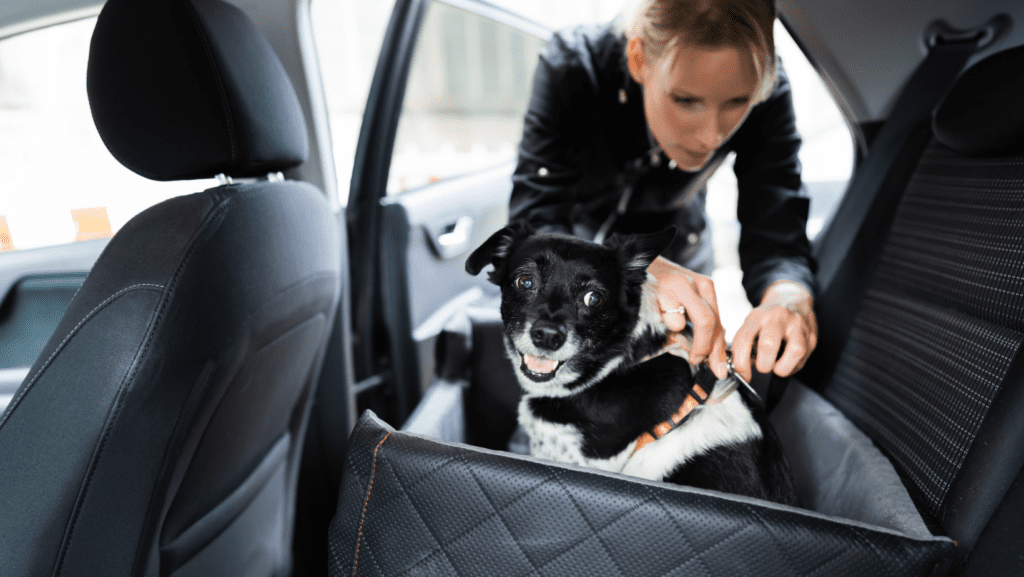
Legal Obligations
As a pet owner in Australia, it’s really important to understand your legal obligations to ensure the safety, security, and comfort of your dogs during travel. If you don’t comply with the law, it can lead to huge penalties. An important transport law for pets is that you can not allowing any part of a dog, except its head, to protrude from the vehicle, and you need to secure a dog on the tray of a vehicle or trailer to prevent injuries – read more on ute safety here.
Conclusion
Putting your dog’s safety first during car rides creates a positive travel experience for both pet and owner. By having appropriate restraints and understanding your states specific laws, you can ensure a secure and enjoyable journey for you and your dog. Follow safety guidelines, and make responsible choices to create lasting memories on the road with your beloved canine friend.

Talitha Mulder
- Shine Lawyers. “Riding in Cars with Dogs.” Source: https://www.shine.com.au/resources/motor-vehicle-law/riding-in-cars-with-dogs
- RSPCA World For Pets Superstore. Source: https://www.rspcawa.asn.au/
- eDog Australia. “Dog Restraint Laws You Need to Know.” Source: https://www.edogaustralia.com.au/blogs/edog-lets-us-help-you-train/dog-restraint-laws-you-need-to-know
- Queensland Government – Business Queensland. “Guidelines for Transporting Dogs.” Source: https://www.business.qld.gov.au/industries/farms-fishing-forestry/agriculture/animal/move/guidelines/dogs

