

What’s the best way to teach someone?
To tell them? Or to show them?
This isn’t just a human question. It’s a question for our dogs too – especially our puppies.
Our dogs don’t just learn from commands. They learn by watching, by doing, by imitating. This is called allelomimetic behaviour, and it’s one of the most powerful forces in how dogs learn.
Table of Contents
Disclosure: This article includes affiliate links. If you click on these links and make a purchase, I receive a small commission. This comes at no extra cost to you but greatly supports the maintenance of this site. Learn more here.
Learning by watching
If you take a moment to think, you probably have seen a puppy pick up a new skill simply by watching an older dog. It’s almost effortless. No commands, no pressure. Whether it’s coming when called, jumping into a car, or even figuring out where to go to the bathroom – if they have an example set by an older dog, it’s natural and it’s instinctive.
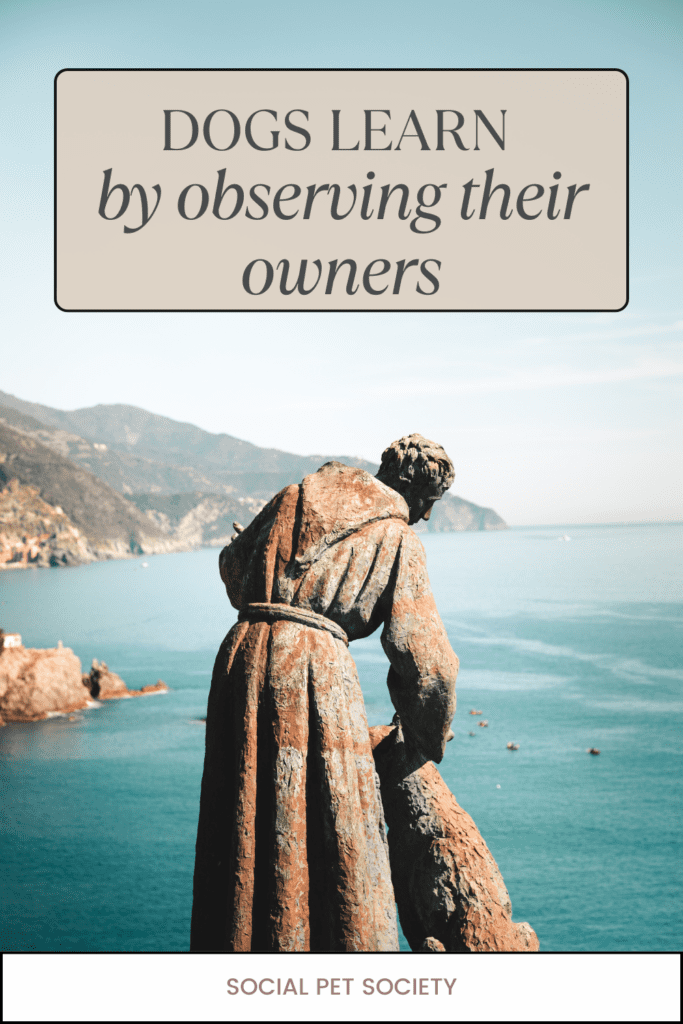
Saint Bernard dogs are the perfect example of learning through observation
Saint Bernard rescue dogs are large mountain dogs that were first used to protect monks and their belongings, and now are used to help find and rescue lost travellers.
These dogs don’t need a special training program and they aren’t taught commands. Instead, they learn by following the lead of older dogs. They observe and then they participate, and over time, they know exactly what to do.
Even something as simple as walking down stairs. Puppies often hesitate, unsure, until they see another dog do it.
Why dogs sync with us
Ever notice how, when you walk your dog, your pace seems to sync? (Okay… maybe not if your dog is pulling the lead and you are barely keeping up with them). But once they’ve calmed down, you can notice how they move in sync with you. It’s like you’re moving together without thinking about it.
It’s a deep connection that’s been developing between dogs and humans for thousands of years.
Research shows that this synchrony might be powered by something called motor resonance. When two individuals’ motor systems sync up, their movements align. Humans have mirror neurons that fire when we perform or observe an action. Dogs? They might have something similar.
But it’s not just physical movements that sync up. Dogs are tuned into our emotions, too. They read our facial expressions, gestures, and even tone of voice. They don’t just mimic—they mirror our feelings.
When dogs walk with us, play with us, or just sit beside us, something extraordinary happens. It’s not just companionship. It’s a shared experience that goes beyond words or actions. It’s biological. It’s emotional. It strengthens with every step we take together.
Conclusion
Next time you take a walk with your dog, remember: it’s not just a walk. It’s a reminder of the deep connection you share.
What can that connection teach you?

