
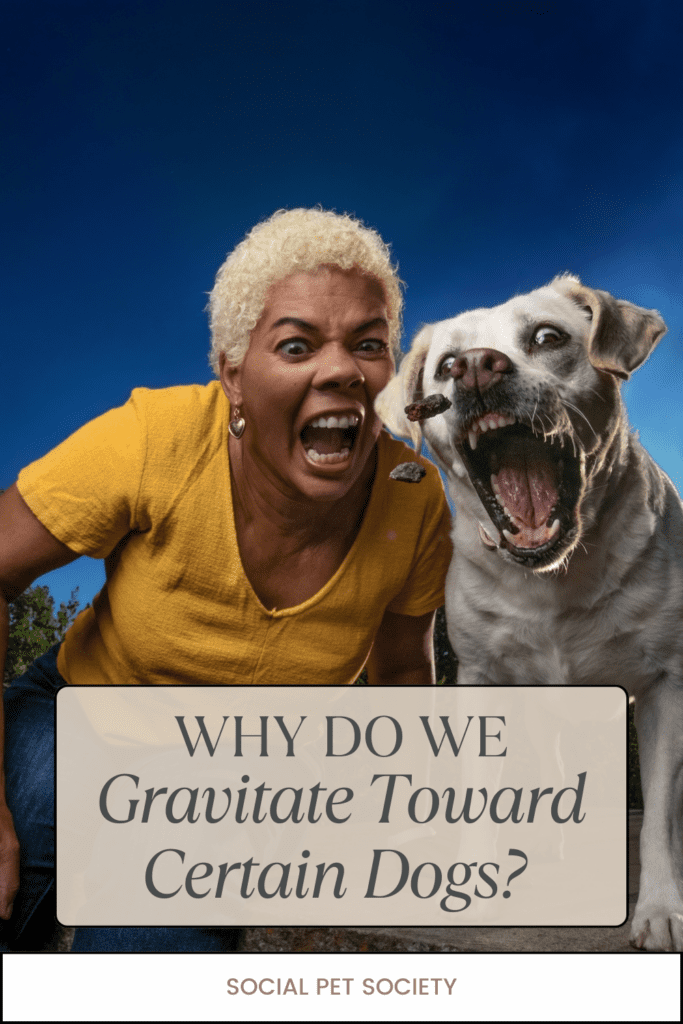

Do you share the common thought that owners choose dogs that look like them?
Or do we pick dogs that match the way we perceive ourselves morally and emotionally?
Table of Contents
Disclosure: This article includes affiliate links. If you click on these links and make a purchase, I receive a small commission. This comes at no extra cost to you but greatly supports the maintenance of this site. Learn more here.
Australian Preferences
A survey in Australia (King, Marston, & Bennett, 2009) asked people about their “ideal dog.” The results showed some common traits across owners preferences.
People wanted a dog that was:
- de-sexed
- medium-sized
- healthy
- friendly
- obedient
- affectionate
- low maintenance (needing only 15-30 minutes of exercise a day)
These common desires would make you think that people are gravitating toward dogs that align with their own lifestyle – not just based on looks or their own self image.
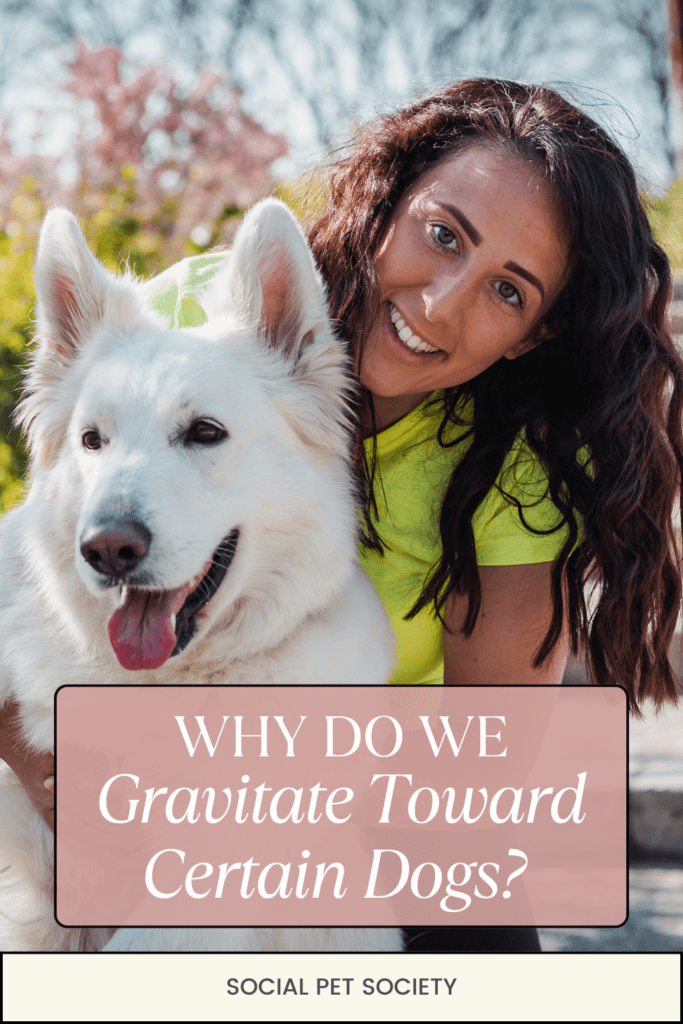
What makes me doubt that lifestyle suitability is the biggest factor in choosing a dog
Take me and my husband, as an example:
I have a Border Collie, and he has a Chug (a Chihuahua-Pug mix).
There’s no denying these two dogs are different, yet we both feel they’re the perfect match for us.
But how can we think that our dogs suit us each so well? My husband and I lead very similar lifestyles, yet our dogs have such individual personalities and needs.
There has to be more at play in our decisions to choose our dog.
How our dogs look
Research by The Kennel Club found that many dog owners choose their pets based on looks.
A huge 63% of owners picked their dog because they were drawn to the breed’s appearance.
Later, when owners took time to research the breed and understand their needs, 88% did feel that their dog was the perfect match for their personality and lifestyle (The Kennel Club, 2022).
Self perception as a factor in choosing our dog
Could it be that our dogs are reflections of us from an emotional, rather than a physical standpoint?
Studies suggest that we might not always choose the “right” dog for our lifestyle, but maybe we see the “right” dog as one that feels intuitively aligned with who we are as a person.
Take the example of Jack Russell owners – research highlights that owners of these dogs perceive themselves as sharing the dominant traits of loyalty, generosity, and trustworthiness, with their dog.
Conclusion
It seems like we might be drawn to dogs that align with our personalities and looks first, even if we’re not fully aware of it at the time of choosing.
So, maybe there’s some truth to the idea that the dog we choose “looks” like us, it just might be in some subtle ways.
The question then becomes – is the way we pick our dogs, detrimental for the dogs in our lives?
References
- King, T., Marston, L., & Bennett, P. (2009). Describing the ideal Australian companion dog. Applied Animal Behaviour Science, 120(1-2), 84-93. https://doi.org/10.1016/j.applanim.2009.07.002
- McConnell, P. (2016, August 2). Why do people choose certain dogs? Companion Animal Psychology. https://www.companionanimalpsychology.com/2016/08/why-do-people-choose-certain-dogs.html
- The Kennel Club. (2022, October). Research into breed choices. The Kennel Club. https://www.thekennelclub.org.uk/media-centre/2022/october/research-into-breed-choices/

